What This Document Is
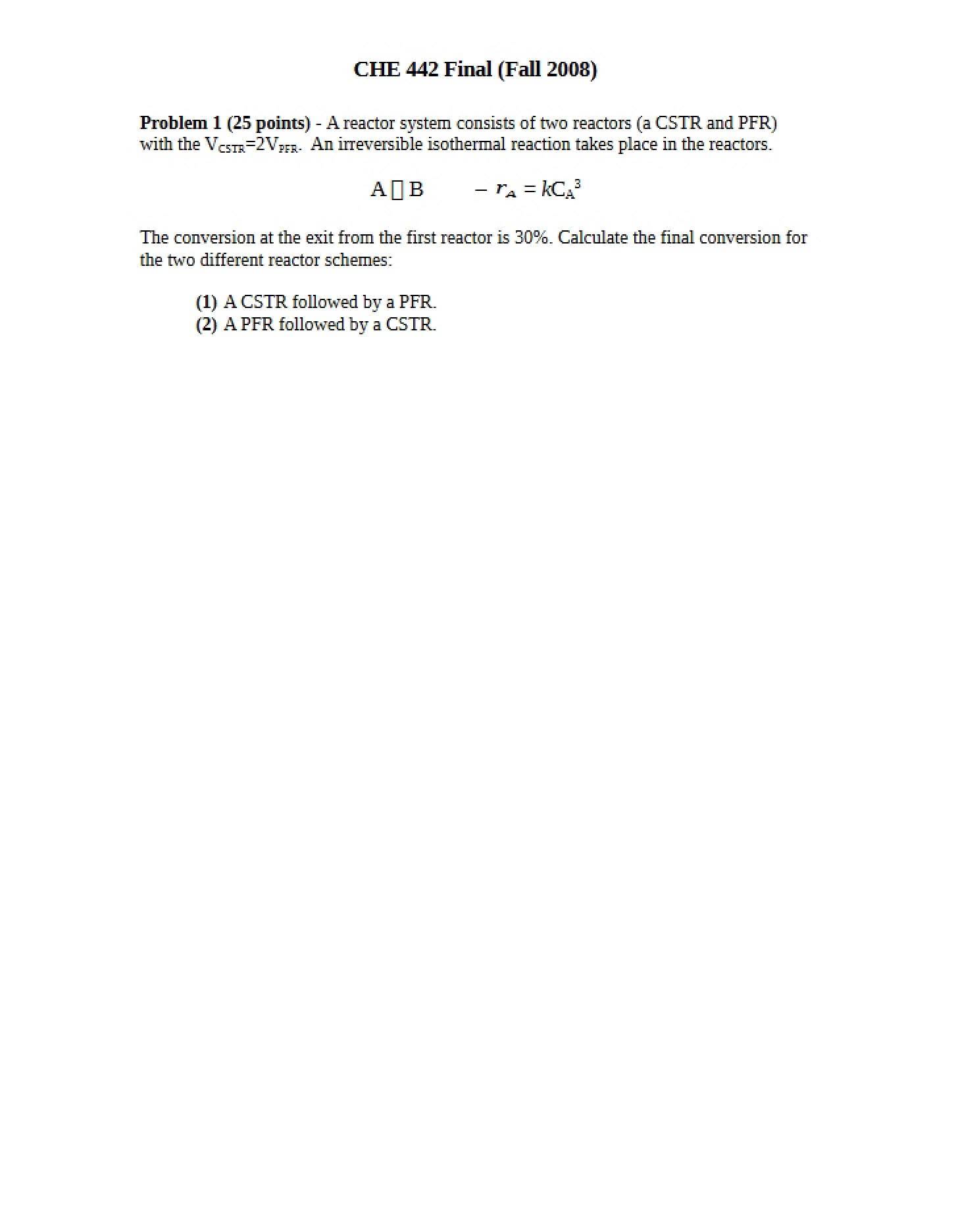
This is a comprehensive final exam from a Chemical Reactor Analysis course (CHE 442) at the University of Southern California, originally administered in Fall 2000. It’s designed to assess a student’s understanding of core principles related to chemical reactor design, operation, and analysis. The exam covers a broad range of topics within the field, requiring application of theoretical knowledge to practical, engineering-focused problems. It’s a rigorous test of concepts learned throughout the semester.
Why This Document Matters
This resource is invaluable for students currently enrolled in a similar Chemical Reactor Analysis course, or those preparing for related professional exams (like the Fundamentals of Engineering). It’s particularly useful for understanding the *types* of questions and the level of difficulty expected on such an exam. Studying past exams is a proven method for identifying knowledge gaps and refining problem-solving skills. It can also help you gauge the emphasis placed on different topics by the instructor. Access to this exam allows you to practice applying your understanding in a high-stakes, exam-like setting.
Common Limitations or Challenges
This document presents a completed exam; it does *not* include solutions, explanations, or a grading rubric. It serves as a practice tool, but requires independent effort to solve the problems. The specific context of the 2000 course (instructor, specific textbook used, etc.) may differ from your current learning environment. Furthermore, while representative of the course material, it doesn’t guarantee the exact content of future exams.
What This Document Provides
* Problems focused on calculating reactor effectiveness factors.
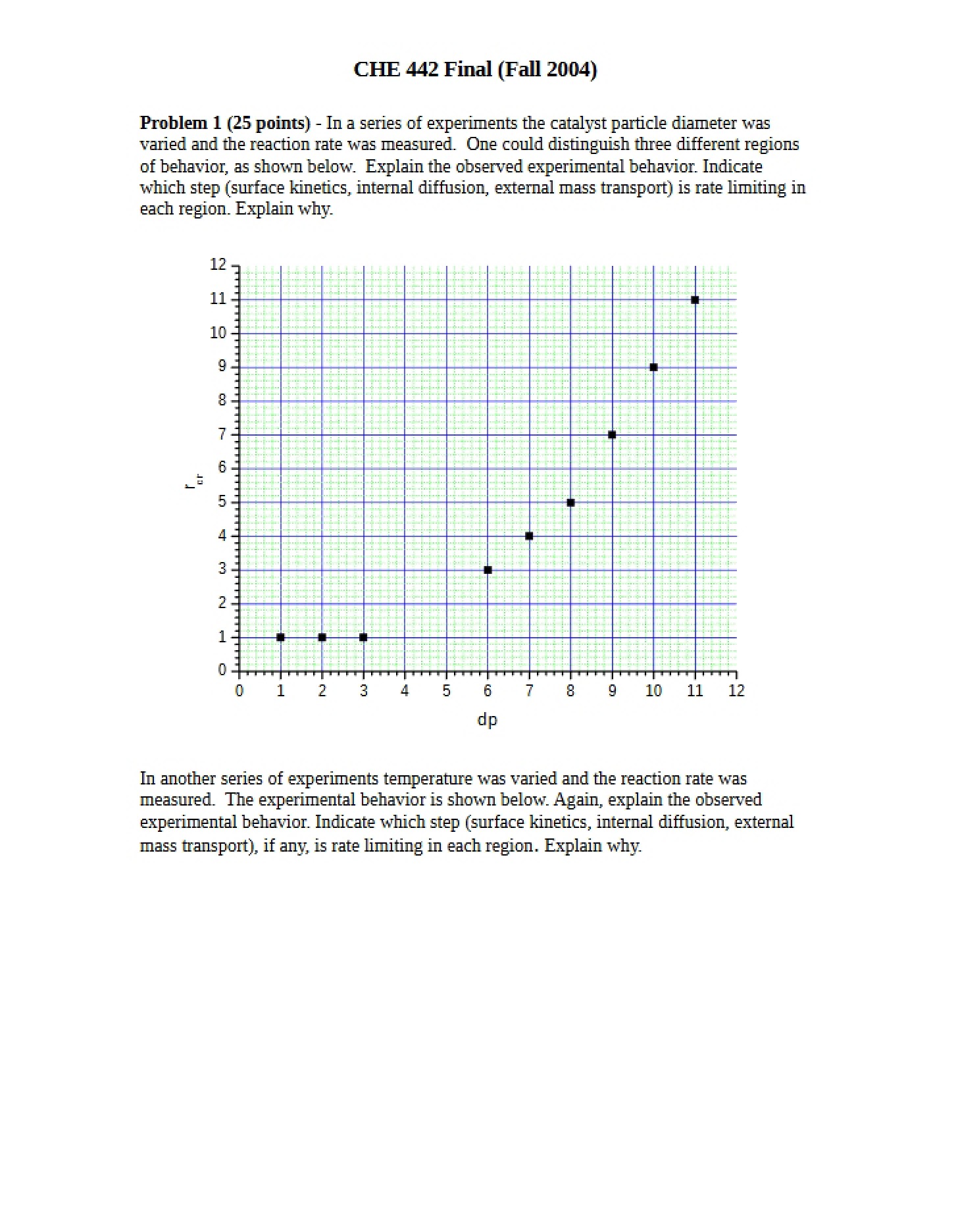
* Questions assessing understanding of rate-limiting mechanisms in chemical reactions.
* Derivation of rate equations for catalytic reactions based on reaction mechanisms.
* Reactor design challenges involving steady-state, nonisothermal conditions.
* Problems related to plug flow reactor performance with pressure drop considerations.
* Equilibrium conversion calculations for multi-stage reactor systems with interstage cooling.
* Semi-batch reactor design and analysis scenarios.
* Problems exploring overall catalyst effectiveness.
* A realistic exam format and time constraint (originally 2 hours).