What This Document Is
This is a final exam from a Chemical Reactor Analysis course (CHE 442) at the University of Southern California, originally administered in Fall 2012. It’s a comprehensive assessment designed to evaluate a student’s understanding of core principles in chemical reaction engineering. The exam focuses on applying theoretical knowledge to practical reactor design and analysis scenarios. It covers a range of reactor types and reaction conditions, testing the ability to model, analyze, and optimize chemical processes.
Why This Document Matters
This exam is an invaluable resource for students currently enrolled in, or preparing to take, a similar Chemical Reactor Analysis course. It’s particularly helpful for those seeking to gauge the level of difficulty and scope of topics typically covered in such an assessment. Studying past exams allows students to identify their strengths and weaknesses, refine their problem-solving skills, and become familiar with the types of questions and analytical techniques expected by instructors. It’s best used as part of a broader study plan, alongside coursework and textbooks.
Common Limitations or Challenges
This document presents a completed exam; it does *not* include solutions, explanations, or step-by-step guidance. It serves as a practice tool to test existing knowledge, not as a teaching resource. The specific focus and emphasis of topics may vary between instructors and semesters, so it should not be considered a definitive representation of all possible exam content. Furthermore, relying solely on past exams without a solid foundation in the course material is unlikely to lead to success.
What This Document Provides
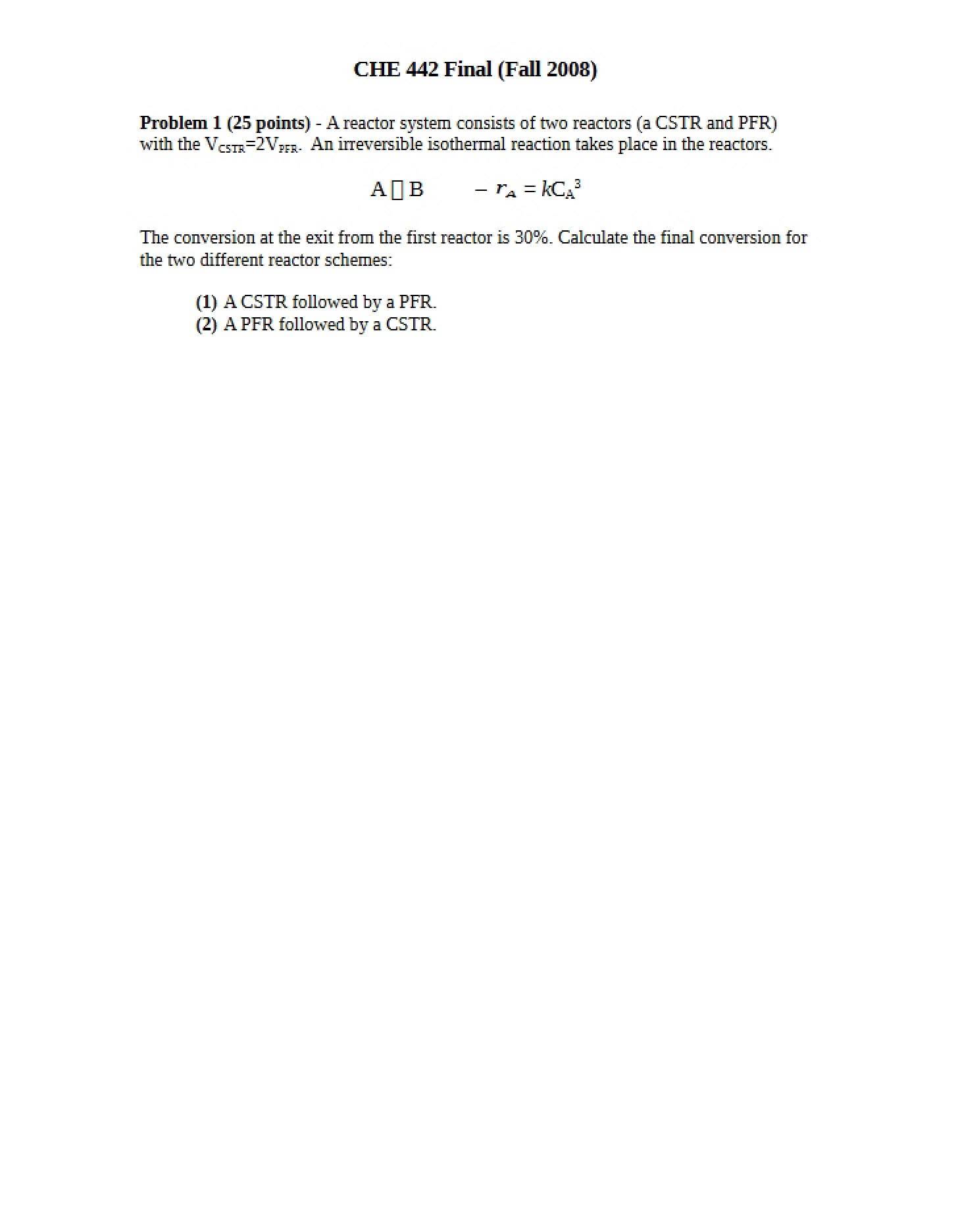
* A series of challenging problems related to various reactor types (PFR, CSTR, Packed-Bed Reactors).
* Problems involving different reaction kinetics (elementary, first-order, zero-order).
* Scenarios requiring analysis of isothermal and adiabatic reactor conditions.
* Problems incorporating concepts of conversion, rate constants, and reactor volume calculations.
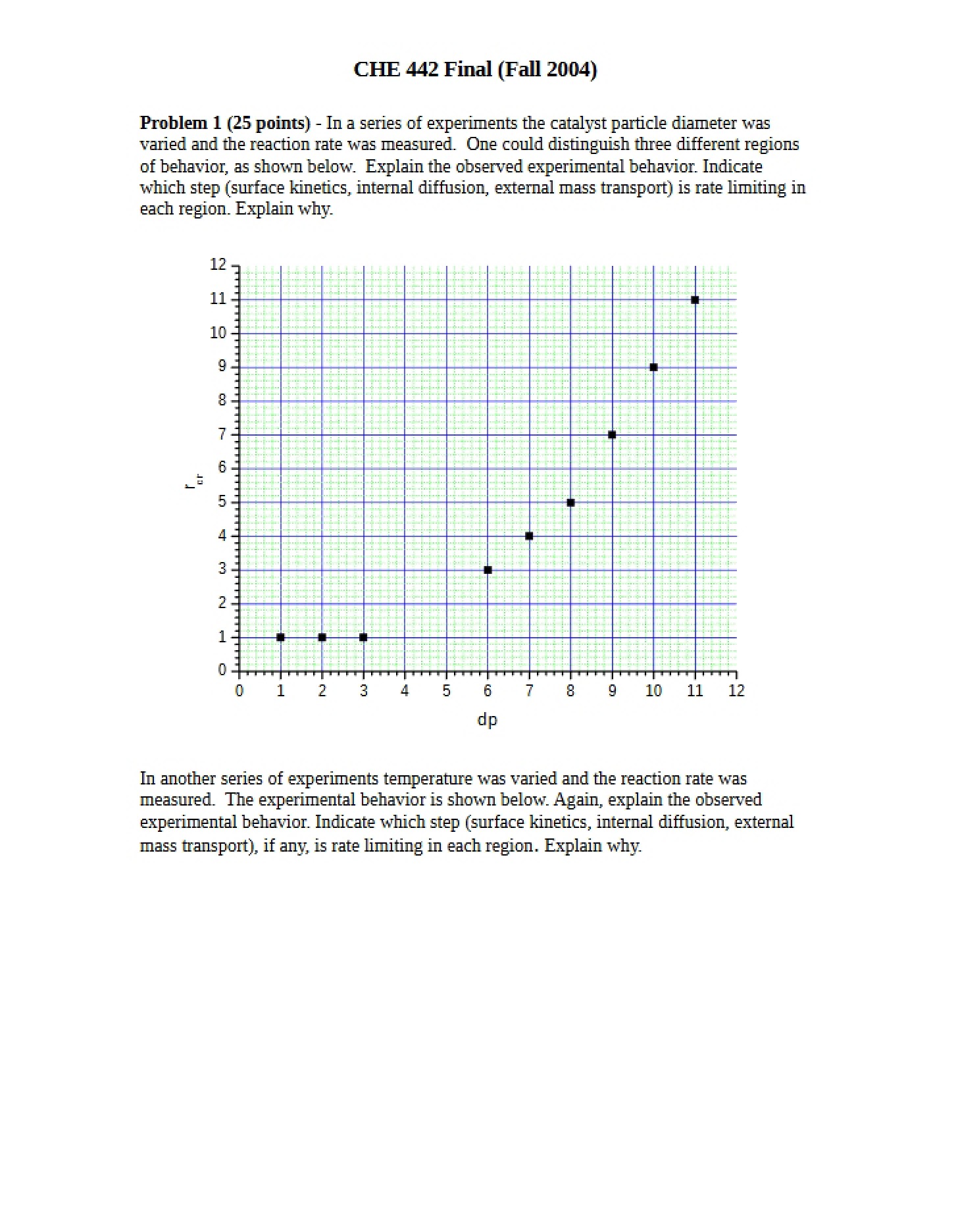
* Questions related to mass transport limitations in catalytic reactors.
* Problems requiring the application of equilibrium considerations.
* A representative assessment of the depth and breadth of knowledge expected in a Chemical Reactor Analysis course.