What This Document Is
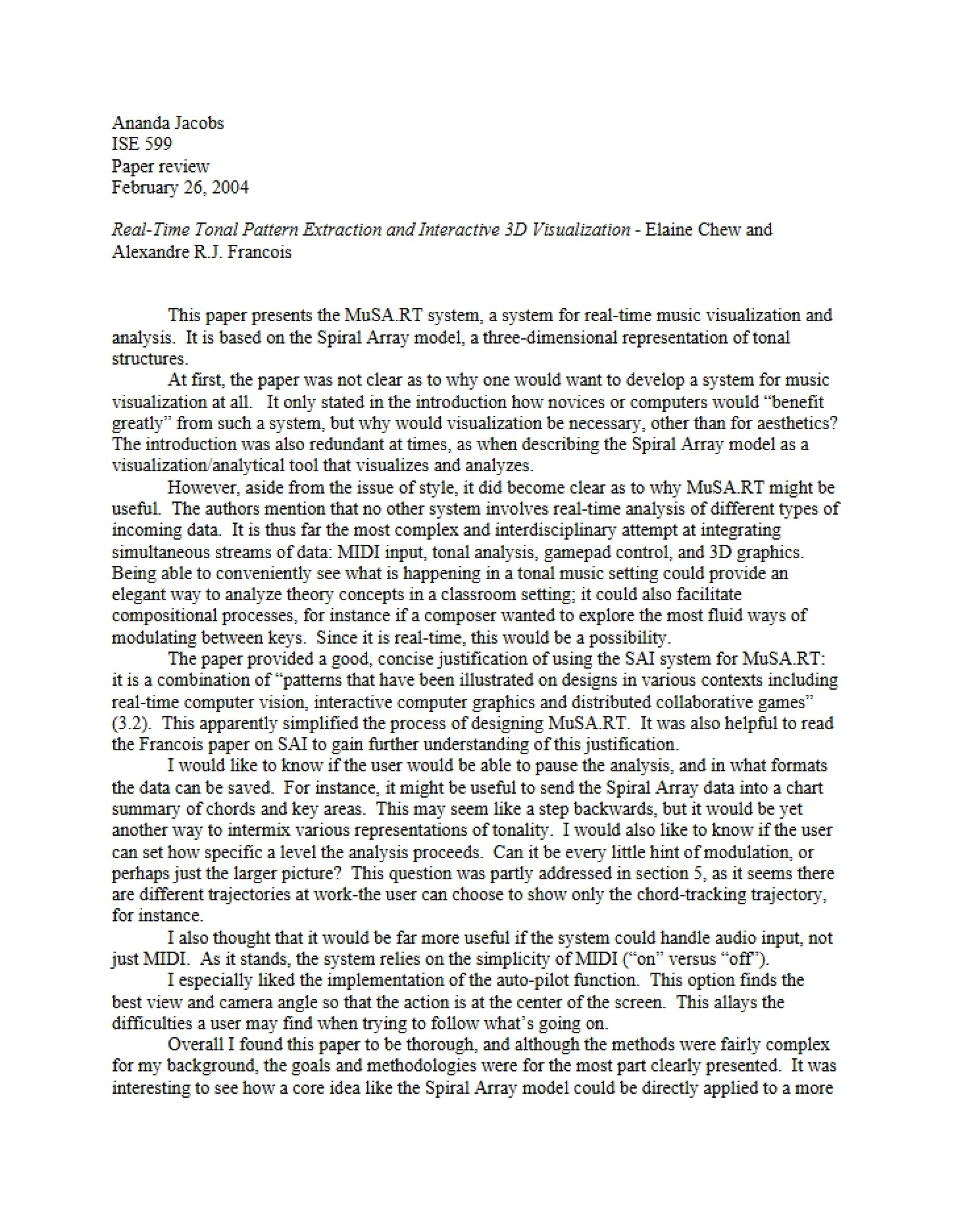
This document comprises presentation slides from a graduate-level course at the University of Southern California (ISE 599, Special Topics) focusing on the computational analysis of music. Specifically, it delves into the field of Musical Pattern Discovery (MPD), exploring methods for automatically identifying and analyzing recurring musical ideas within scores. The presentation, delivered by Ananda Jacobs, outlines theoretical approaches and challenges related to recognizing musical structures. It bridges the gap between music theory and computational techniques, aiming to model how humans perceive and understand musical patterns.
Why This Document Matters
Students and researchers in fields like music information retrieval, computational musicology, and computer science will find this material particularly valuable. It’s ideal for those seeking a deeper understanding of how algorithms can be designed to “listen” to and interpret music. Individuals interested in the intersection of cognitive science and music perception may also benefit from the concepts presented. This resource is most useful when studying automated music analysis techniques or when developing new approaches to musical pattern recognition. It provides a foundational overview of existing methodologies and their inherent limitations.
Common Limitations or Challenges
This presentation focuses on the *concepts* behind musical pattern discovery and does not offer a practical, step-by-step guide to implementing these techniques. It doesn’t include code examples, detailed mathematical derivations, or specific software tutorials. The material assumes a foundational understanding of both music theory and computational thinking. It also highlights the difficulties in translating human perceptual processes into algorithmic form, acknowledging the inherent complexities of the subject.
What This Document Provides
* An overview of core musical concepts relevant to pattern analysis (melody, rhythm, harmony, motives).
* Discussion of existing approaches to musical pattern discovery, including self-similarity matrices and contour analysis.
* Exploration of the challenges associated with identifying transformed musical patterns (augmentation, diminution, inversion, retrograde).
* Consideration of different methods for segmenting musical pieces for analysis (style-based groupings, local boundaries, repetition).
* An introduction to the role of memory (short-term and long-term) in pattern recognition.
* Terminology related to pattern classes and pattern occurrences.