What This Document Is
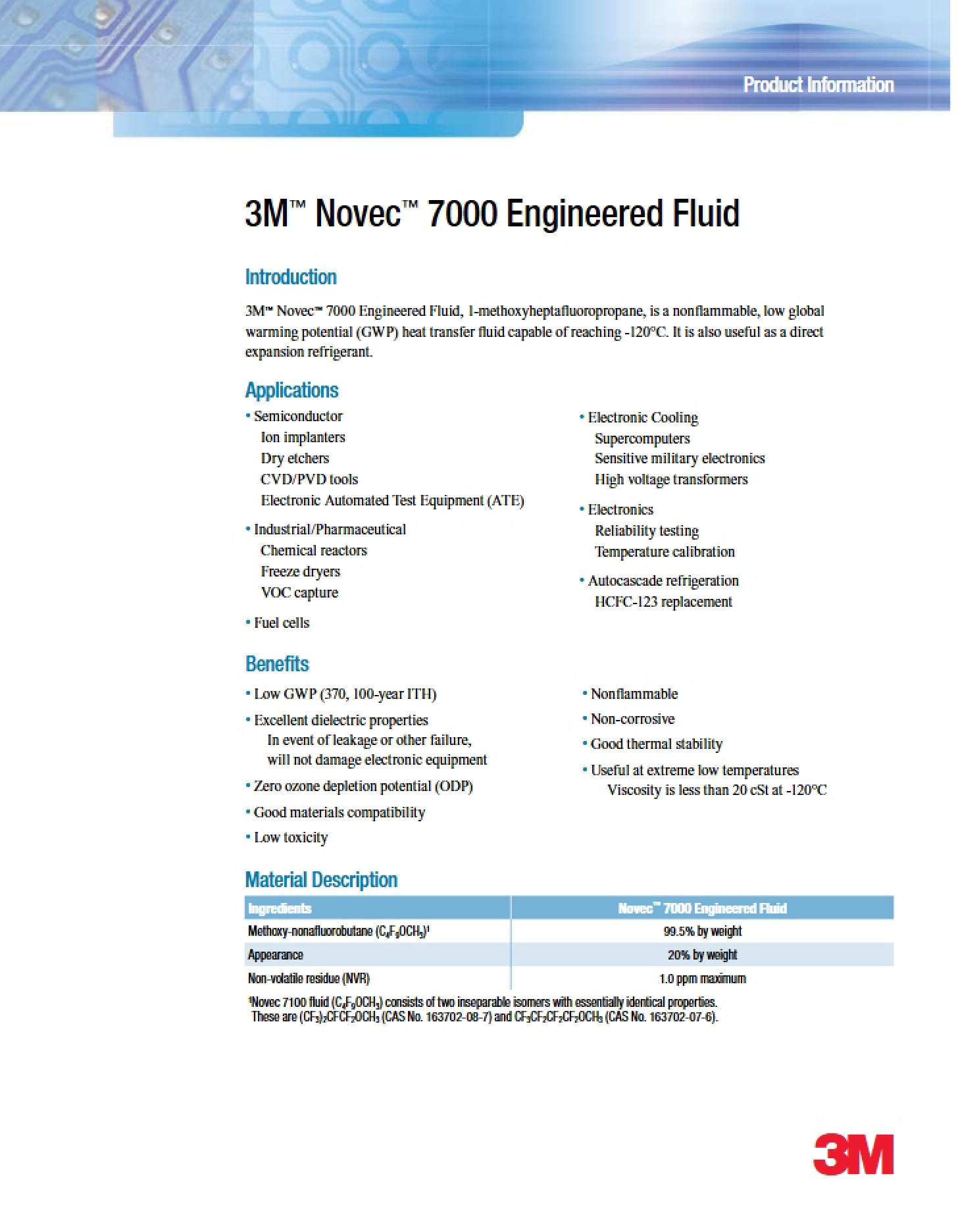
This document consists of detailed lecture notes pertaining to a Thermal Energy Engineering Laboratory course (ME 4331) at the University of Minnesota Twin Cities. It focuses on the properties and applications of a specific engineered fluid – 3M Novec 7000 – used in advanced thermal management systems. The notes delve into the fluid’s characteristics as a heat transfer medium and potential refrigerant, covering a range of physical and chemical properties relevant to engineering applications.
Why This Document Matters
These notes are invaluable for students enrolled in thermal engineering laboratory courses, particularly those dealing with heat transfer, fluid mechanics, and refrigeration cycles. Engineers and researchers exploring alternative fluids for cooling systems, especially in electronics and high-performance computing, will also find this resource beneficial. It’s particularly useful when needing a reference for fluids with low global warming potential and specific thermal characteristics. Understanding the detailed properties of such fluids is crucial for designing efficient and environmentally responsible thermal solutions.
Common Limitations or Challenges
This document presents a focused examination of a single engineered fluid. It does not provide a comprehensive overview of *all* heat transfer fluids available, nor does it include detailed experimental procedures or lab reports from the associated course. It also doesn’t cover broader heat transfer theory beyond what’s relevant to understanding the fluid’s behavior. The notes are intended as a supplement to lectures and hands-on laboratory work, not a standalone learning resource.
What This Document Provides
* Detailed physical properties of 3M Novec 7000, including density, viscosity, thermal conductivity, and vapor pressure.
* Information regarding the fluid’s chemical composition and stability.
* Discussion of typical applications for this fluid in various industries.
* Data on environmental properties, such as ozone depletion potential and global warming potential.
* Toxicological information and safety guidelines for handling the fluid.
* Graphical representations of key property relationships (e.g., viscosity vs. density).
* Compatibility information with common materials used in engineering systems.