What This Document Is
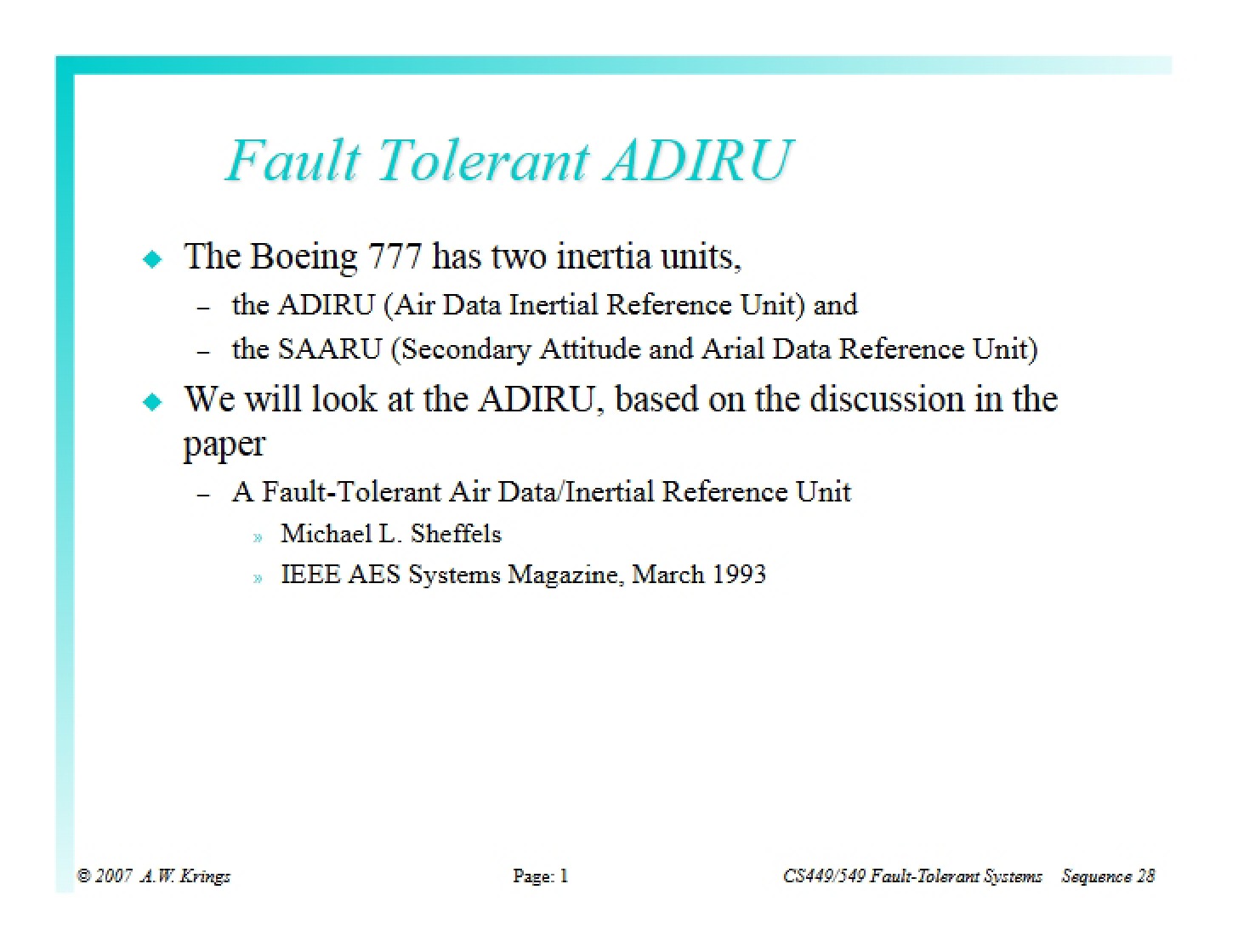
This is a detailed exploration of fault tolerance techniques as applied to a critical aerospace system: the Air Data/Inertial Reference Unit (ADIRU) found in the Boeing 777 aircraft. It delves into the architectural considerations and design choices made to ensure continued operation even in the presence of component failures. The material is based on a specific industry paper and is intended for advanced study within a fault-tolerant systems course. It provides a real-world case study for understanding theoretical concepts.
Why This Document Matters
Students in computer science, electrical engineering, and aerospace engineering will find this resource particularly valuable. It’s ideal for those studying fault-tolerant design, system reliability, and safety-critical systems. This material is best utilized when you are looking for a practical application of fault tolerance principles, moving beyond abstract examples to a complex, functioning system. Understanding the ADIRU’s design will enhance your ability to analyze and design robust systems for various applications.
Topics Covered
* Fault Containment Areas (FCAs) and Fault Containment Modules (FCMs)
* Redundancy Management Strategies
* Power Supply Architectures for High Reliability
* ARINC 629 Bus Interfaces and Voting Mechanisms
* Processor Fault Tolerance and Synchronization
* Fault Isolation Techniques (Electrical and Mechanical)
* System Reliability Considerations in Inertial Reference Units
* Deferred Maintenance Philosophies
What This Document Provides
* A comprehensive overview of the ADIRU’s architecture and its key functional components.
* An examination of the interconnections between different modules within the ADIRU.
* Insights into the requirements and trade-offs involved in designing a fault-tolerant system for aerospace applications.
* Illustrative diagrams showcasing the relationships between FCAs and FCMs.
* A detailed look at the power distribution and communication protocols employed within the ADIRU.
* Discussion of the design objectives related to fault independence and isolation.