What This Document Is
This document contains worked solutions for Problem Set 5 within the Advanced Organic Chemistry – Synthesis and Reactivity (CHEM 634) course at the University of Delaware. It’s designed as a companion resource to the original problem set, offering a detailed exploration of the concepts tested. This isn’t a teaching document *per se*, but rather a focused resource for checking understanding and reinforcing problem-solving skills. It assumes familiarity with the core material presented in lectures and assigned readings related to the problem set.
Why This Document Matters
Students enrolled in CHEM 634 will find this resource particularly valuable when reviewing their own attempts at Problem Set 5. It’s ideal for use *after* independently working through the problems, as a way to identify areas of strength and weakness. This resource can help solidify comprehension of complex synthetic strategies and reactivity patterns. Accessing these solutions can be a crucial step in mastering the material before moving on to subsequent topics and assessments. It’s especially helpful for students aiming for a deeper understanding of the course’s challenging concepts.
Topics Covered
* Multi-step Organic Synthesis Design
* Reagent Selection and Justification
* Retrosynthetic Analysis
* Stereochemical Control in Reactions
* Understanding Reaction Mechanisms (implied through solution approaches)
* Application of Protecting Group Strategies
* Advanced Reaction Concepts related to specific functional groups
What This Document Provides
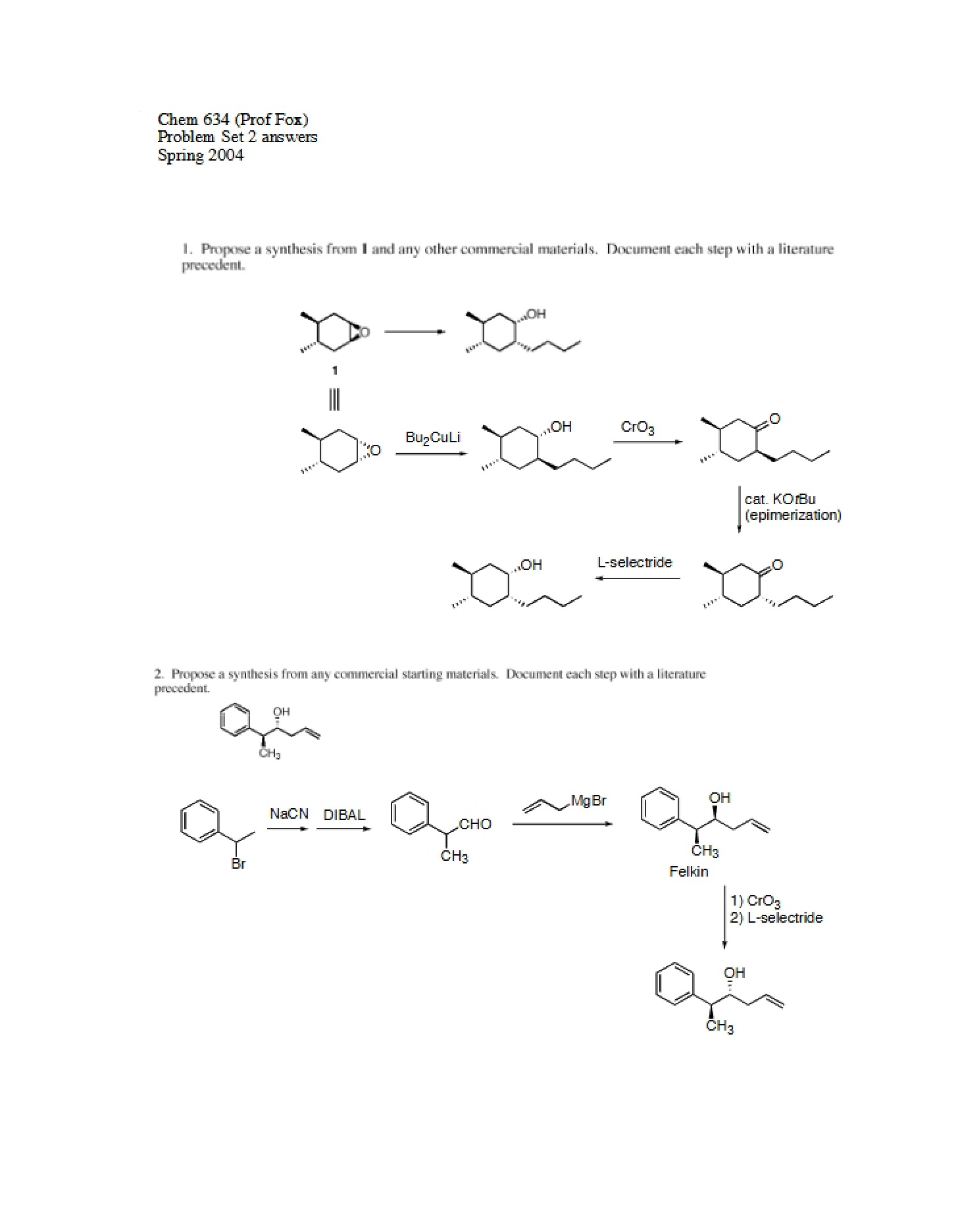
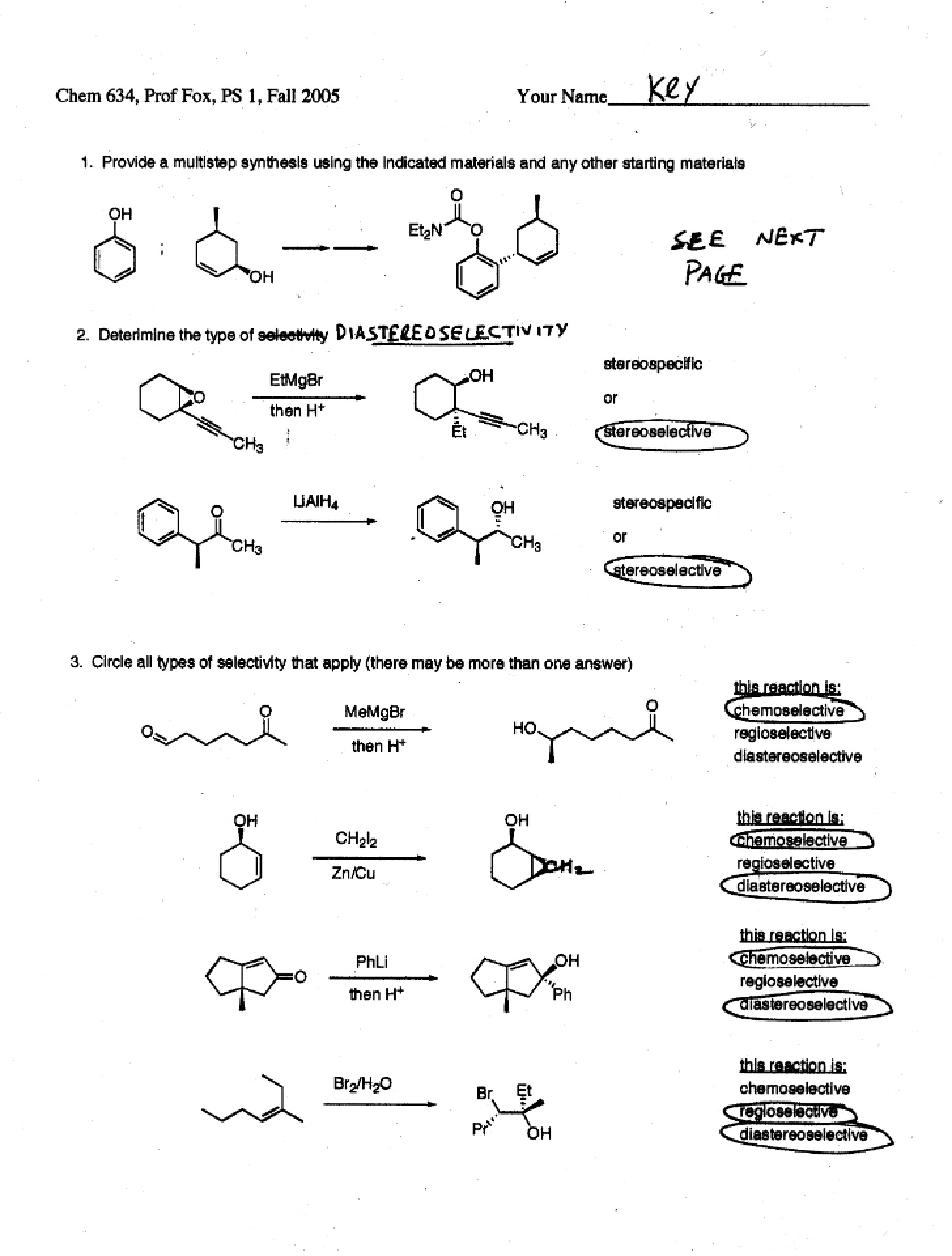
* Detailed, step-by-step approaches to each problem on Problem Set 5.
* A clear presentation of the logic behind each synthetic route or mechanistic consideration.
* Illustrations of how to apply core organic chemistry principles to complex scenarios.
* A framework for evaluating the effectiveness of different synthetic strategies.
* A resource for identifying common pitfalls and misconceptions in problem-solving.
* A comprehensive overview of the expected level of detail and rigor in solutions for this course.