What This Document Is
This document consists of a practice problem set designed for a Computer Architecture course (CMPE 202) at the University of California, Santa Cruz. It’s structured as a past midterm examination, offering a challenging assessment of core concepts within the field. The material focuses on in-depth analysis of processor architecture and performance evaluation. It’s intended to test a student’s ability to apply theoretical knowledge to practical scenarios involving pipeline design and optimization.
Why This Document Matters
This resource is invaluable for students currently enrolled in a similar computer architecture course, or those preparing for related examinations. It’s particularly useful for solidifying understanding after covering topics like pipelining, instruction scheduling, and cache memory systems. Working through these types of problems will help you develop critical thinking skills and prepare for the rigor of academic assessments. It’s best utilized as a self-assessment tool to identify areas needing further study and practice.
Topics Covered
* Pipelined Processor Architecture
* Data and Control Forwarding Techniques
* Pipeline Stalling and Hazard Resolution
* Branch Prediction and Control Hazard Costs
* Instruction-Level Parallelism (ILP) and Performance Metrics
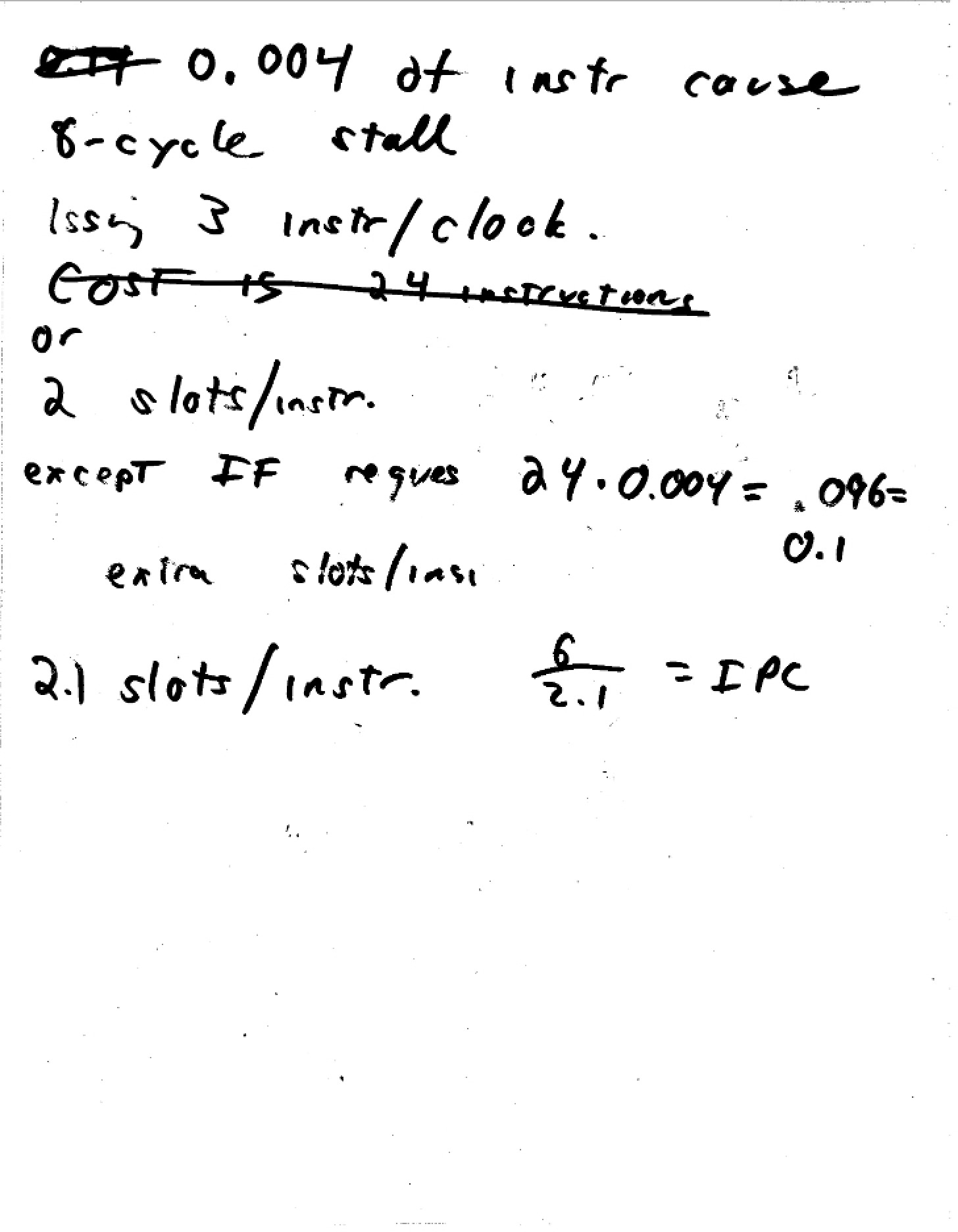
* Cache Memory Performance and Impact on IPC
* Dynamic Instruction Scheduling (Tomosulo’s Algorithm)
* Reservation Stations and Instruction Dependencies
What This Document Provides
* A comprehensive set of problems mirroring the format and difficulty of a university-level midterm exam.
* Scenarios involving a specific processor implementation (McKinley/IA64) for detailed analysis.
* Opportunities to apply concepts related to pipeline diagrams, hazard analysis, and performance calculations.
* A framework for evaluating the impact of various architectural features on overall system performance.
* Problems requiring quantitative analysis of instruction scheduling and cache behavior.