What This Document Is
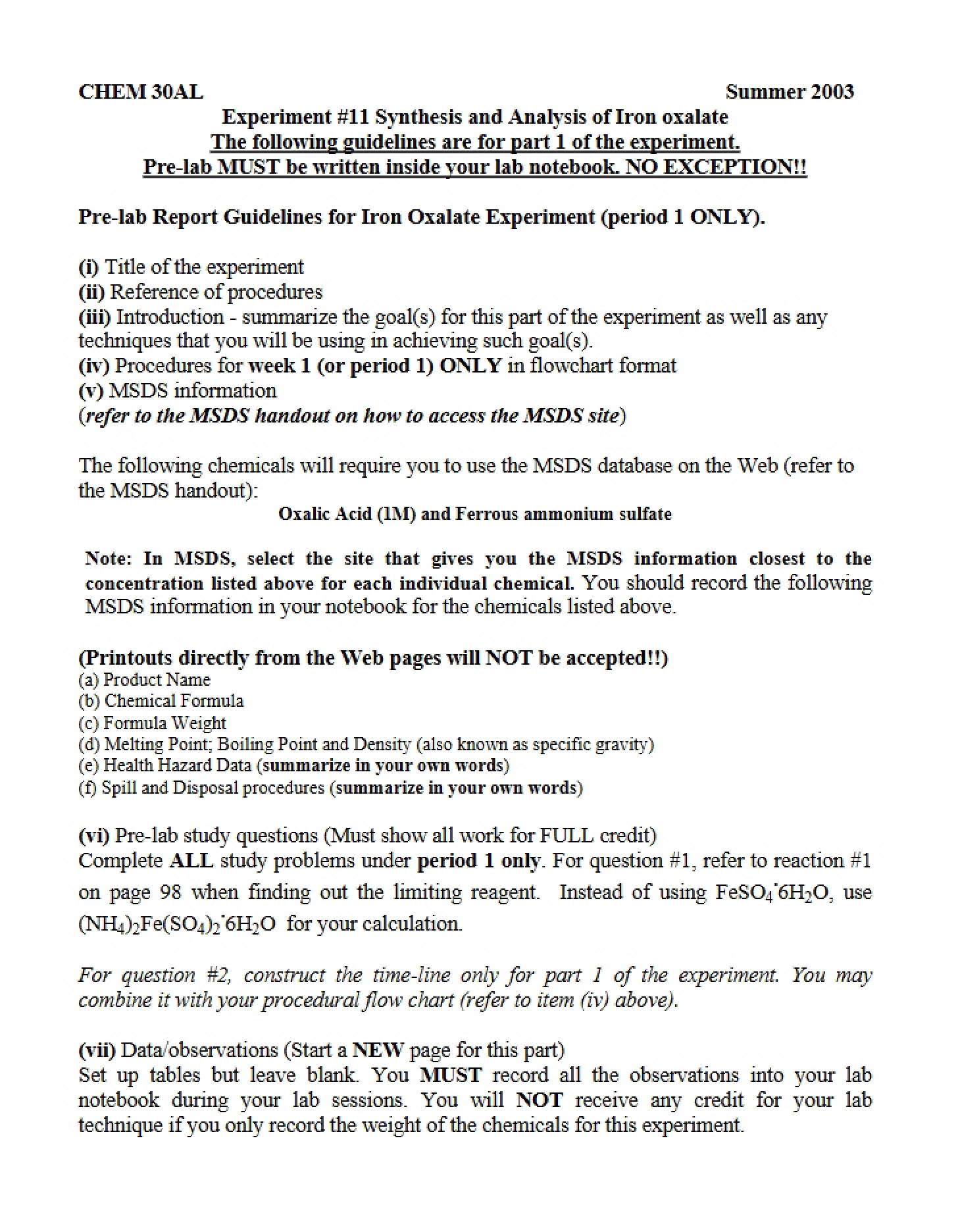
This document outlines the pre- and post-laboratory requirements for an experiment focused on aspirin, a widely used pharmaceutical compound. It’s designed as a comprehensive guide for students enrolled in an Organic Chemistry I laboratory course at the University of California, Los Angeles (CHEM 30A). The material details expectations for thorough preparation, safe execution, and detailed analysis of experimental results related to aspirin.
Why This Document Matters
This resource is essential for students undertaking a synthesis and analysis of aspirin. It’s particularly valuable *before* beginning the lab work, ensuring you understand the necessary preparatory steps and safety considerations. Following this guide will also help you structure your post-lab report effectively, maximizing your understanding of the experiment and demonstrating your analytical skills to your instructor. Access to this document will help you approach the lab with confidence and produce a high-quality, well-documented report.
Topics Covered
* Laboratory safety protocols related to specific chemicals
* Pre-laboratory preparation techniques, including information gathering
* Experimental procedure planning and flowchart creation
* Data collection and organization for experimental results
* Data analysis and calculations related to yield and purity
* Error analysis in experimental data
* Interpretation of analytical techniques (specifically Thin Layer Chromatography and Melting Point)
* Scientific writing and report structure
What This Document Provides
* Detailed guidelines for pre-lab report composition, including required sections.
* A list of specific chemicals requiring Material Safety Data Sheet (MSDS) review, and the information you need to extract.
* Instructions for setting up data tables to record observations during the experiment.
* A framework for the post-lab report, outlining the necessary components like abstract, data analysis, and conclusions.
* Guidance on calculating key metrics such as recrystallized yield and percentage purity.
* Instructions on performing error analysis to evaluate the reliability of experimental results.
* Expectations for the presentation and interpretation of analytical data.