What This Document Is
This is the first assignment for Computer Systems Architecture (COMSCI M151B) at UCLA. It’s a practical exercise designed to reinforce core concepts related to processor performance, instruction execution, and compiler impacts on system efficiency. This assignment challenges students to apply theoretical knowledge to analyze and compare different system configurations and code characteristics. It requires calculations and reasoning about performance metrics, preparing you for more advanced topics in the course.
Why This Document Matters
This assignment is crucial for students enrolled in COMSCI M151B who are looking to solidify their understanding of fundamental architectural principles. It’s particularly helpful when you’re beginning to translate abstract concepts into quantifiable measures of performance. Successfully completing this assignment will build a strong foundation for future coursework and projects involving system design and optimization. It’s best utilized after reviewing the introductory lectures on instruction set architecture and performance evaluation.
Topics Covered
* Processor Performance Metrics (Instructions Per Second, Clock Cycles)
* Clock Rate and Cycle Time Relationships
* Instruction Count and CPI (Cycles Per Instruction)
* Performance Impact of Compiler Optimization
* Execution Time Calculation and Analysis
* Relative Performance Comparisons
* Impact of Instruction Mix on Performance
* Analyzing and interpreting performance data
What This Document Provides
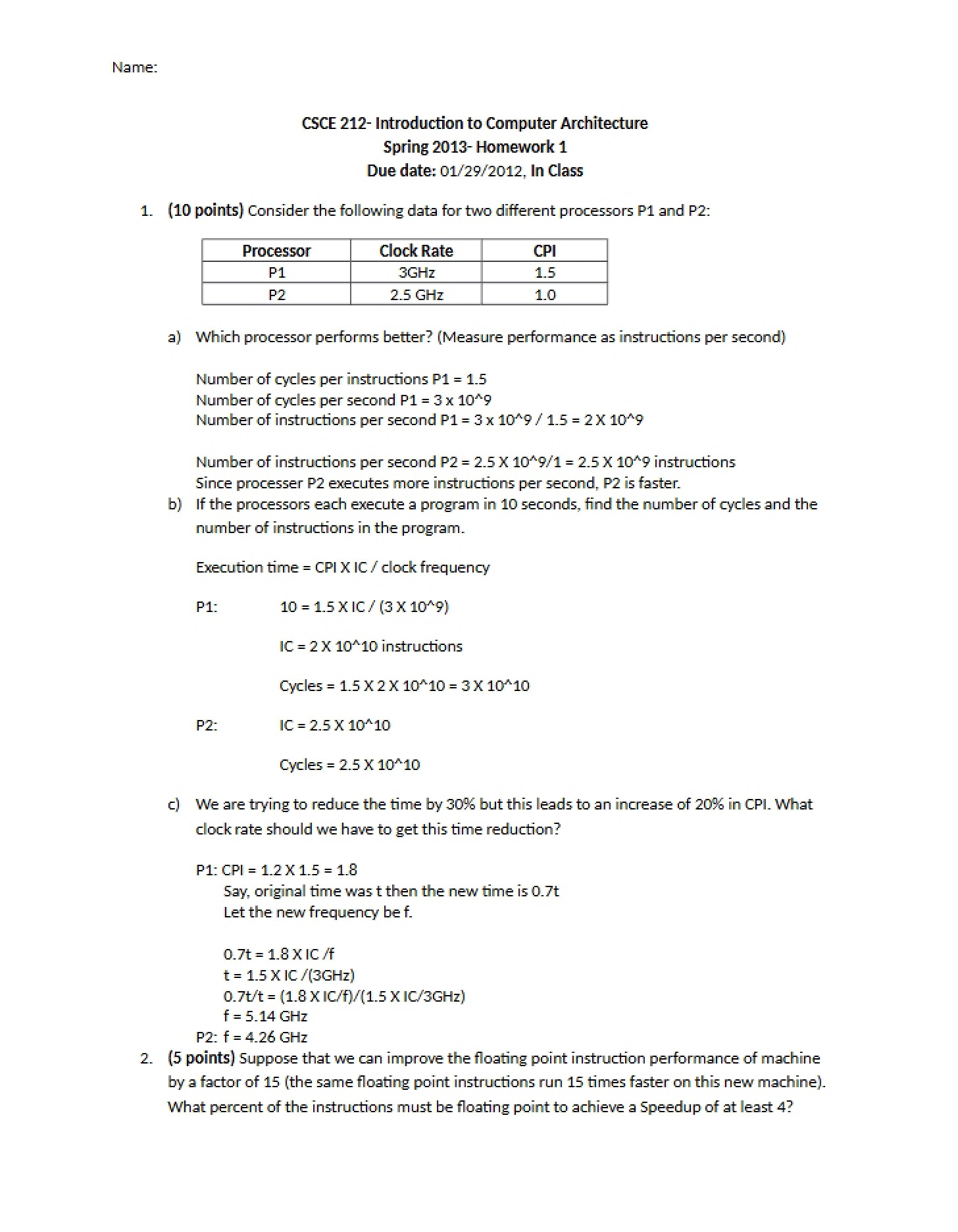
* A series of problems requiring performance calculations for different processor configurations.
* Scenarios involving varying instruction counts, clock speeds, and CPI values.
* Opportunities to analyze the effects of compiler optimizations on execution time.
* Exercises focused on comparing the performance of different code implementations.
* A framework for understanding how changes in system parameters affect overall performance.
* A practical application of theoretical concepts discussed in the course lectures.