What This Document Is
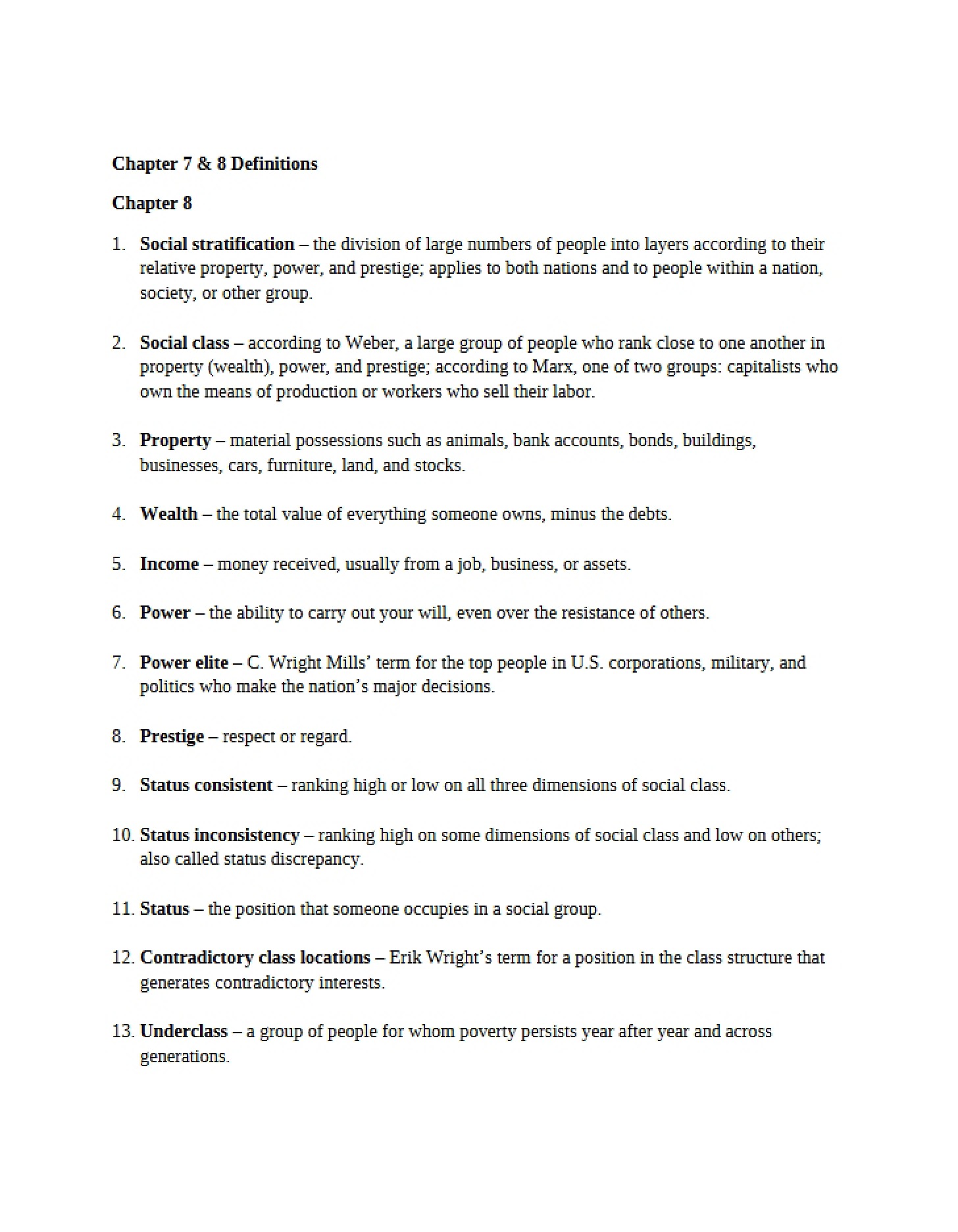
This resource is designed to help you assess your understanding of key concepts from Introductory Sociology (SOCY 101) at the University of South Carolina. Specifically, it focuses on material covered in Chapters 7 & 8, relating to social stratification, global inequality, and class systems. It’s structured as a series of questions covering core sociological theories and terminology. Think of it as a practice tool to reinforce your learning – a way to test your recall and identify areas where you might need further review of course readings and lectures.
Why This Document Matters
This is an invaluable resource for students preparing for quizzes and exams in SOCY 101. It’s particularly useful for those who learn best by actively testing themselves. If you’re struggling to differentiate between competing theoretical perspectives on social class, or if you need to solidify your understanding of how global economic systems function, this will be a helpful study aid. Use it throughout your study process, not just right before an assessment, to maximize its benefit. It’s designed to help you pinpoint knowledge gaps *before* they impact your grade.
Common Limitations or Challenges
This resource is *not* a substitute for attending lectures, completing assigned readings, or engaging in class discussions. It does not provide detailed explanations of the concepts, nor does it offer in-depth analysis of the sociological theories presented in the course. It’s a tool for self-assessment, and assumes you’ve already engaged with the core course material. It also doesn’t include essay prompts or guidance on constructing sociological arguments.
What This Document Provides
* A series of questions covering core concepts from Chapters 7 & 8.
* Focus on key terms related to social class, power, prestige, and global economic structures.
* Coverage of theoretical frameworks like those proposed by Marx and Weber.
* Questions relating to the measurement and understanding of poverty.
* Exploration of the relationships between nations within a globalized world.