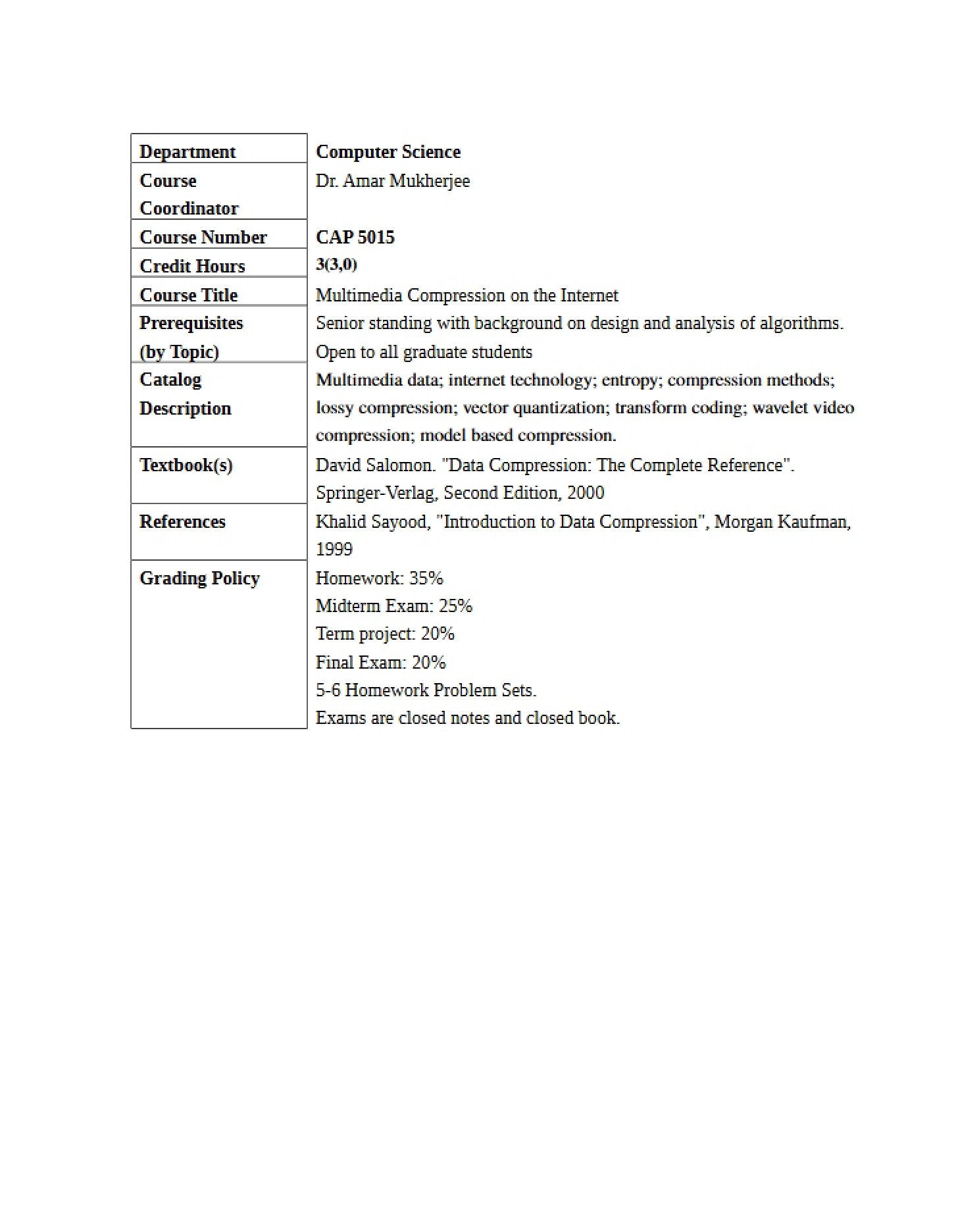
What This Document Is
This document consists of lecture notes from CAP 5015: Multimedia Compression on the Internet, offered at the University of Central Florida. It focuses specifically on the principles and techniques behind perceptual audio coding – a crucial component of modern multimedia compression systems. These notes delve into the science of how humans perceive sound and how that understanding is leveraged to efficiently compress audio data without significant loss of perceived quality. It’s part of a larger series covering image and video compression.
Why This Document Matters
This resource is ideal for students enrolled in multimedia compression courses, particularly those specializing in audio processing or digital signal processing. It’s also valuable for professionals working in fields like audio engineering, streaming media, telecommunications, or game development where efficient audio compression is essential. Understanding the concepts presented will provide a strong foundation for designing and implementing audio codecs, optimizing audio delivery systems, and appreciating the trade-offs involved in balancing compression ratios and audio fidelity.
Topics Covered
* The physiological basis of hearing and the structure of the ear
* Human sound perception, including loudness, pitch, and timbre
* Psychoacoustic principles, with a focus on auditory masking effects
* Frequency and temporal masking phenomena
* An overview of MPEG Audio Compression standards
* The motivation behind perceptual audio coding in various applications
What This Document Provides
* A detailed exploration of the relationship between physical sound properties and human perception.
* An examination of how the ear functions as a complex signal processing system.
* A conceptual framework for understanding how psychoacoustic models are used in audio compression.
* Contextualization of perceptual audio coding within the broader landscape of multimedia compression technologies.
* A foundation for further study of advanced audio coding techniques and standards.