What This Document Is
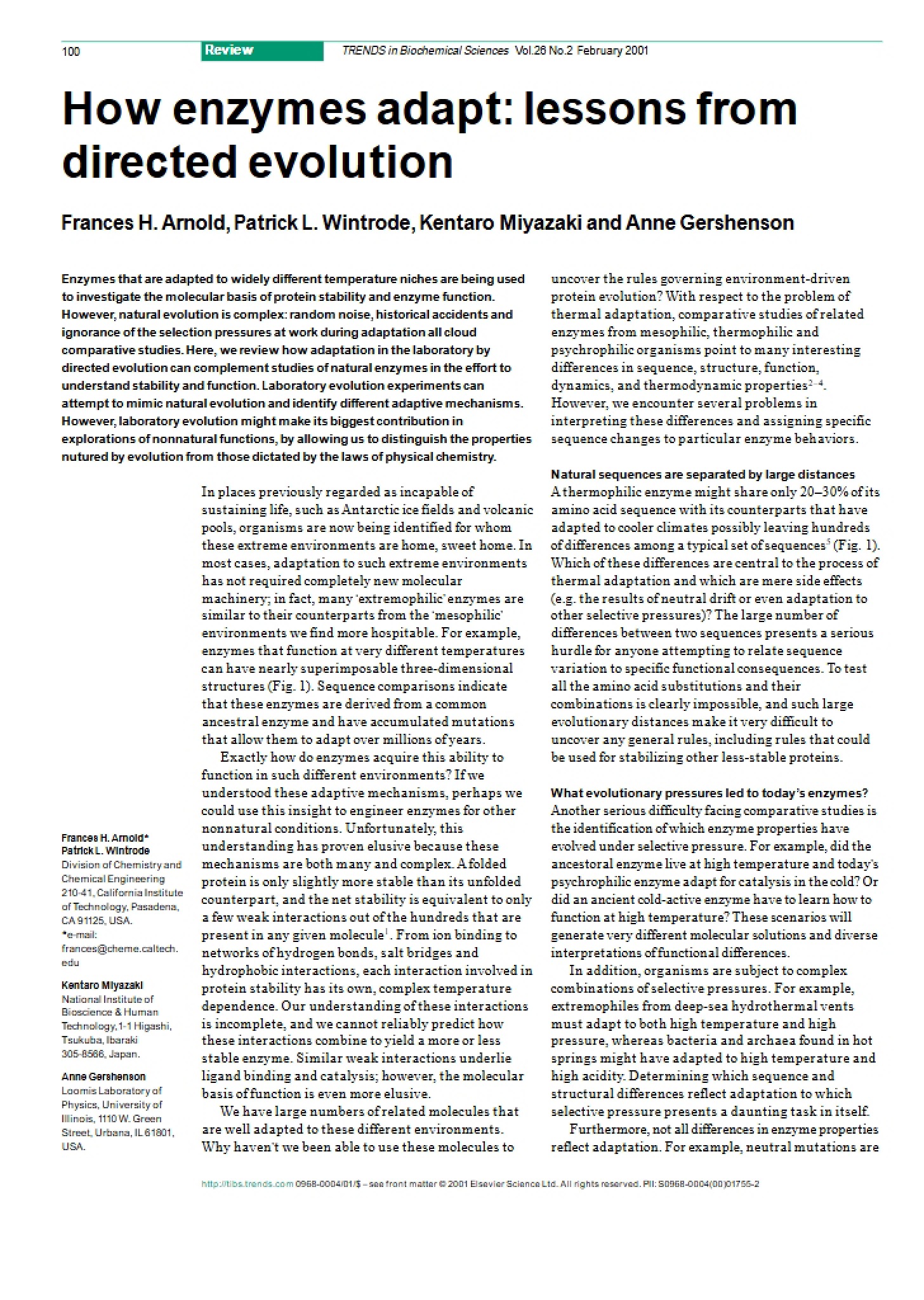
This is a detailed review article exploring the fascinating world of enzyme adaptation to varying temperatures. Specifically, it delves into the physiological and biochemical strategies organisms employ to maintain consistent metabolic function across a range of thermal environments. The focus is on comparative physiology, examining how enzymes – the biological catalysts essential for life – adjust at a molecular level to different temperatures. It builds upon decades of research in thermal physiology, tracing the evolution of understanding in this field.
Why This Document Matters
This resource is ideal for upper-level undergraduate and graduate students in zoology, physiology, biochemistry, and related fields. It’s particularly valuable for those taking courses in comparative physiology, evolutionary biology, or biochemical adaptation. Researchers investigating enzyme kinetics, protein structure-function relationships, or the impact of environmental factors on biological processes will also find it insightful. It’s best utilized when seeking a deeper understanding of the underlying mechanisms driving temperature compensation in living organisms, and the historical context of research in this area.
Common Limitations or Challenges
This document presents a comprehensive overview of research findings and conceptual frameworks. It does *not* offer practical laboratory protocols, step-by-step experimental procedures, or detailed mathematical derivations. It also doesn’t provide a complete catalog of *all* enzyme adaptations, but rather focuses on illustrating core principles through specific examples and case studies. It assumes a foundational understanding of biochemistry and physiological principles.
What This Document Provides
* An historical overview of research into temperature compensation in ectothermic animals.
* Discussion of the conceptual framework for understanding biochemical adaptation.
* Exploration of the roles of amino acid sequence changes in enzyme adaptation.
* Analysis of the influence of environmental factors (like pH and organic solutes) on enzyme function.
* Examination of the thermodynamic principles governing enzyme adaptation to temperature.
* Insight into the significance of specific enzymes, such as lactate dehydrogenase (LDH), as model systems for studying adaptation.