What This Document Is
This resource is a foundational exploration of computing basics, designed for students enrolled in Computer Organization (EEL 3801) at the University of Central Florida. It delves into the core principles underpinning how computers represent and manipulate information, serving as a crucial starting point for understanding more complex computer systems. This material establishes the groundwork for subsequent topics in the course, focusing on the fundamental building blocks of digital logic and data handling.
Why This Document Matters
This is an essential resource for students new to the field of computer engineering or computer science, or anyone seeking a deeper understanding of how computers function at a low level. It’s particularly valuable at the beginning of a Computer Organization course, providing the necessary context for grasping concepts like digital circuits, assembly language, and computer architecture. Students preparing for labs or projects involving binary manipulation will also find this a helpful reference. Accessing the full content will provide a solid base for success in more advanced coursework.
Topics Covered
* Data Representation in Digital Systems
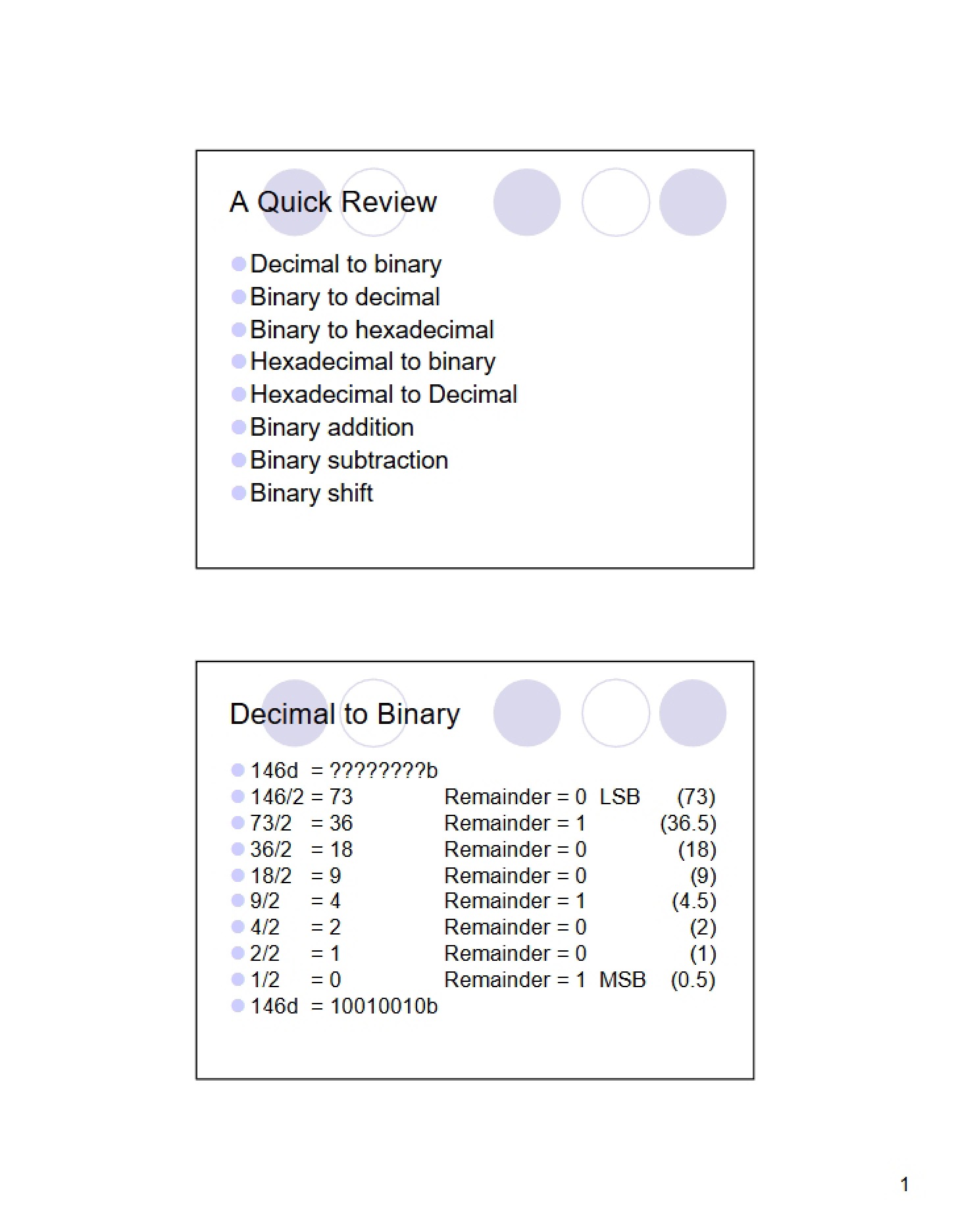
* Binary Number Systems and Conversions
* Understanding Number Bases (Decimal, Binary, Hexadecimal, and Octal)
* The Relationship Between Bits, Bytes, Words, and Double Words
* Methods for Converting Between Different Number Systems
* The Significance of Hexadecimal Representation in Computing
What This Document Provides
* A clear explanation of the binary nature of computers and how all information is ultimately represented using 0s and 1s.
* Detailed exploration of different units of data measurement and their relationships to each other.
* Multiple approaches to converting numbers between different bases, enabling practical application of theoretical concepts.
* A foundational understanding of why hexadecimal numbers are preferred for representing computer memory and instructions.
* A structured approach to learning the core concepts of data representation.