What This Document Is
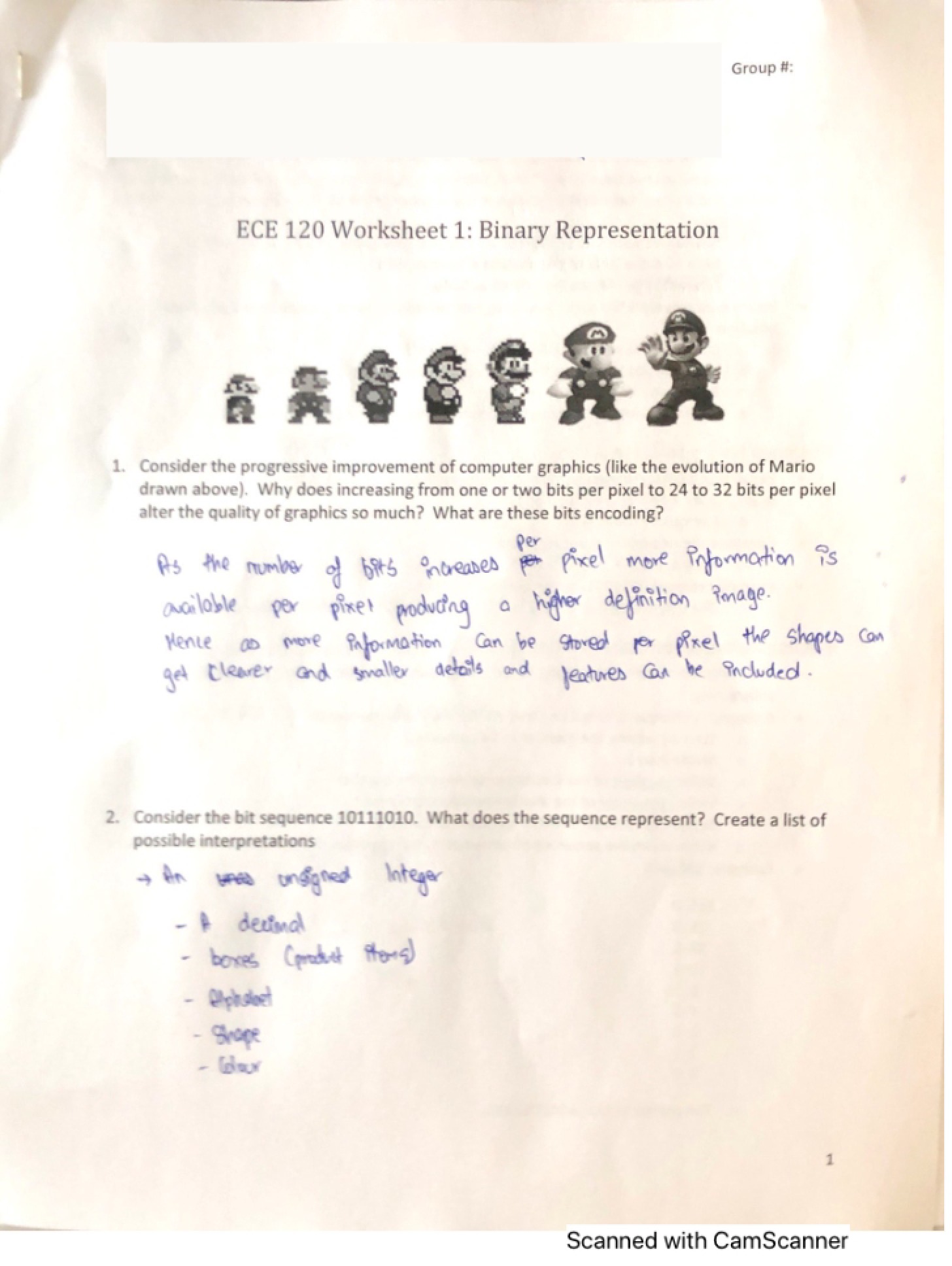
This is a homework assignment for Introduction to Computing (ECE 120) at the University of Illinois at Urbana-Champaign, specifically focusing on the foundational concepts of binary arithmetic and data representation. It’s designed to reinforce your understanding of how computers internally handle numbers and data, moving beyond the decimal system you’re likely familiar with. The assignment emphasizes practical application through problem-solving.
Why This Document Matters
This assignment is crucial for students learning the core principles of computer science and electrical engineering. Successfully completing it will solidify your ability to work with binary numbers, a fundamental skill for understanding computer architecture, low-level programming, and digital systems. It’s particularly helpful if you’re preparing for more advanced courses that build upon these concepts, or if you plan to work with hardware or systems-level software. This assignment is best utilized *after* reviewing lecture materials and relevant textbook sections on binary numbers and their representations.
Topics Covered
* Binary Addition and Subtraction
* Unsigned Binary Representation
* Two's Complement Representation
* Data Type Interpretation (Unsigned, Two's Complement, Floating Point, ASCII)
* Logical Operations (AND, OR, NOT)
* Number System Conversions (Decimal to Binary, Hexadecimal to Binary)
* Floating-Point Representation (IEEE 754)
* Data Representation and Ordering
What This Document Provides
* A series of computational problems requiring binary arithmetic operations.
* Exercises designed to test your understanding of different number representation schemes.
* Problems that challenge you to interpret data based on its assigned data type.
* Tasks involving logical bitwise operations.
* Conversion exercises between different number systems and data types.
* Guidance on proper homework submission procedures and academic integrity policies.
* A set of problems designed to reinforce the relationship between different data representations and their practical implications.