What This Document Is
This resource is a focused exploration of applying linear regression techniques when one or more of the variables involved are binary – meaning they have only two possible values. It delves into how standard regression models can be adapted and interpreted in scenarios common to psychological research, where categorical variables like experimental group membership are frequently analyzed alongside continuous outcome measures. The material originates from PSCH 543: Research Design and Analysis at the University of Illinois at Chicago.
Why This Document Matters
Students and researchers in the behavioral sciences will find this particularly useful. If you’re grappling with understanding how to statistically compare groups on a continuous variable, or need to interpret regression results where a predictor variable represents a category, this resource offers valuable insights. It’s ideal for those seeking a deeper understanding of the underlying principles connecting binary variables and linear modeling, beyond simply running the analysis in statistical software. This is a great resource to review when preparing for data analysis or interpreting research findings.
Topics Covered
* The interpretation of regression weights with binary predictors.
* Understanding how regression models represent group differences.
* The relationship between R-squared values and the strength of an effect when using binary variables.
* Point biserial correlations as a specific case of correlation involving binary variables.
* Visualizing causal relationships with diagrams and understanding how different model structures imply different covariance patterns.
* The use of path diagrams to represent complex relationships between variables.
What This Document Provides
* A clear explanation of how the parameters in a linear regression model relate to group means when a predictor is binary.
* A discussion of how to quantify the proportion of variance explained by a binary predictor.
* An overview of the connection between correlation coefficients and R-squared in the context of binary variables.
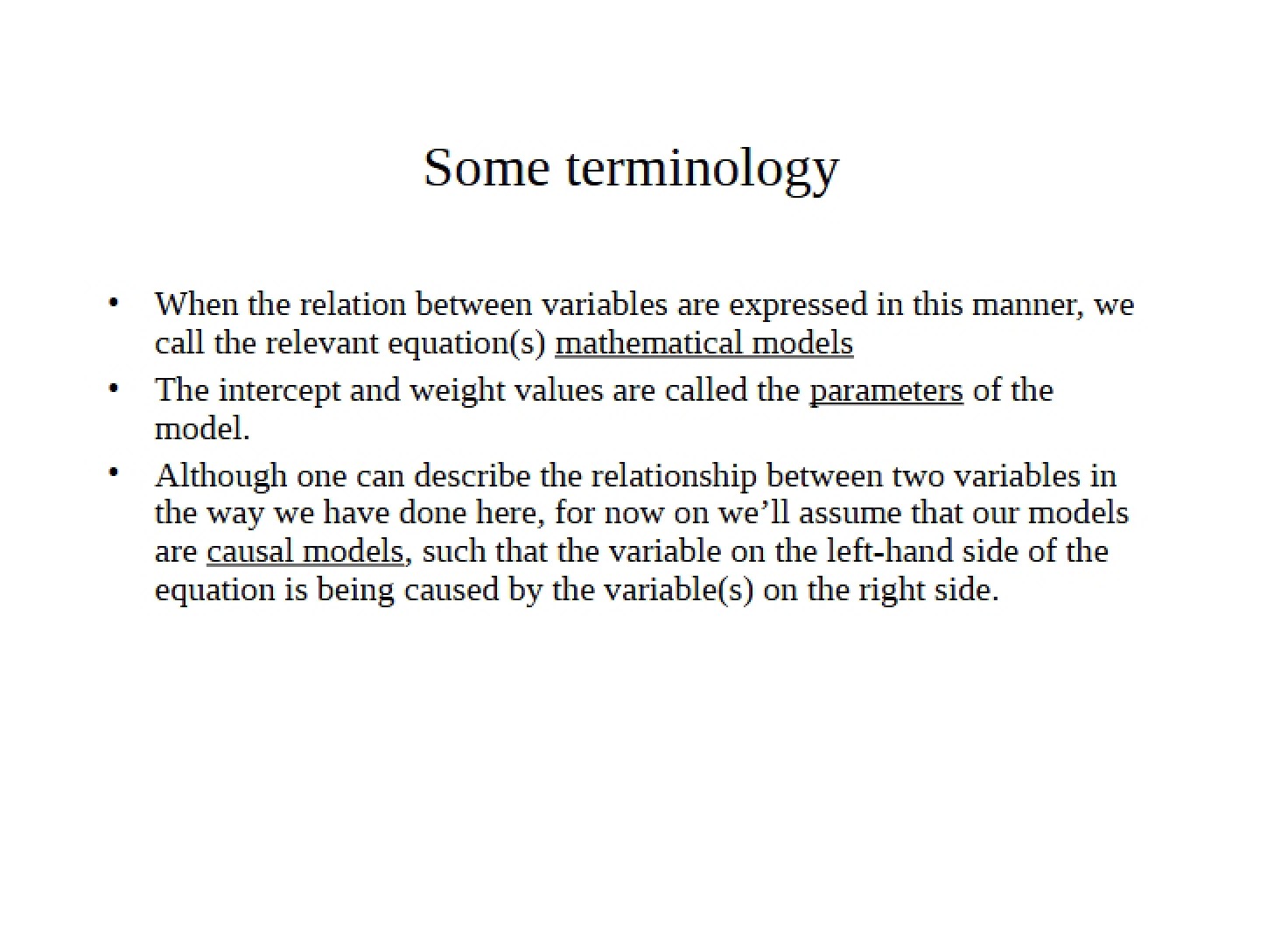
* An introduction to the symbolic representation of causal models and how to interpret them.
* A foundation for understanding more complex modeling techniques like path analysis and structural equation modeling.