What This Document Is
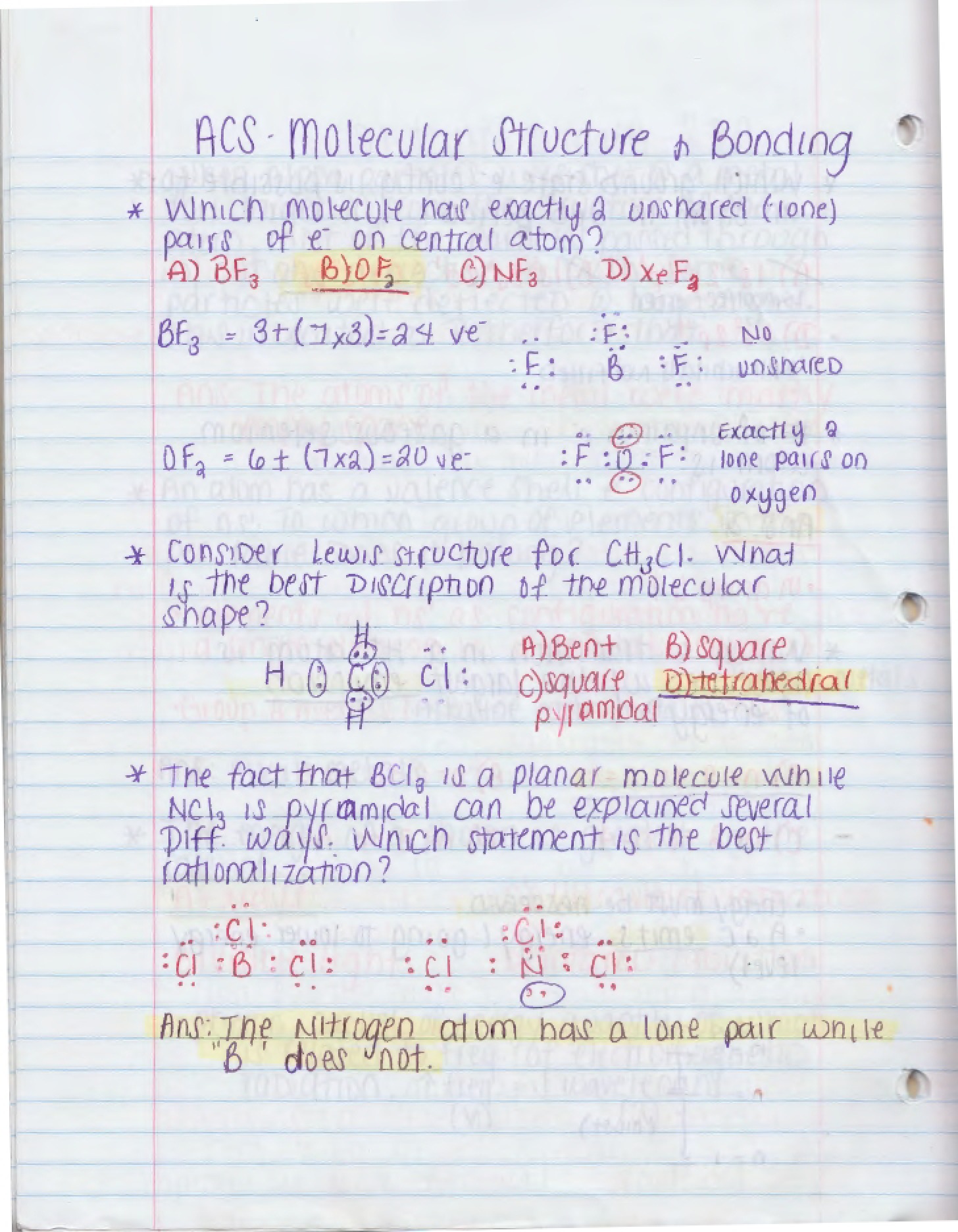
This study guide delves into the fundamental principles governing the bonding and structural characteristics of molecules, specifically within the context of a second-semester general chemistry curriculum. It’s designed to reinforce concepts presented in lectures and provide a deeper understanding of how atoms interact to form stable compounds. This resource focuses on the theoretical frameworks used to predict and explain molecular behavior, moving beyond simple Lewis structures to explore more advanced models.
Why This Document Matters
This guide is invaluable for students enrolled in Chemistry II Lab (CHM 2046L) at the University of Central Florida, or any similar course emphasizing molecular structure and bonding. It’s particularly helpful when preparing for quizzes and exams, or when needing a consolidated resource to review complex topics. Students who find themselves needing to strengthen their understanding of chemical bonding theories, molecular geometry, and the relationship between structure and properties will find this a useful companion to their coursework.
Topics Covered
* Lewis Structures and Resonance
* Molecular Geometry and VSEPR Theory
* Bond Polarity and Dipole Moments
* Hybridization of Atomic Orbitals
* Molecular Orbital Theory (introduction to concepts)
* Ionic vs. Covalent vs. Metallic Bonding
* Experimental Determination of Bonding Characteristics
* Factors Influencing Bond Strength and Length
* Predicting Molecular Properties based on Structure
What This Document Provides
* A comprehensive overview of key bonding theories.
* Exploration of how molecular shape impacts properties.
* Discussion of the limitations of certain bonding models.
* Considerations of how to predict bonding behavior.
* A framework for understanding the relationship between electronic structure and macroscopic properties.
* Points for consideration regarding experimental evidence of bonding types.