What This Document Is
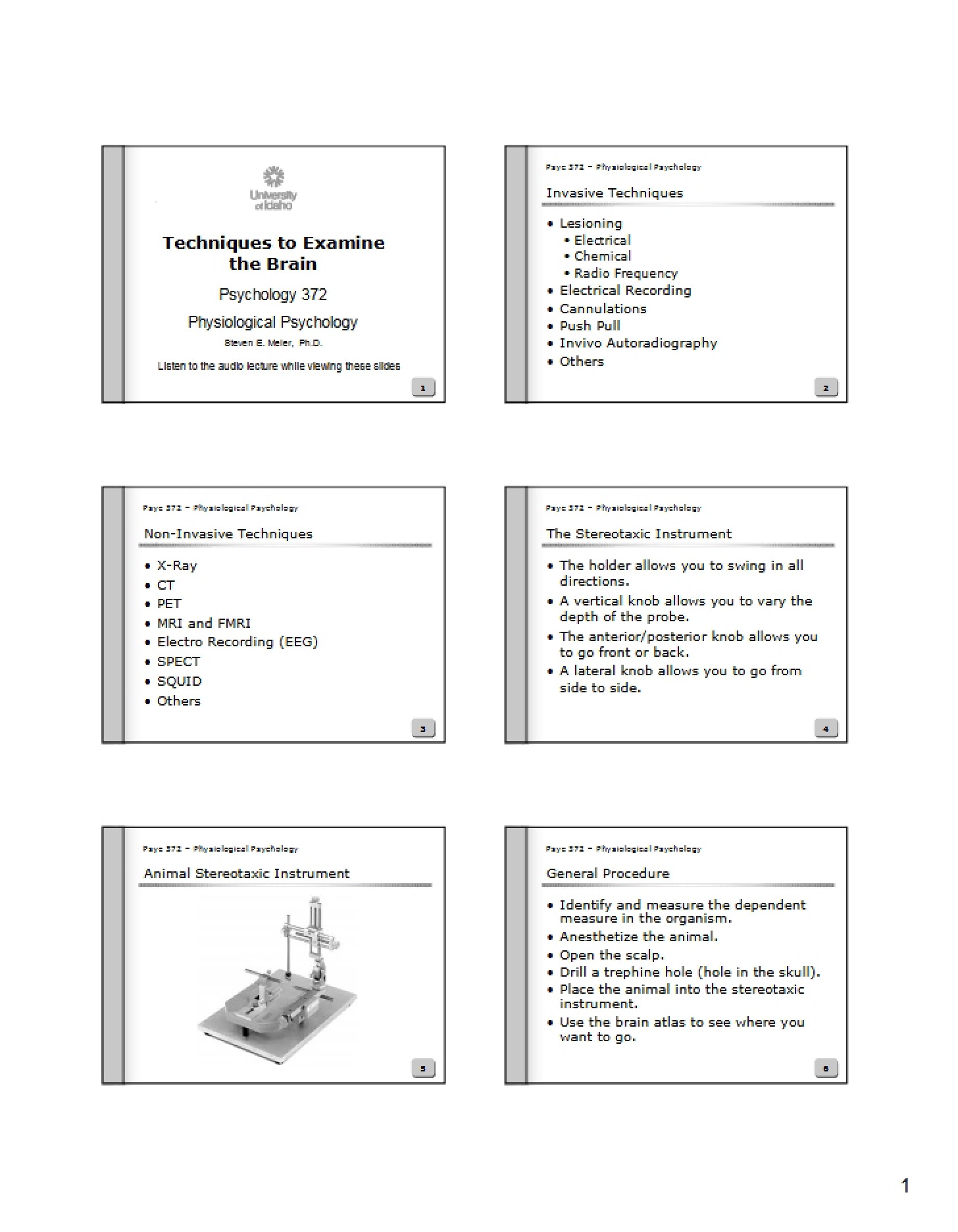
This resource is a comprehensive overview of the methods used to investigate the biological basis of behavior, specifically focusing on techniques employed in physiological psychology. It details a range of approaches used to analyze brain structure and function, categorized by their invasiveness. The material is designed for students seeking a deeper understanding of how researchers explore the complexities of the nervous system and its relationship to psychological processes.
Why This Document Matters
This material is particularly valuable for students enrolled in physiological psychology, behavioral neuroscience, or related courses. It’s ideal for those preparing to design research projects, interpret findings from neuroscience studies, or simply gain a solid foundation in the tools used to study the brain. Understanding these techniques is crucial for anyone aiming to critically evaluate research in the field and appreciate the challenges and advancements in our understanding of brain-behavior relationships.
Topics Covered
* Invasive techniques for brain analysis, including methods that alter brain tissue.
* Non-invasive techniques for visualizing and assessing brain activity.
* Detailed examination of stereotaxic instrumentation and its application.
* Procedures for targeted interventions within the brain.
* Specific lesioning techniques and their associated considerations.
* Chemical methods for influencing neuronal activity.
What This Document Provides
* A clear distinction between invasive and non-invasive brain analysis approaches.
* An overview of the general procedures involved in experimental techniques.
* Discussion of the advantages and disadvantages of various methodologies.
* Insights into the practical considerations when selecting a technique for a specific research question.
* A foundational understanding of the principles behind each method, preparing you for more advanced study.