What This Document Is
This is a comprehensive exploration of cellular communication, a foundational topic within Introductory Biology I. It delves into the intricate ways cells interact with their environment and each other, forming the basis for understanding complex biological processes. This material is designed to build a strong understanding of how signals are received, processed, and ultimately lead to cellular responses. It’s a detailed examination of the mechanisms governing life at its most fundamental level.
Why This Document Matters
This resource is ideal for students enrolled in a university-level introductory biology course, particularly those seeking a deeper understanding of cell signaling pathways. It’s most beneficial when studying for exams, completing assignments, or simply reinforcing concepts presented in lectures. Students who master this material will be well-prepared for more advanced coursework in biology, biochemistry, and related fields. A solid grasp of cell communication is crucial for understanding everything from development and immunity to disease processes.
Topics Covered
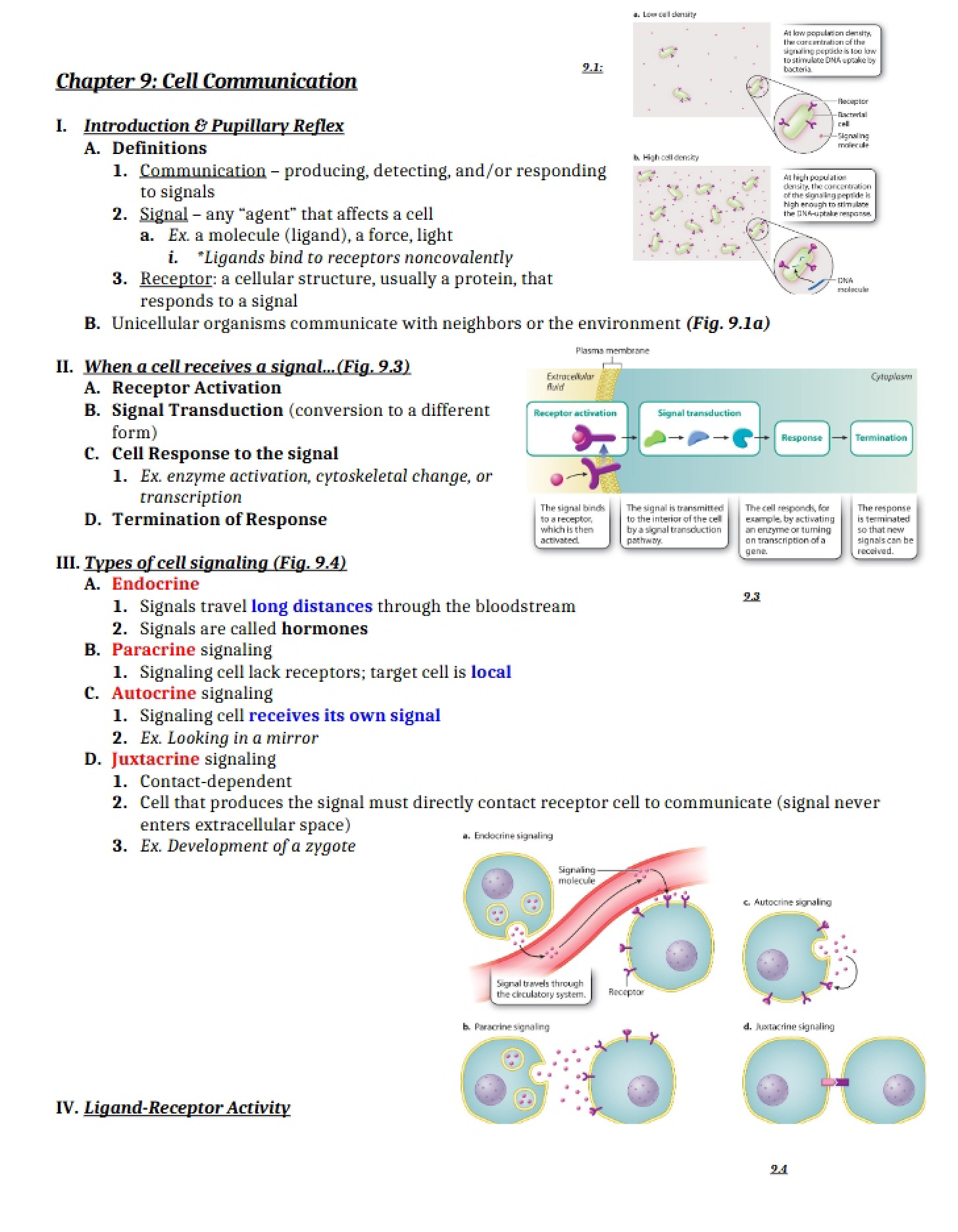
* The fundamental principles of cell signaling and its importance in both unicellular and multicellular organisms.
* Different types of signaling mechanisms, including endocrine, paracrine, autocrine, and juxtacrine signaling.
* The roles of ligands and receptors in initiating cellular responses.
* Detailed examination of receptor types and their activation processes.
* Signal transduction pathways and the concept of second messengers.
* Mechanisms for terminating cellular responses to signals.
What This Document Provides
* Clear definitions of key terminology related to cell communication.
* An overview of the stages involved in signal reception, transduction, and response.
* Illustrative examples of different signaling pathways and their biological consequences.
* Detailed descriptions of various receptor classes, including G-protein coupled receptors, receptor kinases, and ligand-gated ion channels.
* An exploration of how signals are amplified within the cell to produce robust responses.