What This Document Is
This document is a foundational chapter from a university-level introductory financial accounting course (BMGT 220 at UCLA). It serves as a comprehensive overview of the core principles and concepts that underpin the field of accounting, and the role it plays within the broader business landscape. It establishes the fundamental language and framework used to understand and analyze business activities.
Why This Document Matters
This material is essential for students beginning their study of accounting, finance, or business administration. It’s particularly valuable for those seeking to understand how businesses operate, how financial information is communicated, and the ethical considerations involved in financial reporting. Reviewing this chapter will provide a strong base for more advanced coursework and real-world application of accounting principles. It’s best utilized at the start of a financial accounting course, or as a refresher for those needing a solid grounding in the basics.
Topics Covered
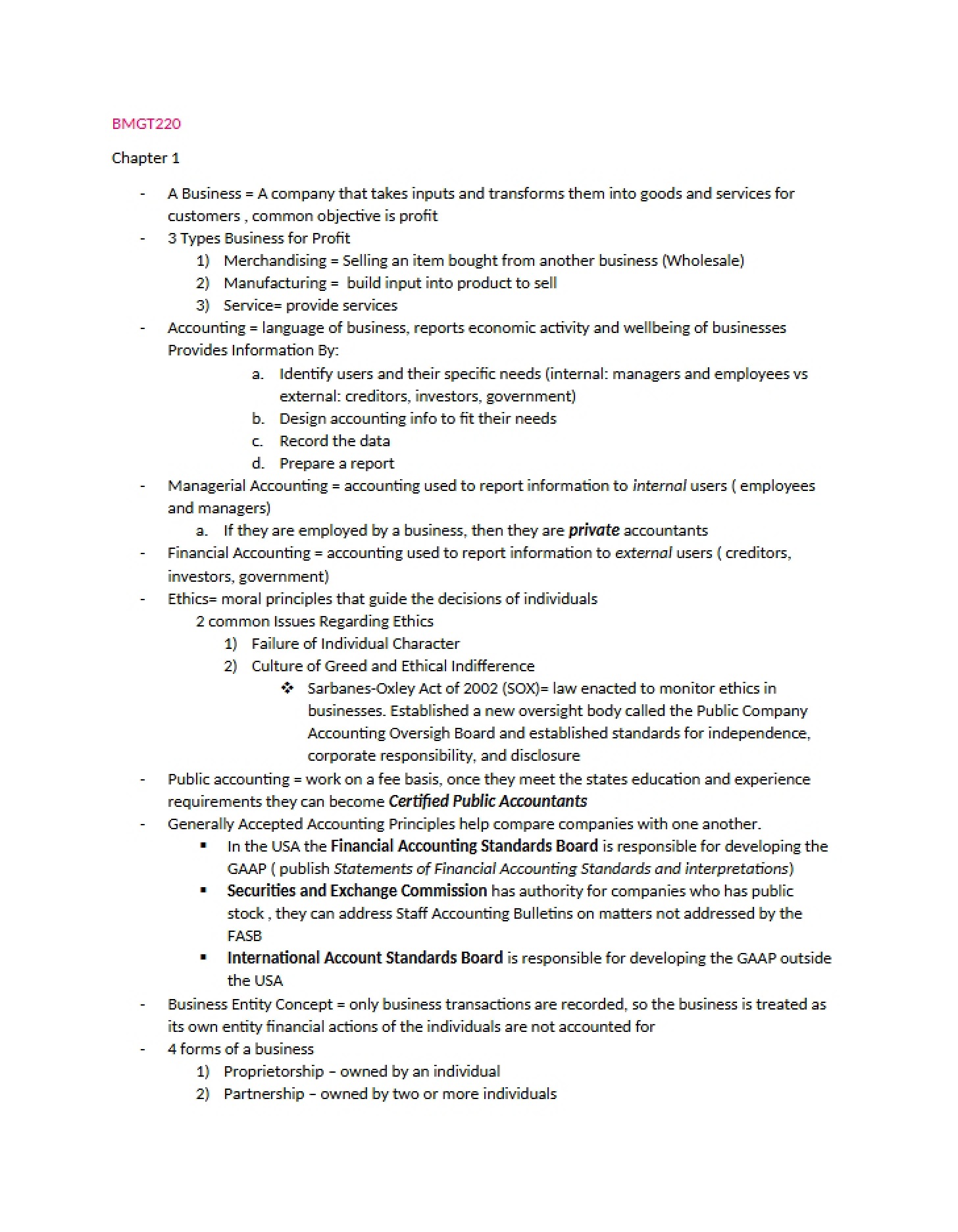
* The fundamental definition and types of business organizations
* The role of accounting in providing information to both internal and external stakeholders
* Distinctions between managerial and financial accounting
* Ethical considerations and regulatory frameworks in accounting
* Generally Accepted Accounting Principles (GAAP) and standard-setting bodies
* Core accounting concepts and principles (e.g., business entity concept, cost concept)
* The basic accounting equation and its components
* Different forms of business ownership and their implications
* Introduction to key financial statements
What This Document Provides
* A clear articulation of the purpose and scope of accounting.
* An overview of the users of accounting information and their specific needs.
* A foundational understanding of the ethical responsibilities of accountants.
* An introduction to the regulatory environment governing financial reporting.
* A framework for understanding the relationship between assets, liabilities, and equity.
* A starting point for understanding how business transactions impact financial statements.