What This Document Is
This study guide provides a detailed overview of foundational concepts in cellular biology, specifically as they relate to human anatomy and physiology. It focuses on the cell as the fundamental unit of life, exploring its structure and the critical functions performed by its various components. This material is designed to support learning within a university-level Human Anatomy and Physiology I course.
Why This Document Matters
Students enrolled in BIOL 243 at the University of South Carolina – and anyone seeking a strong basis in human biology – will find this resource invaluable. It’s particularly helpful for understanding the relationship between cellular structure and function, a core principle that underpins all physiological processes. Use this guide to supplement lectures, reinforce textbook readings, and prepare for more advanced topics. It’s best utilized *before* tackling complex organ system studies, as a solid cellular foundation is essential for success.
Common Limitations or Challenges
This guide presents a comprehensive overview, but it does not replace the need for active learning, such as attending lectures and completing assigned readings. It focuses on core principles and terminology; it does not include detailed experimental data, clinical case studies, or in-depth explorations of pathological conditions. Furthermore, while it provides a strong foundation, it won’t cover every nuance of cellular processes – deeper exploration requires dedicated study and practice.
What This Document Provides
* A detailed examination of the three primary components of a human cell.
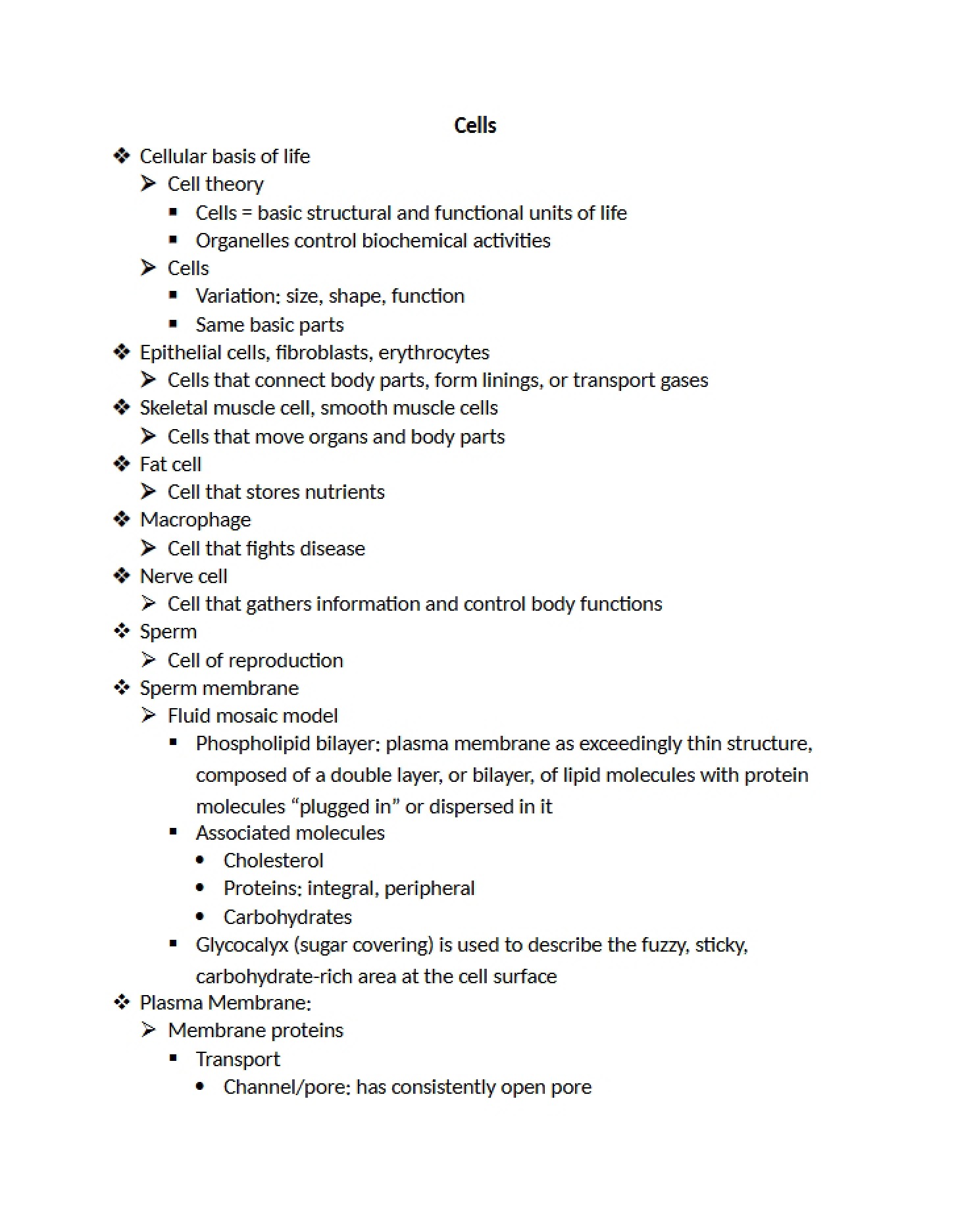
* An overview of the plasma membrane’s structure and composition, including key lipid and protein types.
* Discussion of the various types of junctions that facilitate communication and structural support between cells.
* An introduction to the principles of membrane transport, differentiating between passive and active mechanisms.
* Explanation of key concepts like diffusion, concentration gradients, and the role of membrane proteins in facilitating transport.
* Exploration of different types of facilitated diffusion and channel proteins.