What This Document Is
This material represents a continuation of foundational concepts within a Fashion Product Analysis course. It delves into the complex systems underpinning the fashion industry, moving beyond initial design considerations to explore the practical realities of bringing garments to market. The focus is on understanding the interconnectedness of various industry sectors and the strategic decisions businesses make throughout the product lifecycle. It builds upon previously covered material, offering a more detailed examination of industry structures.
Why This Document Matters
Students enrolled in fashion merchandising, product development, or retail management programs will find this particularly valuable. It’s ideal for those seeking a comprehensive understanding of how fashion goods are produced, distributed, and sold. Professionals already working in the industry can use this as a refresher on core business principles and a framework for analyzing current industry trends. This resource is most helpful when studying supply chain management, sourcing strategies, and retail operations within the fashion context.
Common Limitations or Challenges
This material provides a broad overview of industry processes and does not offer detailed, step-by-step instructions for implementing specific business strategies. It focuses on conceptual understanding rather than practical application. While it touches upon challenges like trade deficits and production issues, it doesn’t provide solutions or case studies for overcoming them. It also doesn’t include current market data or financial analyses.
What This Document Provides
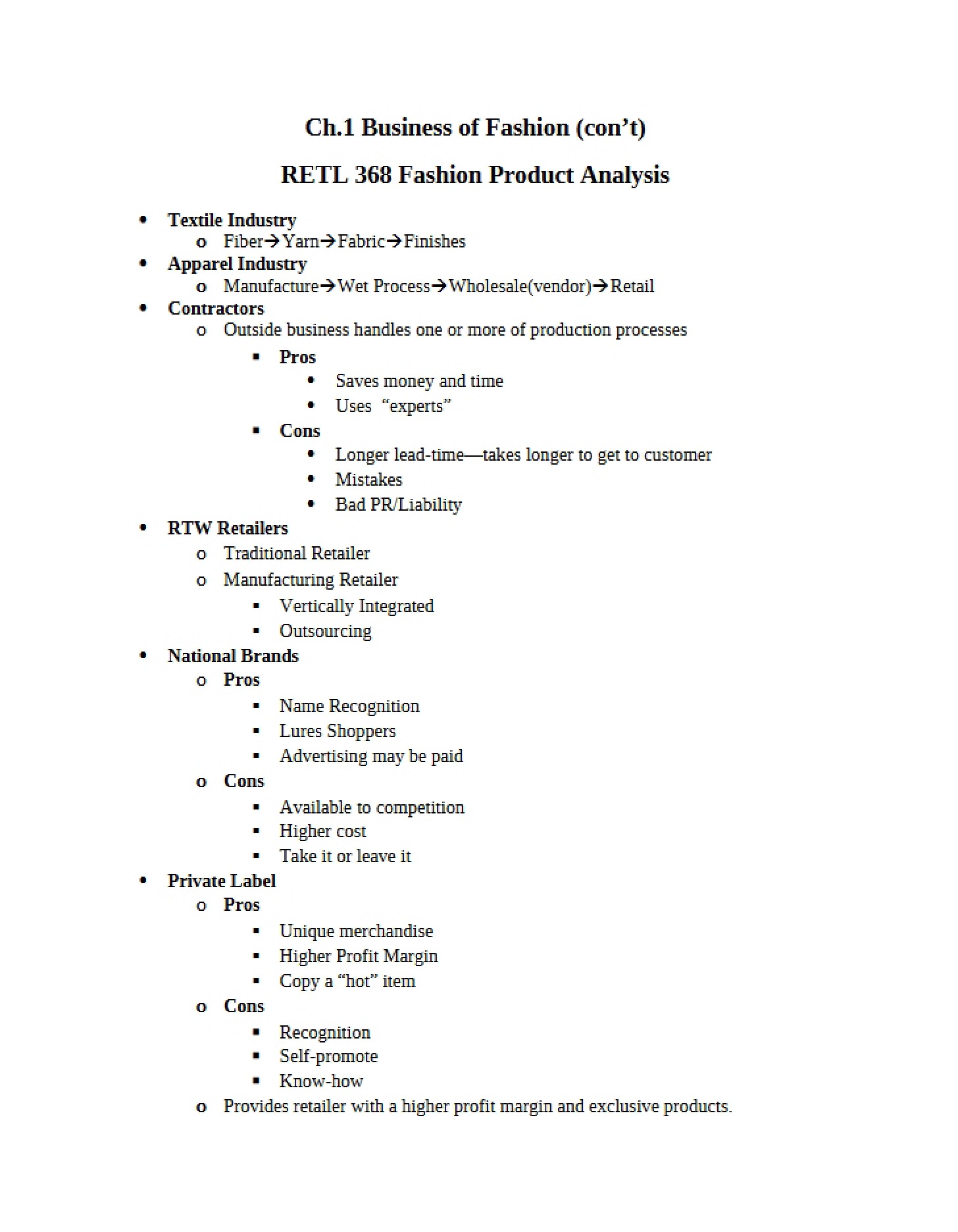
* An overview of the textile and apparel industry structures, from raw materials to retail.
* Exploration of different manufacturing approaches, including the use of contractors.
* Discussion of the pros and cons of various retail models, such as traditional retail and vertically integrated businesses.
* Examination of national brand versus private label strategies.
* Insights into the complexities of global trade, including exports, imports, and associated challenges.
* Introduction to technologies impacting the industry, such as Electronic Data Interchange (EDI) and Quick Response (QR) codes.
* Explanation of key identification systems used in retail, like Universal Price Codes (UPC).