What This Document Is
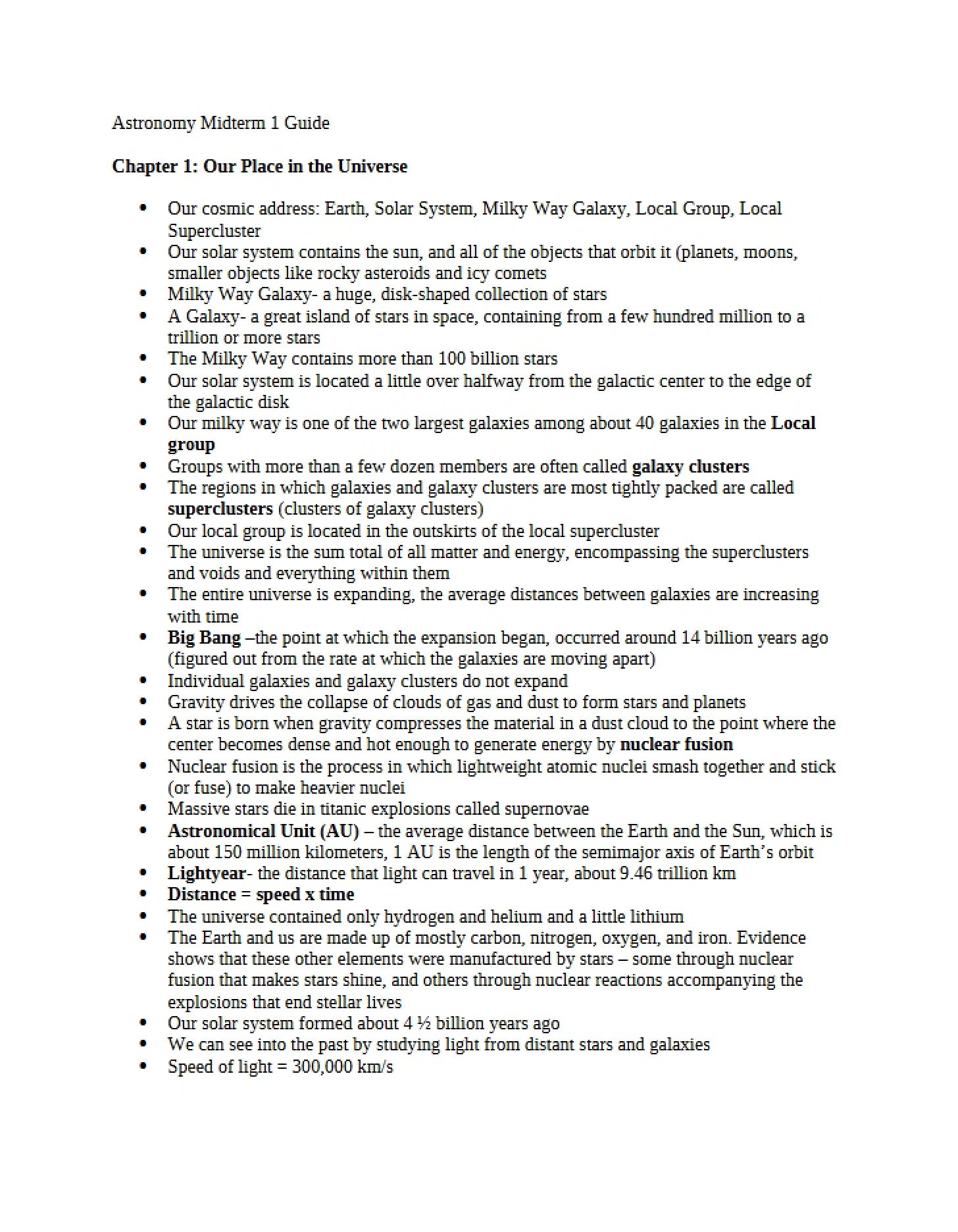
This is a comprehensive study guide designed to accompany the Introduction to Astronomy (PHYS 133) course at the University of Delaware. Specifically, it focuses on foundational concepts presented in Chapter 1: Our Place in the Universe. It’s structured to help students build a strong understanding of the cosmos, from our local surroundings to the vastness of the observable universe, and the origins of everything within it. This guide is intended to be a valuable resource for reviewing and reinforcing key ideas discussed in lectures and readings.
Why This Document Matters
This study guide is ideal for students who want to proactively prepare for assessments, solidify their grasp of introductory astronomical principles, or review material before a cumulative final exam. It’s particularly helpful for those who benefit from a structured overview of course content and a clear presentation of core definitions and relationships. Whether you’re struggling with specific concepts or aiming for a deeper understanding, this resource can support your learning journey. Accessing the full guide unlocks a detailed exploration of these essential topics.
Topics Covered
* Cosmic Address and Scale of the Universe
* Definitions of Celestial Objects (Stars, Planets, Moons, Asteroids, Comets, Nebulae)
* The Origin and Evolution of the Universe
* Units of Astronomical Distance (Light-Years, Astronomical Units)
* The Concept of Looking Back in Time
* The Composition of the Universe and the Origin of Elements
* Numerical Comparisons to Grasp Astronomical Scales
What This Document Provides
* Key definitions and terminology related to astronomy.
* An overview of the hierarchical structure of the universe, from Earth to the largest observable structures.
* A framework for understanding the age and evolution of the universe and our solar system.
* Explanations of how astronomers measure vast distances in space.
* Context for understanding the relationship between time, distance, and observation in astronomy.
* A foundation for further study in more advanced astronomical topics.