What This Document Is
This document is Chapter 14 from the “Understanding Business” textbook used in Drexel University’s Foundations of Business I (BUSN 101) course. It provides a foundational overview of how businesses develop and price their goods and services, focusing on the elements that contribute to a product’s overall value proposition. It explores the considerations companies make when bringing new offerings to market and how they differentiate themselves in a competitive landscape.
Why This Document Matters
This chapter is crucial for anyone studying introductory business concepts, particularly those interested in marketing, product management, or entrepreneurship. It’s used to establish a core understanding of the factors influencing consumer purchasing decisions and the strategies businesses employ to create successful products. Understanding these concepts is essential for analyzing real-world business scenarios and developing effective business plans. It’s particularly relevant when considering how to position a new product or service within a market.
Common Limitations or Challenges
This chapter provides a broad overview and does *not* delve into the detailed execution of product development or pricing strategies. It doesn’t offer specific formulas or case studies for implementation. It also doesn’t cover advanced topics like dynamic pricing or global product adaptation in detail. Users will still need further resources and practical experience to apply these concepts effectively.
What This Document Provides
The full chapter includes coverage of:
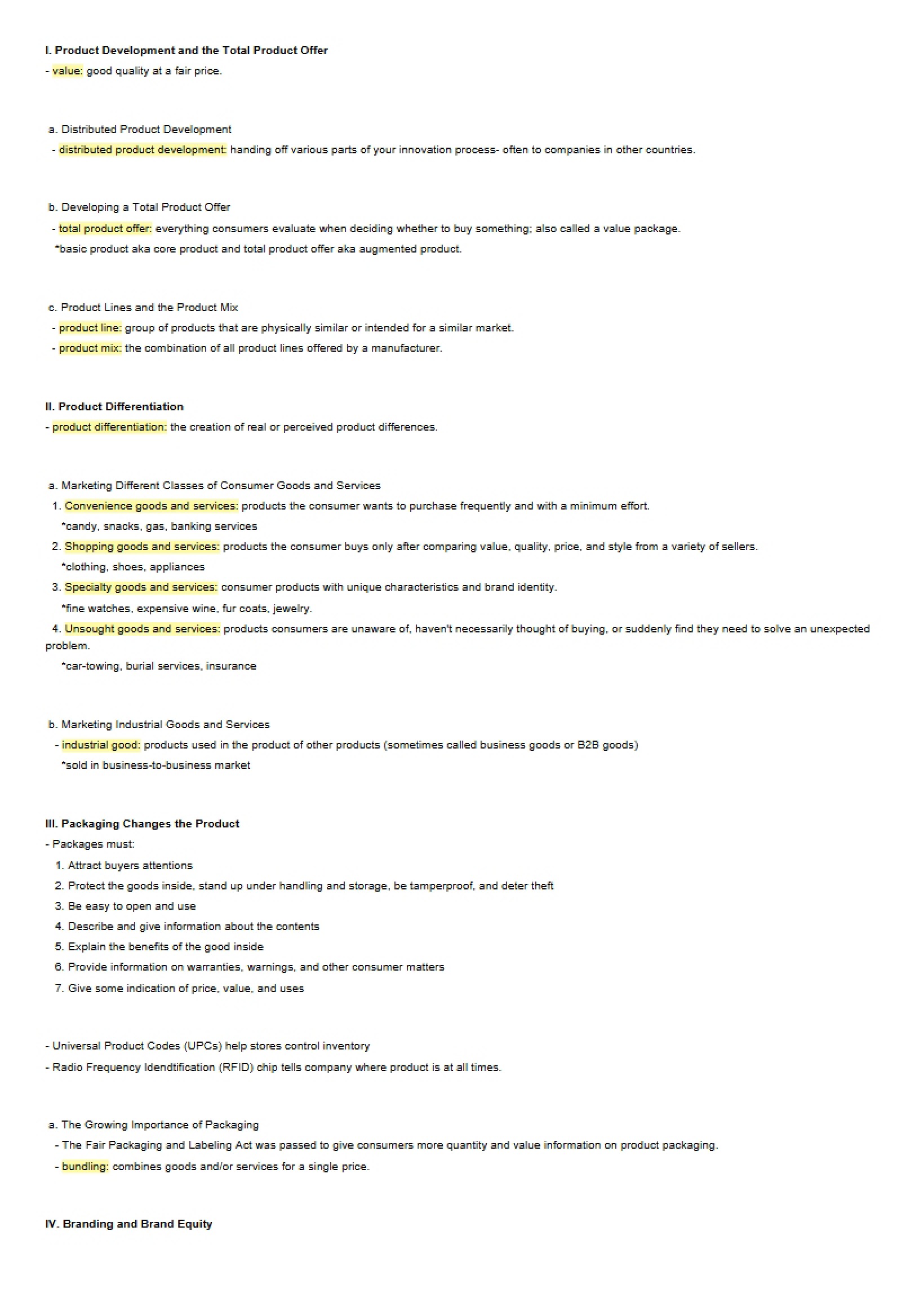
* The concept of “total product offer” and its components.
* Differentiation between product lines and product mixes.
* Classification of consumer goods (convenience, shopping, specialty, unsought) and industrial goods.
* The role of packaging in product strategy, including bundling.
* Branding concepts, including brand equity, loyalty, and associations.
* An introduction to the new-product development process (the first step is outlined).
This preview *does not* include the complete six-step new-product development process, detailed examples of branding strategies, or in-depth analysis of pricing models. It is intended to provide a high-level understanding of the chapter’s scope and key themes.