What This Document Is
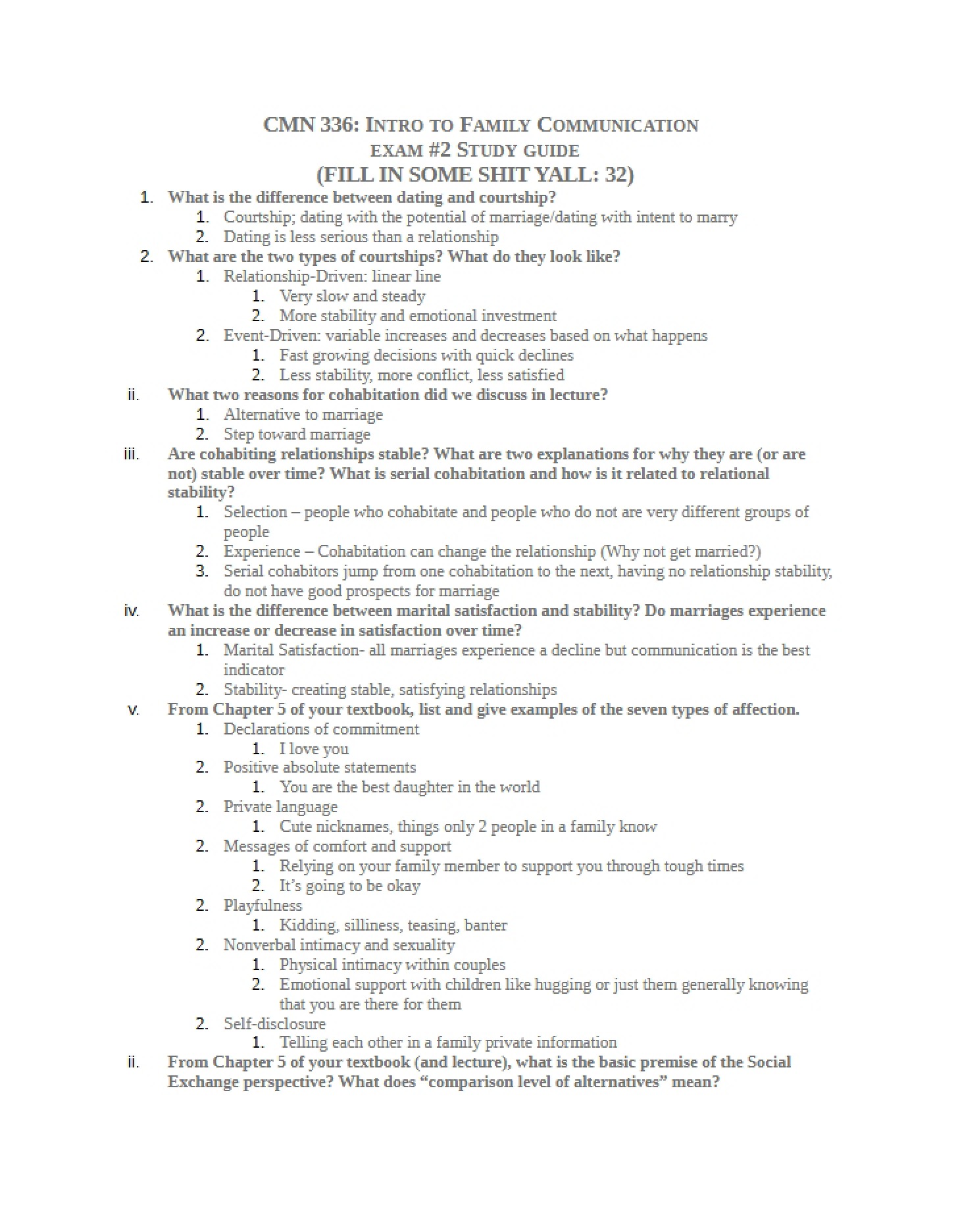
This study guide provides a focused exploration of theoretical frameworks essential to understanding family communication, specifically within the context of CMN 336 at the University of Illinois at Urbana-Champaign. It delves into the core principles that underpin the study of how families communicate and interact, offering a foundational understanding for more complex concepts covered in the course. This resource is designed to complement course lectures and readings, aiding in a deeper comprehension of the subject matter.
Why This Document Matters
Students enrolled in CMN 336 – Family Communication – will find this guide particularly beneficial when preparing for assessments, engaging in class discussions, and completing assignments. It’s ideal for those seeking a consolidated overview of key theoretical approaches and research methodologies used in the field. This resource is most valuable when used *alongside* assigned readings and course materials to reinforce learning and identify areas needing further attention. It’s a strong starting point for anyone wanting to build a robust understanding of the theoretical underpinnings of family dynamics.
Topics Covered
* The fundamental definition and purpose of theory in the context of family communication.
* Different goals that theories aim to achieve in the study of family interactions.
* A comparison of major intellectual traditions influencing family communication research.
* The core assumptions of positivistic, interpretive, and critical approaches to studying families.
* An overview of quantitative and qualitative research methods.
* Exploration of various methods for studying families, including surveys and interviews.
* The concept of triangulation in research design.
What This Document Provides
* A clear articulation of how theoretical frameworks help analyze family communication patterns.
* A structured overview of different research paradigms and their implications.
* A foundational understanding of the philosophical assumptions guiding family communication research.
* A comparative analysis of various research methodologies used in the field.
* Key terminology and concepts related to theoretical approaches in family communication studies.