What This Document Is
This document comprises Chapter 5 from the CHEM 20A Chemical Structure course at UCLA, covering the fundamental principles of Quantum Mechanics and Atomic Structure. It delves into the theoretical framework underpinning our understanding of atomic behavior, moving beyond classical models to explore the quantum realm. This material was presented in class on Wednesday, November 2nd.
Why This Document Matters
This chapter is crucial for students seeking a deep understanding of the building blocks of matter and how they interact. It’s particularly beneficial for those preparing for advanced chemistry courses, physics studies, or related fields like materials science and biochemistry. Reviewing this material will strengthen your foundation for understanding chemical bonding, spectroscopy, and molecular properties. It’s best utilized during and after lectures, while working through problem sets, and as a study aid before assessments.
Topics Covered
* The application of quantum mechanics to the hydrogen atom
* Quantum numbers and their significance in describing atomic orbitals
* The relationship between energy levels and quantum numbers
* Wavefunctions and probability density
* Spherical polar coordinates and their use in atomic structure calculations
* Orbital shapes and nomenclature (s, p, d, f orbitals)
* The concept of atomic orbitals as solutions to the Schrödinger equation
* Degeneracy of energy levels in single-electron atoms
What This Document Provides
* A detailed exploration of the Schrödinger equation as applied to atomic systems.
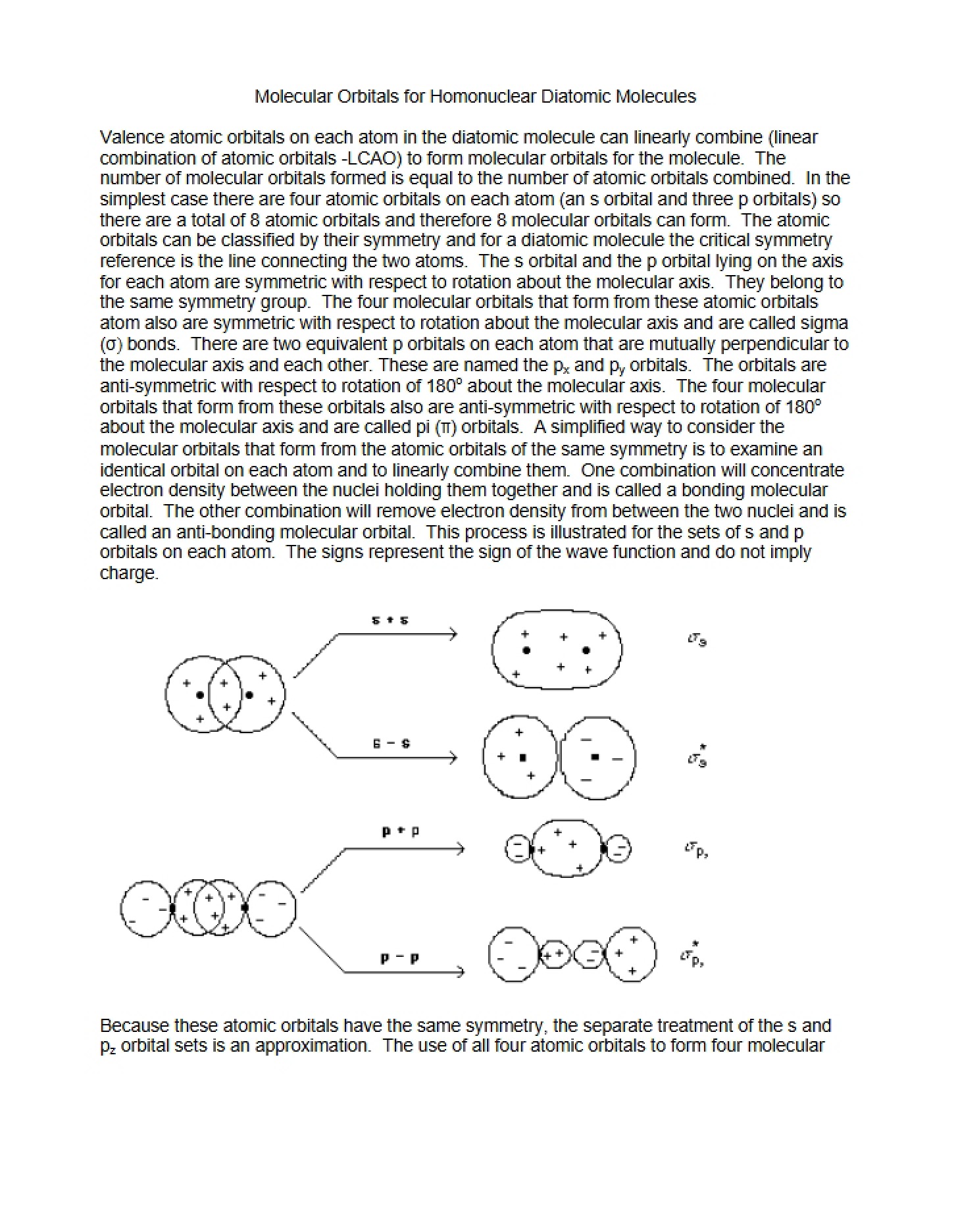
* Illustrative figures depicting atomic orbitals and coordinate systems.
* A systematic presentation of allowed quantum number values for one-electron atoms.
* Tables summarizing key relationships between quantum numbers and orbital characteristics.
* An overview of radial and angular parts of wavefunctions.
* A guide to naming quantum states and identifying orbital types based on quantum numbers.
* A discussion of the physical interpretation of wavefunctions and probability distributions.