What This Document Is
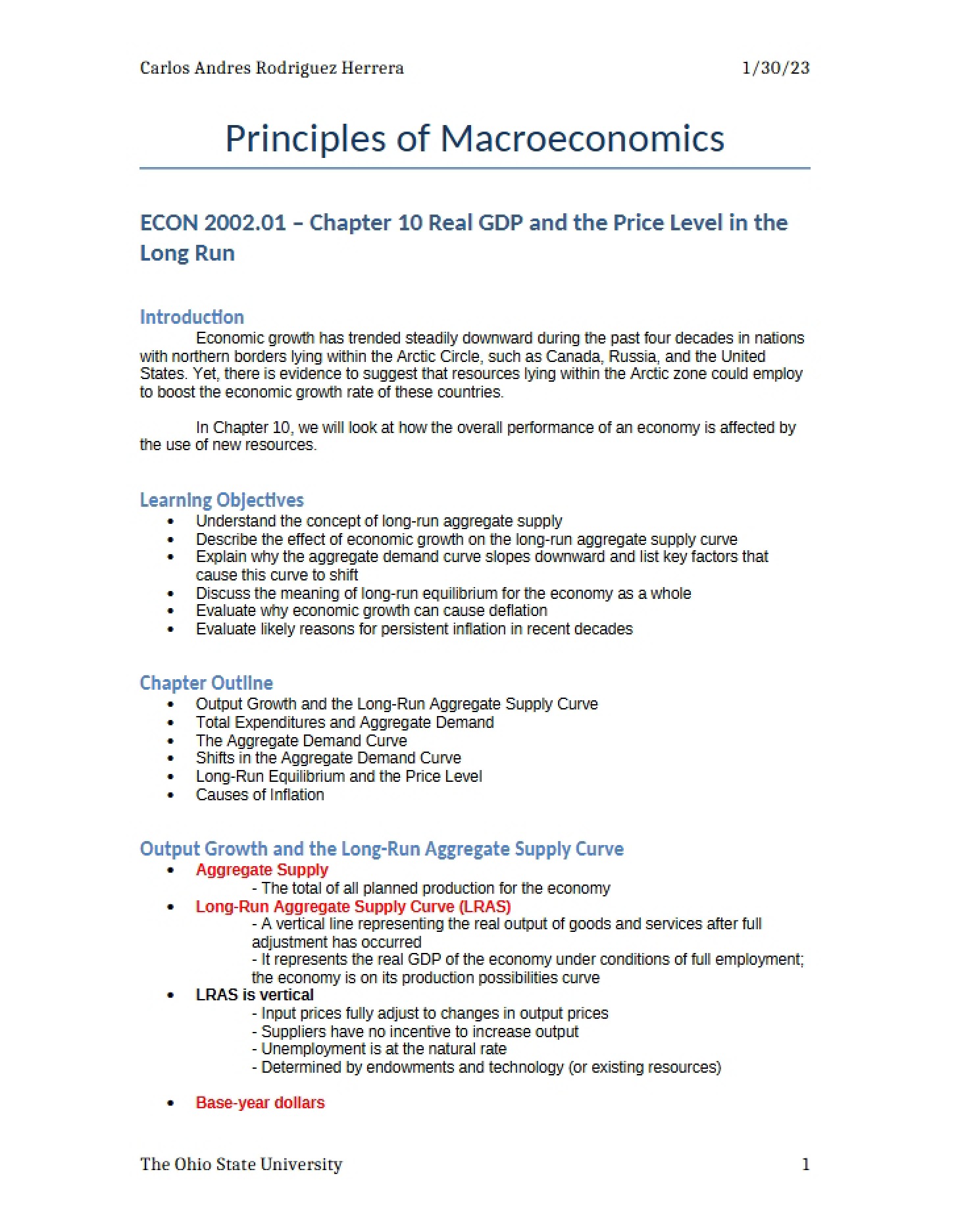
This document represents Chapter One from the Principles of Microeconomics (ECON 200) course at The Ohio State University. It serves as a foundational introduction to the core principles that underpin the study of economics, establishing a framework for understanding how individuals and societies make decisions in the face of scarcity. It explores the methodologies used to analyze economic phenomena and lays the groundwork for more advanced topics covered throughout the course.
Why This Document Matters
This chapter is crucial for any student beginning their journey into the world of microeconomics. It’s particularly beneficial for those who are new to economic thinking or who need a refresher on fundamental concepts. Understanding the material presented here will significantly improve your ability to grasp subsequent topics, analyze real-world economic issues, and succeed in your ECON 200 coursework. It’s best reviewed at the start of the course and revisited as needed when tackling more complex economic models.
Topics Covered
* The fundamental definition of economics and its core focus.
* The concept of rational behavior and its implications for economic decision-making.
* The significance of opportunity cost and marginal analysis in evaluating choices.
* An overview of the scientific method as applied to economic inquiry.
* Key economic principles, including the role of the *ceteris paribus* assumption.
* The distinction between microeconomics and macroeconomics.
* The economic problems faced by individuals and society as a whole.
* The factors of production and their roles in creating economic output.
* The production possibilities curve and its applications.
What This Document Provides
* A clear explanation of the core tenets of economic thought.
* An introduction to the tools economists use to model and analyze behavior.
* A framework for understanding scarcity and resource allocation.
* A foundational understanding of key economic concepts like budget lines and production possibilities.
* An exploration of the factors that influence economic growth and efficiency.
* A basis for understanding different economic systems and their characteristics.