What This Document Is
This material represents Chapter One from ATMS 100, an introductory course in Meteorology at the University of Illinois at Urbana-Champaign. It lays the foundational groundwork for understanding the science of the atmosphere and the processes that drive weather and climate. This chapter serves as a comprehensive overview of essential concepts, historical context, and fundamental principles used throughout the course. It’s designed to establish a common understanding of atmospheric science terminology and basic observational techniques.
Why This Document Matters
This chapter is crucial for students new to the field of meteorology, as well as anyone seeking a deeper understanding of the forces shaping our planet’s weather. It’s particularly beneficial for those beginning ATMS 100, providing a solid base for subsequent, more specialized topics. Reviewing this material before diving into complex atmospheric models or regional weather patterns will significantly enhance comprehension. It’s also a valuable resource for self-study and reinforcing core concepts.
Topics Covered
* The composition and structure of the Earth’s atmosphere
* A historical perspective on the development of meteorological science
* Defining and differentiating between weather and climate
* Fundamental elements used in weather observation and reporting
* Basic principles of air movement and pressure systems
* Introduction to key atmospheric components and their roles
* The importance of long-term data analysis in climate studies
What This Document Provides
* An overview of the atmosphere’s vital role in supporting life on Earth.
* A timeline highlighting key milestones in the history of meteorology.
* Explanations of how atmospheric conditions are measured and represented.
* Descriptions of tools and techniques used to observe weather phenomena.
* An introduction to the concepts of high and low-pressure systems and their associated weather patterns.
* Foundational knowledge regarding atmospheric gases and their impact.
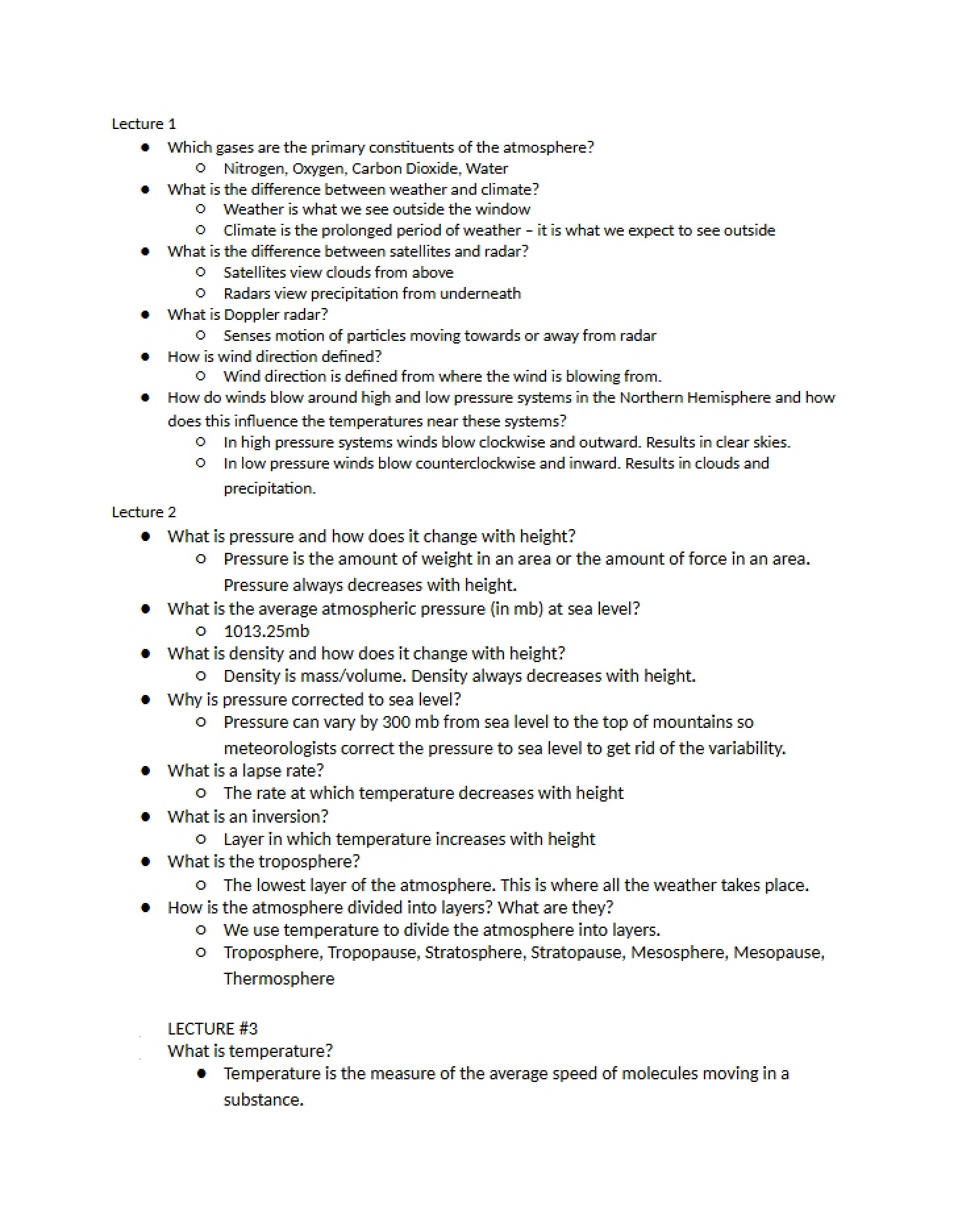
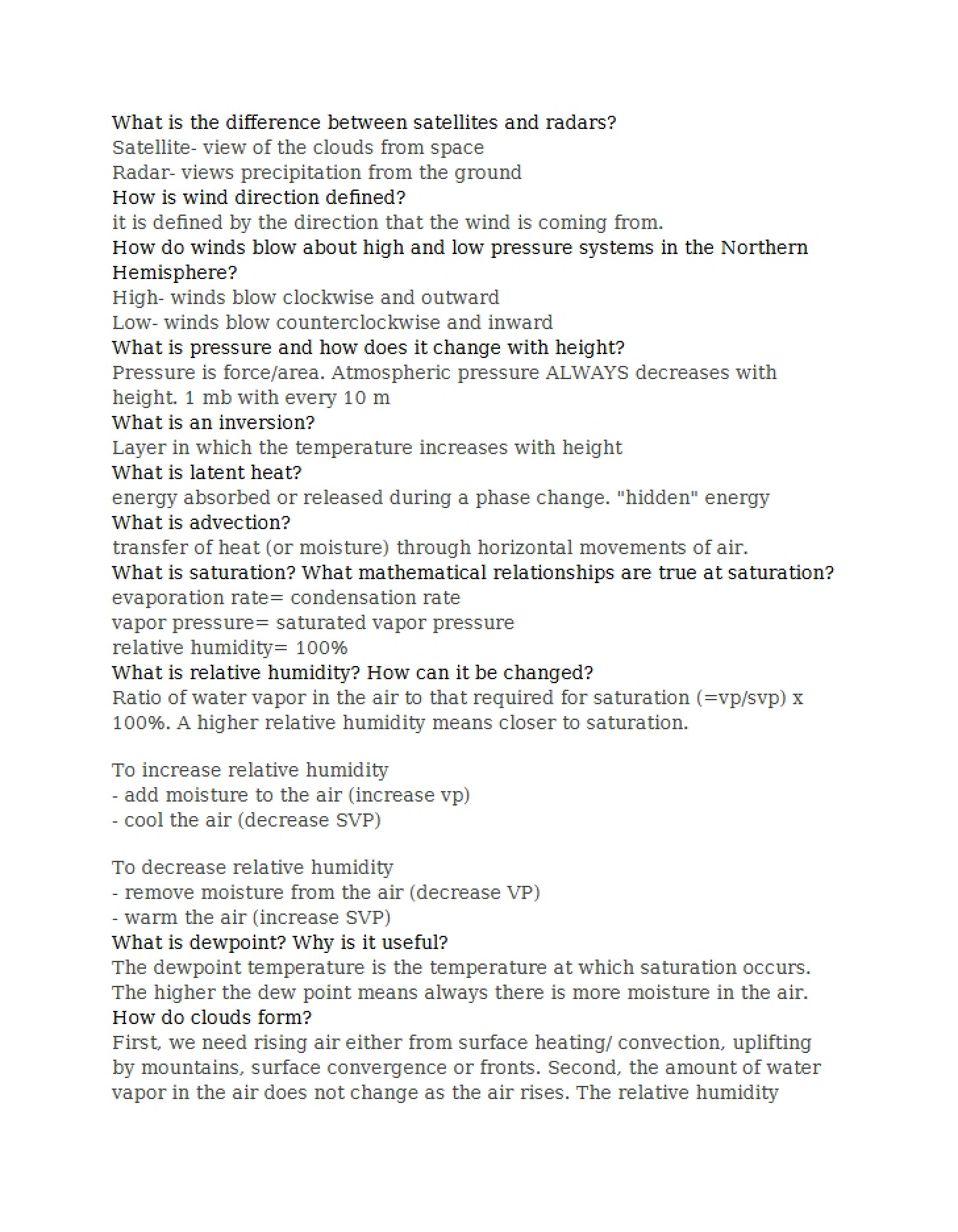
* Review questions designed to reinforce understanding of core concepts.