What This Document Is
This study guide delves into the intricate world of consonant sounds, a core component of speech science. Specifically, it focuses on the acoustic and articulatory characteristics that define different consonant classifications. It’s designed for students seeking a deeper understanding of how these sounds are produced and perceived, moving beyond simple identification to a more nuanced analysis of their underlying properties. This material builds upon foundational knowledge of the vocal tract and phonetic principles.
Why This Document Matters
This resource is invaluable for students in speech-language pathology, linguistics, and communication sciences. It’s particularly helpful when preparing for in-depth study of phonetics, speech production, and acoustic analysis. Use this guide to solidify your understanding of consonant categorization and prepare for more advanced coursework or clinical applications. It’s best utilized alongside lectures and lab sessions, serving as a focused reference for key concepts.
Topics Covered
* Detailed categorization of consonant types (obstruents, sonorants, etc.)
* Articulatory features defining consonant production
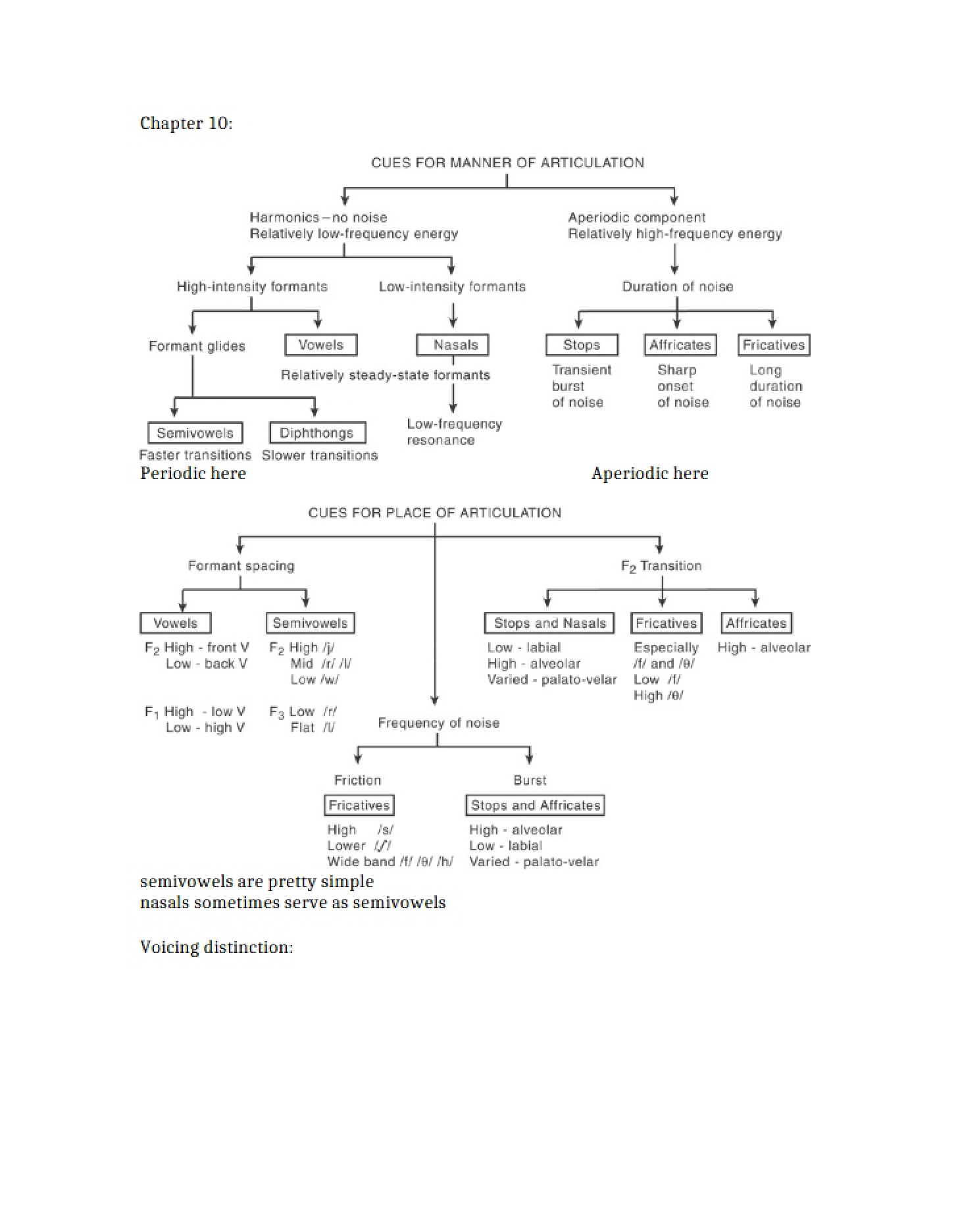
* Acoustic properties associated with different consonant classes
* The role of airflow and vocal fold vibration in consonant creation
* Syllable structure and consonant placement
* Specific characteristics of liquids and glides
* Analysis of fricative production at various points in the vocal tract
* Formant transitions and their relationship to consonant articulation
What This Document Provides
* A systematic breakdown of consonant classifications based on articulatory and acoustic criteria.
* Exploration of the relationship between tongue position and resulting sound characteristics.
* Discussion of the acoustic features that distinguish different consonant types.
* Insights into how consonants function within the broader context of speech production.
* A framework for understanding the complexities of consonant articulation and perception.