What This Document Is
This study guide provides a comprehensive overview of key concepts covered in Chapters Seven through Ten of SPAN 210 at the University of South Carolina. It’s designed to support your learning journey through intermediate Spanish, focusing on grammatical structures and cultural themes. The material explores a range of topics, from interpersonal relationships and socio-political issues to environmental concerns and the impact of globalization. It aims to solidify your understanding of complex Spanish language nuances within real-world contexts.
Why This Document Matters
If you are currently enrolled in SPAN 210, or are reviewing intermediate Spanish grammar and cultural topics, this resource will be incredibly valuable. It’s particularly helpful for students preparing for quizzes, exams, or larger writing assignments. Use this guide to reinforce your comprehension of challenging concepts and to identify areas where you might need further clarification from your instructor or through additional study. It’s best utilized *alongside* your textbook and class notes, not as a replacement for them.
Common Limitations or Challenges
This guide is intended to be a supportive tool, but it does not offer complete, standalone instruction. It assumes a foundational understanding of Spanish grammar and vocabulary already established in earlier coursework. It will not provide direct translations, sentence diagrams, or step-by-step explanations of grammatical conjugations. Furthermore, it doesn’t include practice exercises or assessments – those are best found within your course materials.
What This Document Provides
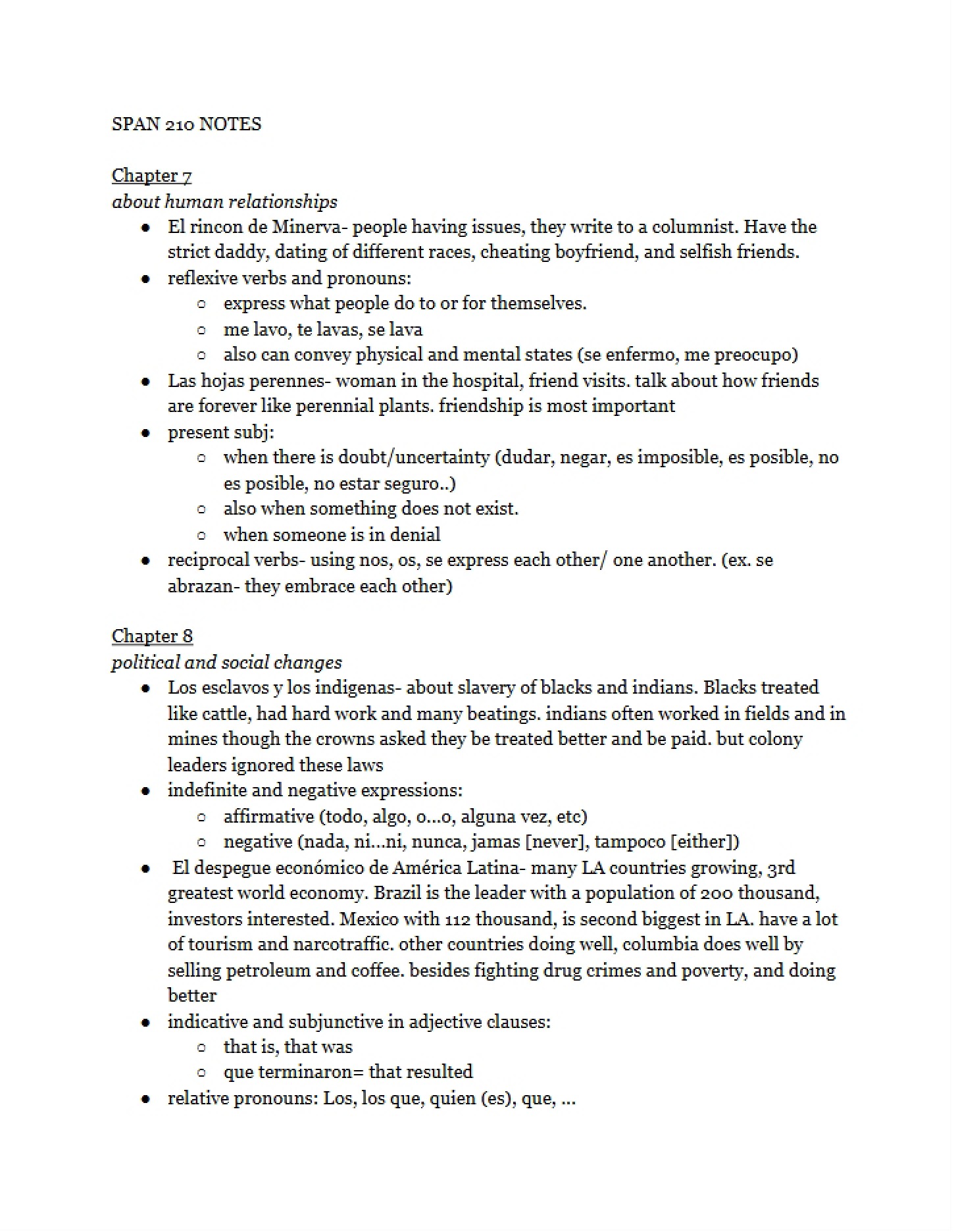
* A focused exploration of reflexive and reciprocal verb constructions.
* An overview of how to express doubt, uncertainty, and denial in Spanish.
* Key grammatical concepts related to indefinite and negative expressions.
* Discussions of complex socio-political themes relevant to Latin American history and current events.
* An introduction to grammatical structures used when discussing the future and hypothetical situations.
* An examination of how to express conditions and time-related clauses using the subjunctive mood.
* Insights into cultural topics such as globalization and environmental issues in Latin America.