What This Document Is
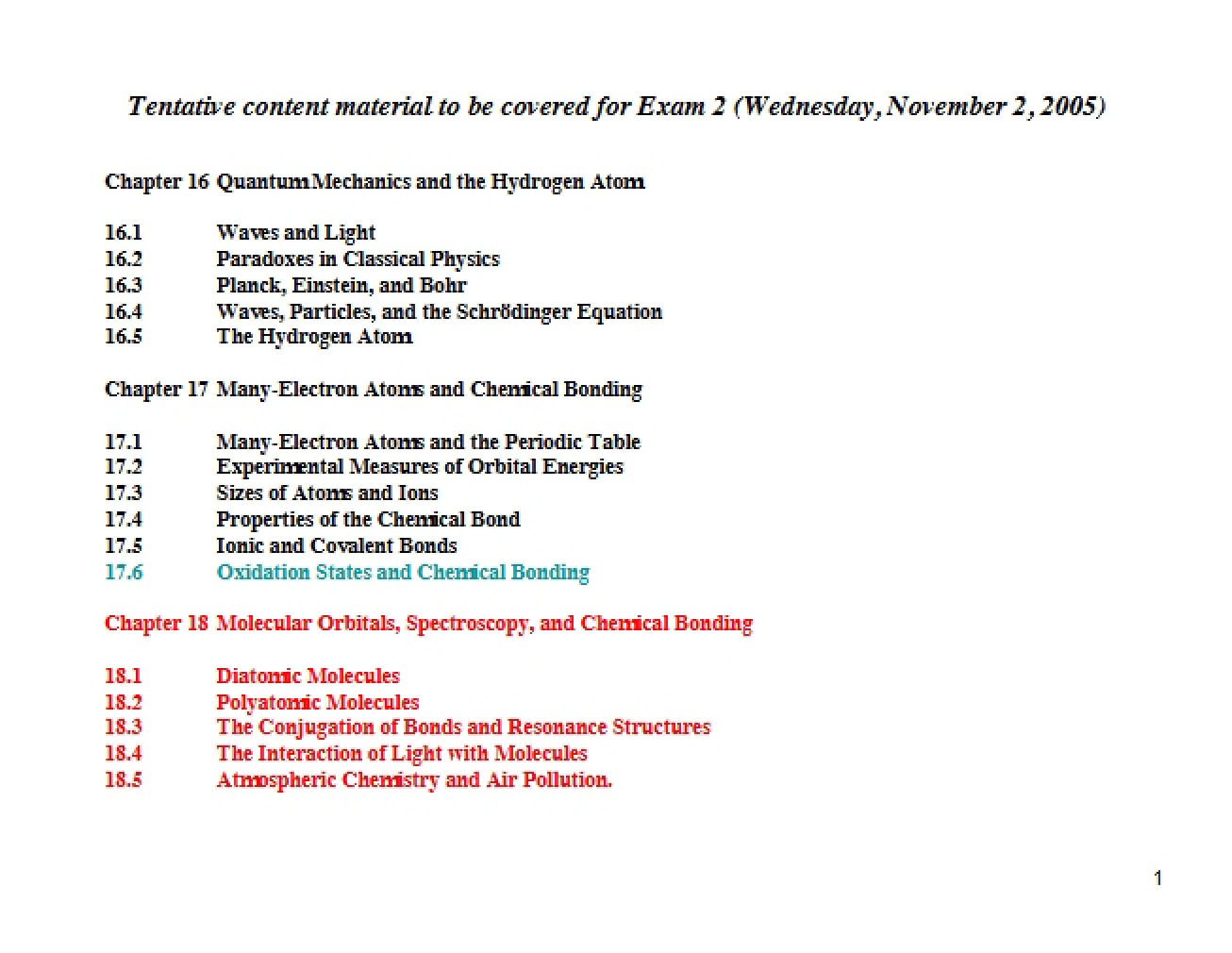
These lecture notes provide a foundational overview of chemical bonding, a core concept in General Chemistry I. The material introduces the fundamental principles governing how atoms interact to form molecules and solid-state structures. It distinguishes between ionic and covalent bonding, and explores the nuances of bond polarity.
Why This Document Matters
This document is essential for students beginning their study of chemistry. Understanding bonding is crucial for predicting molecular properties, reaction behavior, and the characteristics of different materials. These notes are typically used during the bonding unit of a first-semester general chemistry course, serving as a companion to textbook readings and in-class discussions. A solid grasp of these concepts is necessary for success in subsequent chemistry topics.
Common Limitations or Challenges
This document provides a theoretical framework for understanding bonding. It does *not* include detailed problem-solving strategies, complex molecular geometry predictions, or advanced bonding theories like hybridization. It’s a starting point, and further study will be needed to apply these concepts to specific chemical systems. This preview does not cover all nuances of lattice energy calculations or detailed electronegativity trends.
What This Document Provides
The full document includes:
* Definitions of ionic and covalent bonding, including the energetic considerations (ionization energy, electron affinity, lattice energy) involved in bond formation.
* An explanation of bond energy and bond length, and their relationship to molecular stability.
* A discussion of polar covalent bonds, electronegativity, and dipole moments.
* A guide to predicting ionic character based on electronegativity differences.
* Illustrative examples of how electronegativity influences charge distribution within molecules.
* A comparison of ion and atom sizes, and how these change across the periodic table.
* An introduction to lattice energy and factors affecting its magnitude.
This preview offers a high-level overview of these topics, but does not include the detailed explanations, diagrams, or quantitative examples found in the complete lecture notes.