What This Document Is
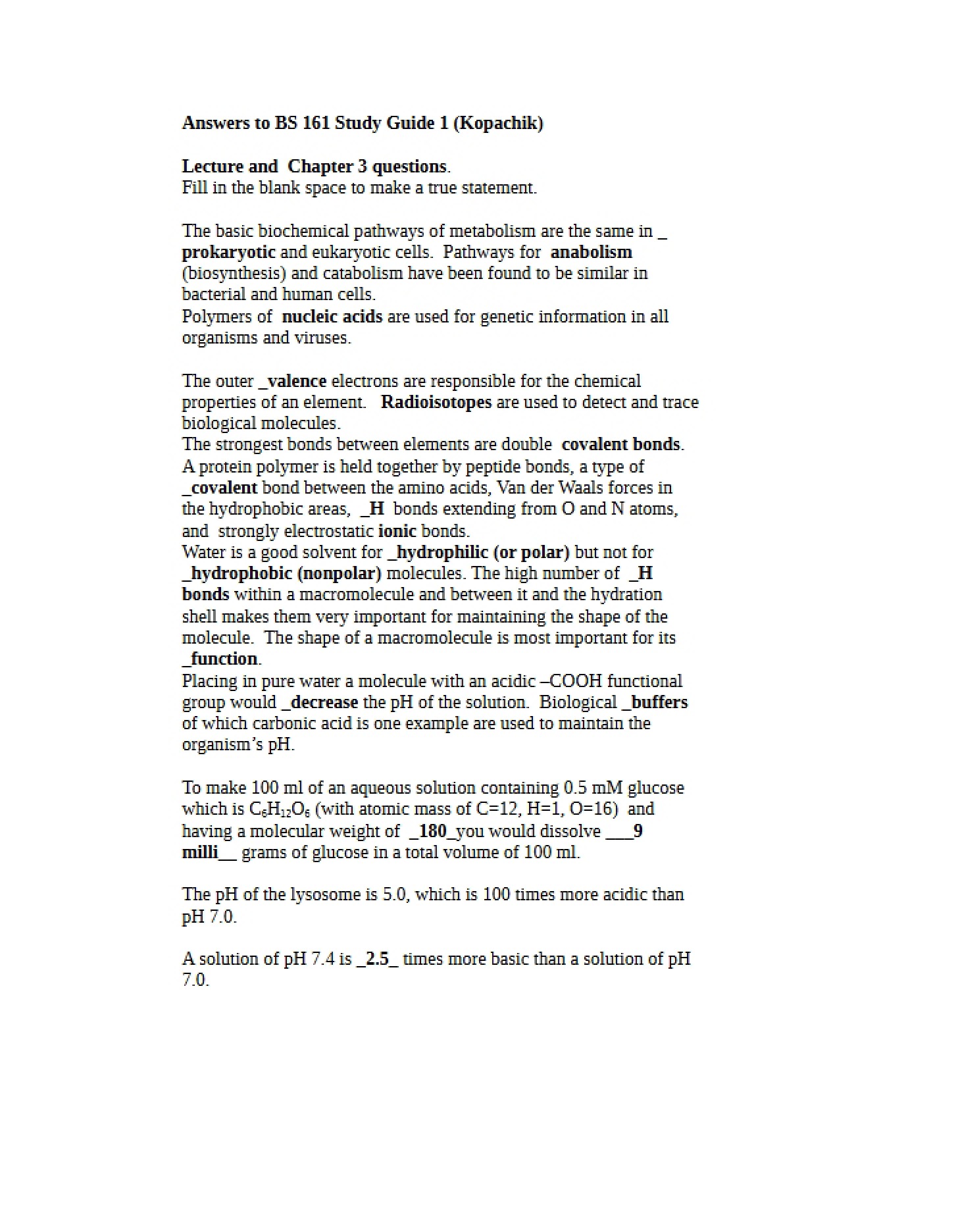
This is a comprehensive study guide designed to accompany course (BS 161) at the University of California, Los Angeles. Specifically, it focuses on Chapter 3, which explores the fundamental chemical building blocks essential for life. It’s intended to be a focused resource for students navigating complex biochemical concepts, offering a structured approach to understanding core principles. The guide is designed to complement both lecture materials and the textbook, providing a cohesive learning experience.
Why This Document Matters
This study guide is an invaluable resource for students aiming to solidify their understanding of foundational biological chemistry. It’s particularly helpful when preparing for quizzes and exams, and for reinforcing concepts presented in class. Students who utilize this guide will be better equipped to grasp the relationships between molecular structure and biological function, a critical skill for success in this course and future studies in the life sciences. It’s best used *alongside* your regular coursework, as a tool for active recall and deeper comprehension.
Topics Covered
* The four major classes of biological macromolecules
* Monomers and polymers: identifying building blocks and their assembly
* Chemical bonds linking monomers within and between macromolecules
* Dehydration and hydrolysis reactions and their roles in macromolecule dynamics
* The structural characteristics of different carbohydrate types
* The diverse functions of lipids, nucleic acids, proteins, and carbohydrates
* Key functional groups and their contribution to macromolecular properties
What This Document Provides
* A focused review of core concepts from Chapter 3.
* Guidance on connecting lecture notes and textbook explanations.
* Suggestions for effective study techniques, including self-testing strategies.
* An overview of the essential properties and biological roles of key macromolecules.
* A framework for recognizing and differentiating between different types of biological molecules.
* Points for recognizing the structures of key molecules.