What This Document Is
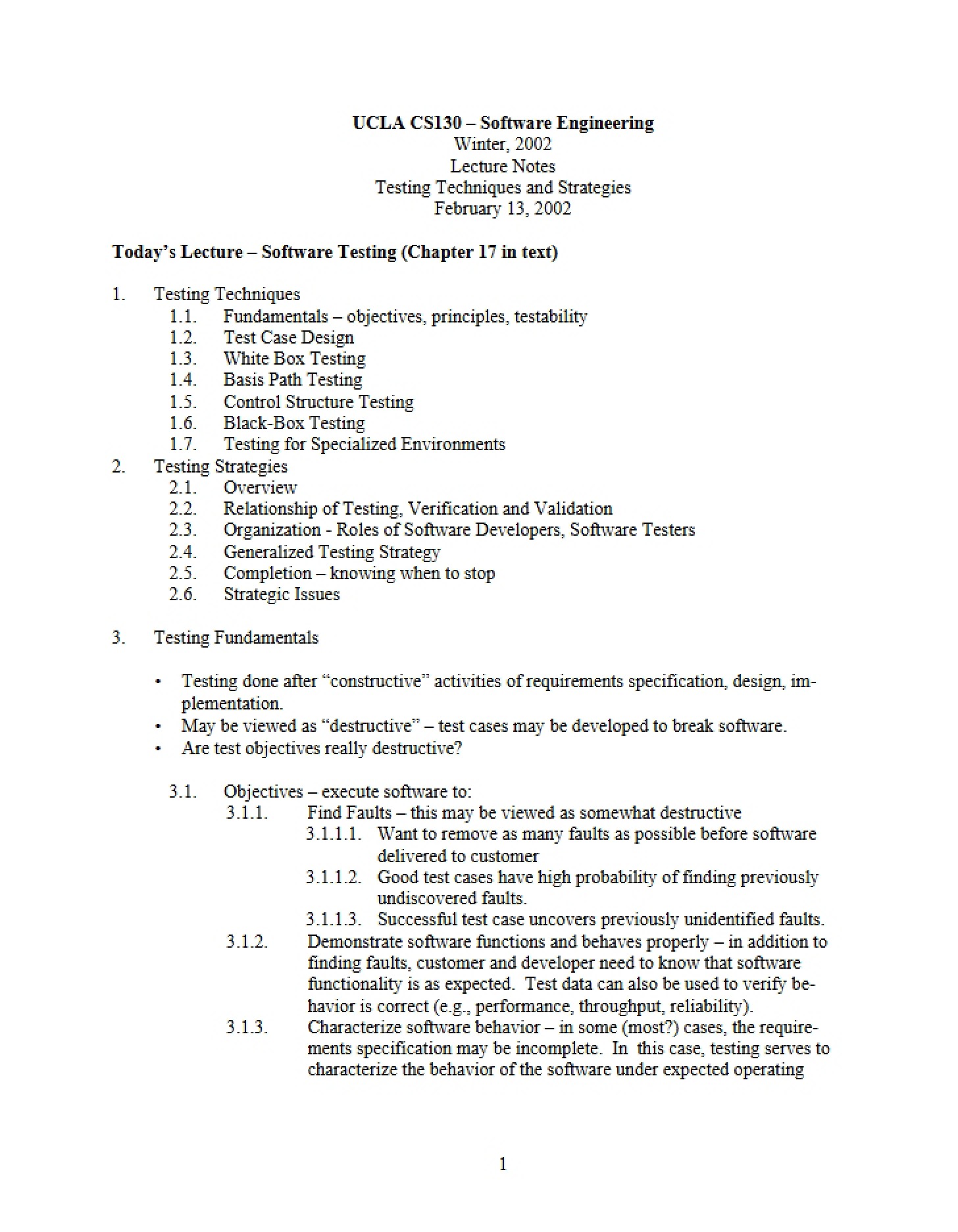
This document contains lecture notes from a Software Engineering course (COMSCI 130) at the University of California, Los Angeles. It focuses on essential practices for successful software development, moving beyond just coding to encompass the broader challenges of building reliable and impactful software systems. The material explores critical aspects of project management and quality control within a software development lifecycle.
Why This Document Matters
These notes are invaluable for students enrolled in a Software Engineering course, or anyone seeking a foundational understanding of how to manage the complexities of software projects. It’s particularly helpful when you’re learning about the processes involved in planning, executing, and delivering software, and will be useful when preparing for assignments and exams related to software development methodologies. Understanding these concepts is crucial for aspiring software engineers and project managers alike.
Topics Covered
* Proactive versus Reactive strategies in software development
* Identifying and categorizing potential risks in software projects
* The impact of various risk factors on project timelines and costs
* Methods for systematically identifying potential threats to a project
* Considerations for assessing project size, customer involvement, and technological maturity
* Establishing a framework for evaluating the potential impact of identified risks
* Software Quality Assurance principles
* Software Configuration Management fundamentals
What This Document Provides
* A structured overview of risk management techniques.
* A discussion of different categories of risks encountered in software engineering.
* A framework for systematically identifying potential project risks.
* Insights into the importance of planning and contingency measures.
* A foundation for understanding how to prioritize risks based on their potential impact.
* A glimpse into the elements of a risk assessment table.