What This Document Is
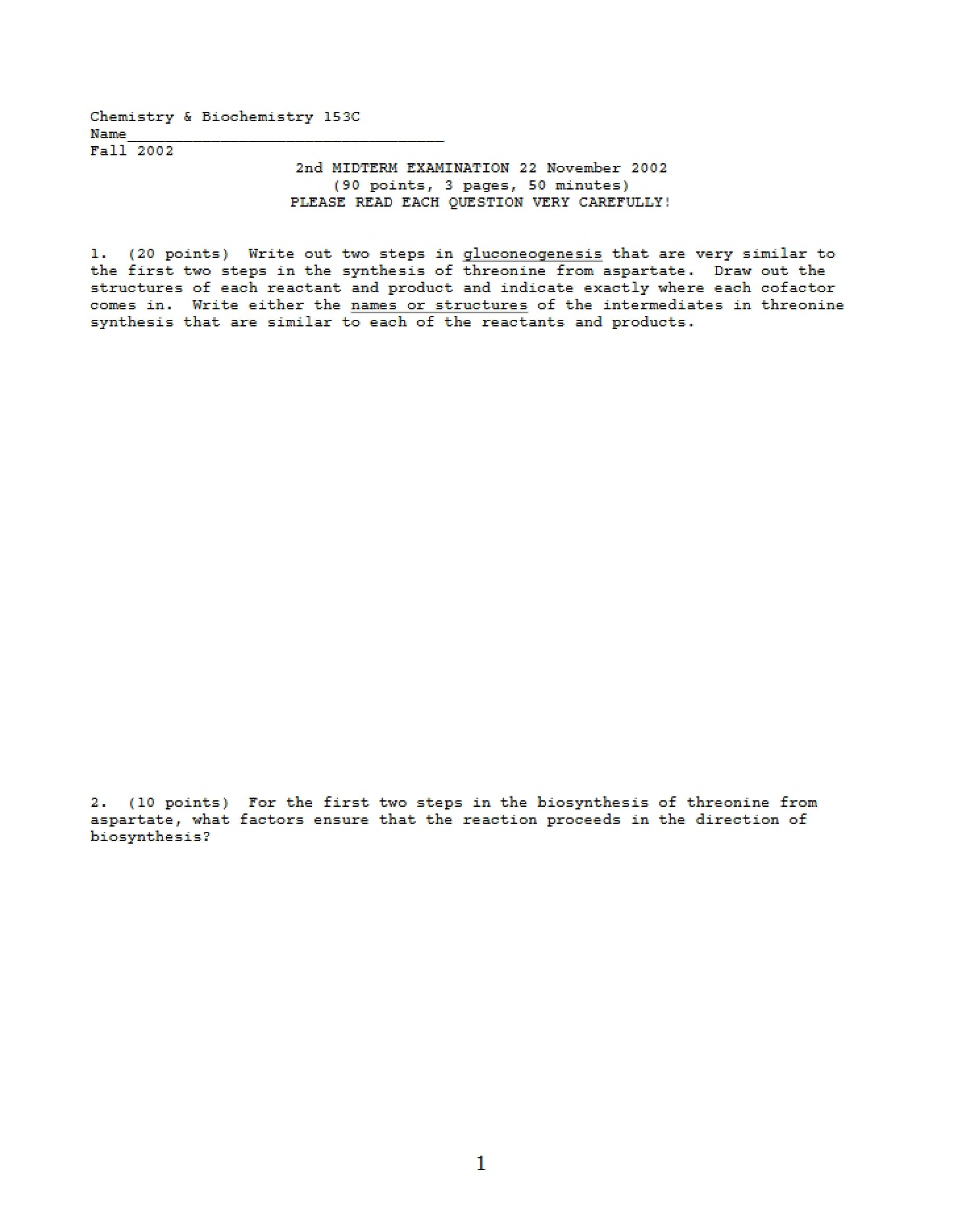
These are lecture notes from CHEM 153C, Biochemistry – Biosynthetic and Energy Metabolism and Its Regulation, offered at the University of California, Los Angeles. This resource focuses on the intricate world of metabolic pathways and how cells maintain energy balance. It delves into the regulatory mechanisms that govern these pathways, ensuring cellular needs are met efficiently. The notes represent a comprehensive overview of key biochemical concepts presented in class.
Why This Document Matters
This material is invaluable for students enrolled in a rigorous biochemistry course, particularly those focusing on metabolism. It’s most helpful when used to supplement lectures, aid in understanding complex concepts, and prepare for assessments. Students who find themselves needing a more detailed explanation of metabolic regulation, enzyme kinetics, and energy charge dynamics will find these notes particularly beneficial. Having a solid grasp of these principles is foundational for advanced studies in biology, medicine, and related fields.
Topics Covered
* Metabolic Regulation and its correlation to cellular needs
* Enzyme Kinetics and the concept of rate-determining steps
* Allosteric Control and Covalent Modification of Enzymes
* The Energy Charge Hypothesis and its implications
* Adenylate-based regulation of key metabolic enzymes
* ATP regenerating and ATP utilizing pathways
* The role of Adenosine Monophosphate (AMP) in metabolic control
* Generalized responses of regulatory enzymes to energy fluctuations
What This Document Provides
* A detailed exploration of terminology related to metabolic flux and enzyme activity.
* An overview of the mechanisms cells use to regulate metabolic pathways.
* Illustrations of how various molecules act as modulators of enzyme function.
* Conceptual frameworks for understanding energy charge and its impact on metabolic processes.
* Insights into the interplay between ATP synthesis, hydrolysis, and cellular energy status.
* A foundation for understanding how metabolic pathways respond to changing cellular conditions.