What This Document Is
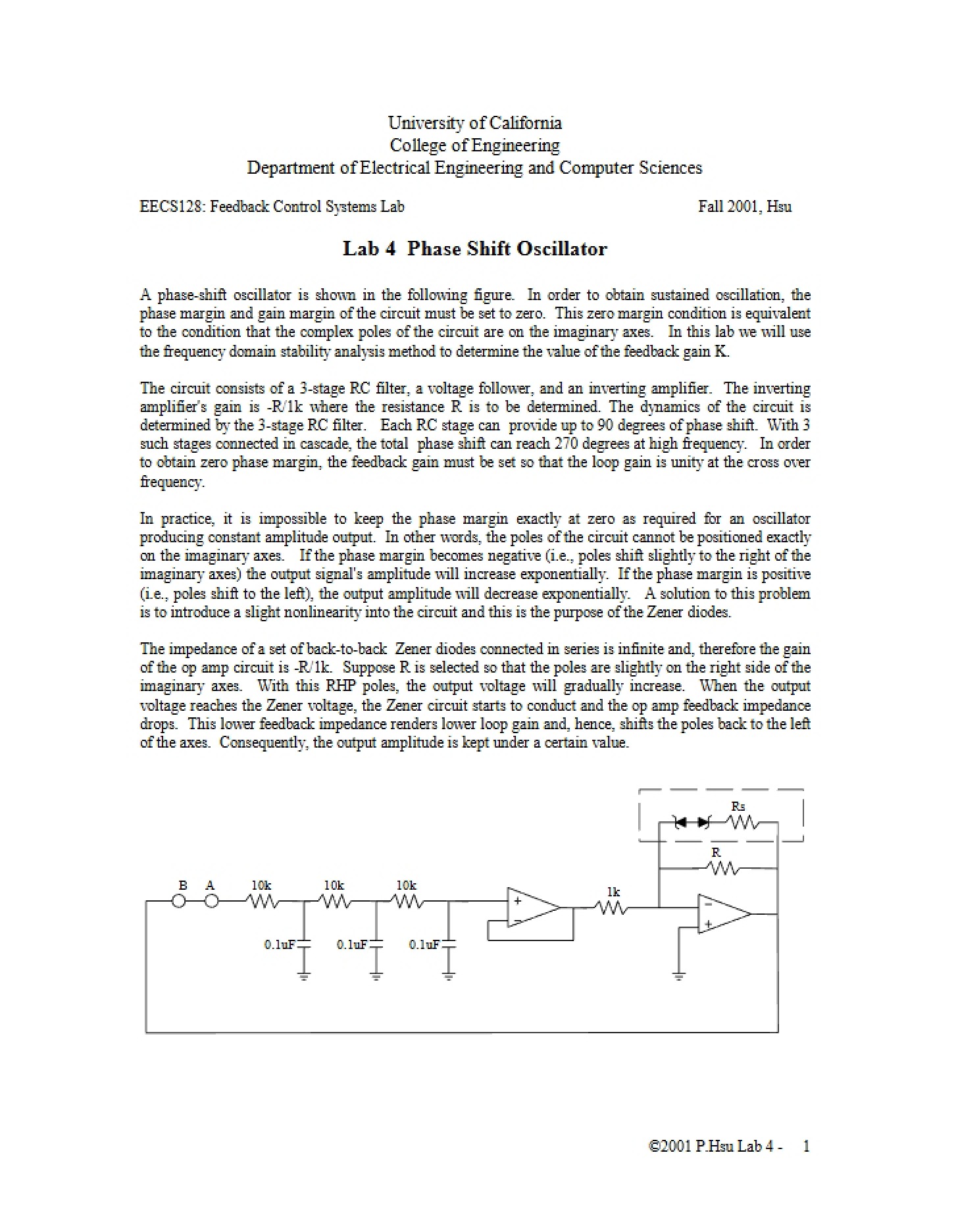
These are detailed class notes from ELENG C128: Feedback Control Systems, taught at the University of California, Berkeley. This resource offers a focused exploration of core principles within control systems engineering, presenting concepts typically covered in a university-level lecture setting. It delves into both theoretical foundations and practical applications, aiming to build a strong understanding of system behavior and design.
Why This Document Matters
This material is invaluable for students currently enrolled in a feedback control systems course, or those reviewing the subject for an exam. It’s particularly helpful for individuals who benefit from a structured, note-based approach to learning complex engineering topics. These notes can serve as a companion to textbook readings and lecture attendance, aiding in comprehension and retention. It’s also a useful reference for engineers seeking to refresh their knowledge of fundamental control systems concepts.
Topics Covered
* Mason’s Rule for analyzing complex block diagrams
* Modeling of electromechanical systems, including motors and generators
* The impact of pole locations on system stability and response
* Time-domain specifications for evaluating system performance
* Analysis of impulse responses and system stability
* Relationships between damping ratio, natural frequency, and system behavior
* Understanding oscillatory time responses
What This Document Provides
* A structured outline of key concepts in feedback control.
* Detailed explanations of theoretical principles.
* Illustrative examples relating to electromechanical systems.
* A foundation for understanding system response characteristics.
* A resource for reinforcing lecture material and textbook readings.
* A focused exploration of time-domain specifications like rise time, settling time, and overshoot.