What This Document Is
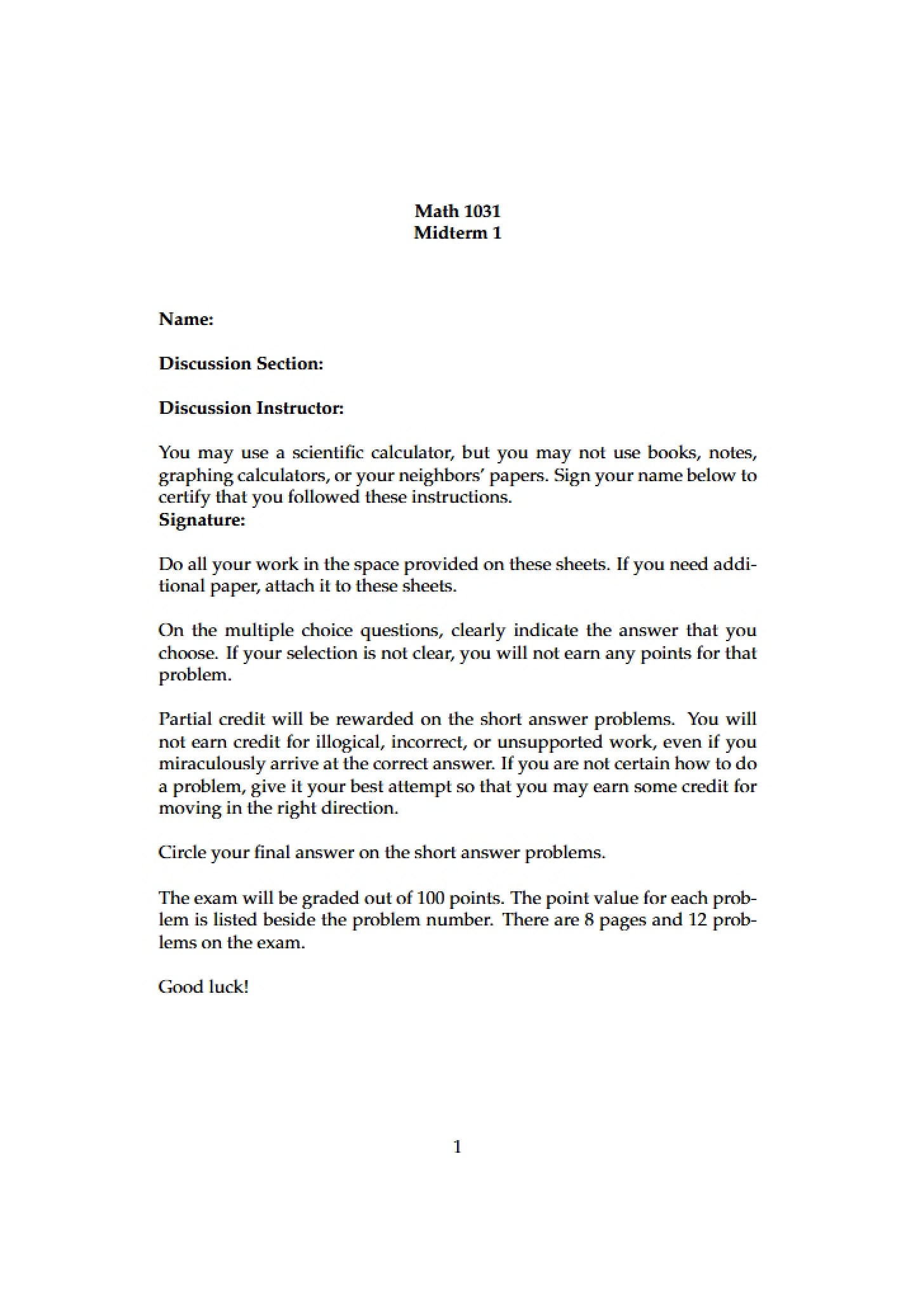
These are class notes from MATH 1031, College Algebra and Probability, at the University of Minnesota Twin Cities. They represent a direct record of lectures, capturing core concepts and foundational principles explored in the course. The notes focus on building a strong understanding of algebraic manipulation and the introduction of probabilistic reasoning. Expect a detailed, though condensed, representation of topics likely covered during scheduled class sessions. The handwriting suggests a fast-paced note-taking style, reflecting the dynamic nature of live instruction.
Why This Document Matters
This resource is invaluable for students currently enrolled in MATH 1031 who want to reinforce their understanding of lecture material. It’s particularly helpful for reviewing concepts *immediately* after a class session, aiding in retention and identifying areas needing further clarification. These notes can also serve as a useful companion when working through homework assignments or preparing for quizzes, offering a quick reference to key ideas. Students who benefit most from visual or handwritten notes will find this particularly useful. Access to these notes can help bridge gaps in understanding and improve overall course performance.
Common Limitations or Challenges
These notes are a *record* of lectures, not a substitute for attending class or reading the textbook. They may contain abbreviations, shorthand, or diagrams that require familiarity with the course content to fully decipher. The notes do *not* include detailed explanations of every step in a problem-solving process, nor do they offer worked examples or practice exercises. They are also not a comprehensive summary of the entire course; rather, they represent coverage from specific lectures. Purchasing access does not grant access to instructor explanations or clarifications.
What This Document Provides
* A chronological record of topics discussed in class.
* Key definitions and terminology related to algebra and probability.
* Visual representations of concepts (diagrams, graphs – though details are not revealed here).
* A framework for understanding the logical flow of ideas presented in lectures.
* Potential insights into the instructor’s emphasis on specific areas of the course.
* A starting point for focused review and self-assessment.