What This Document Is
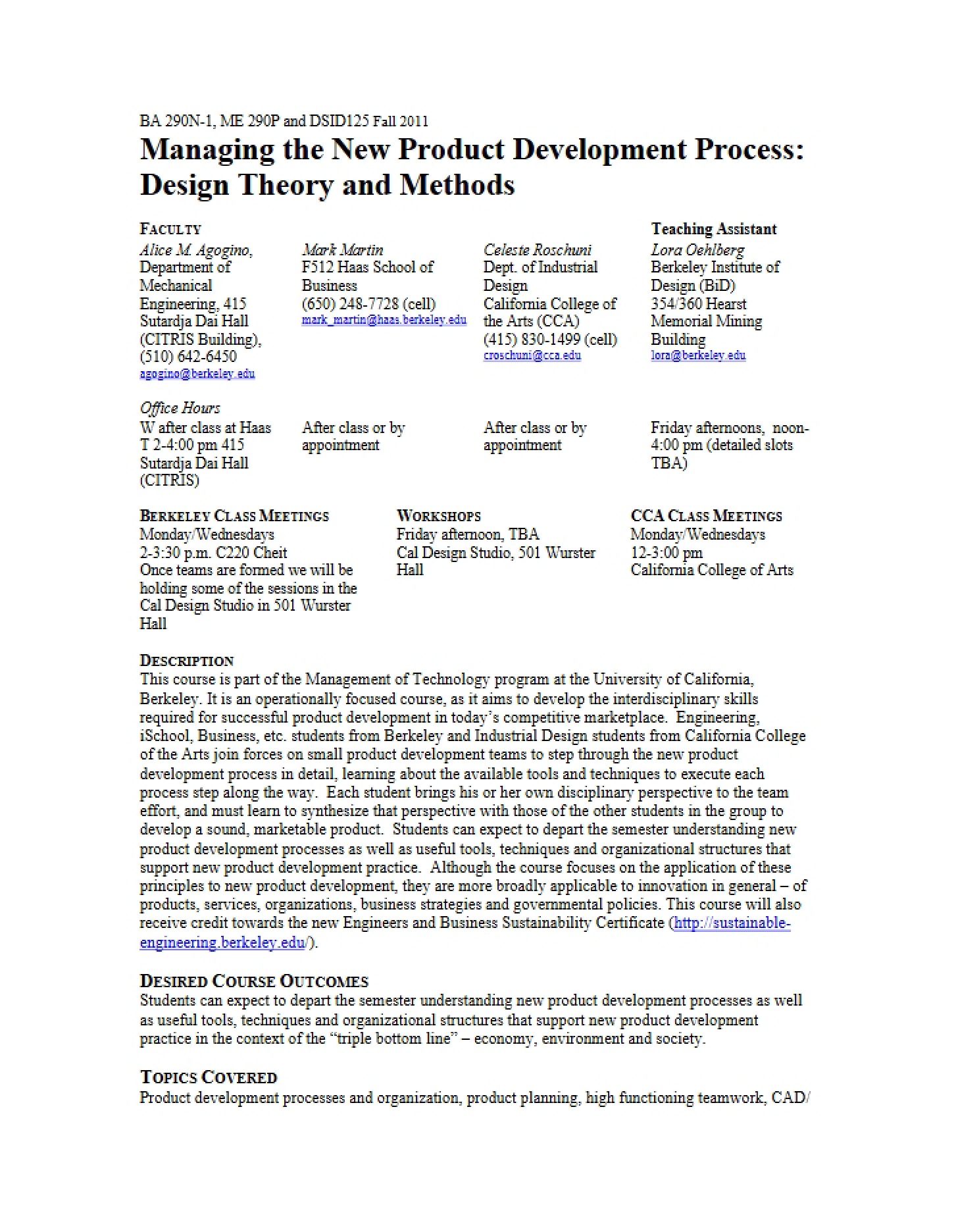
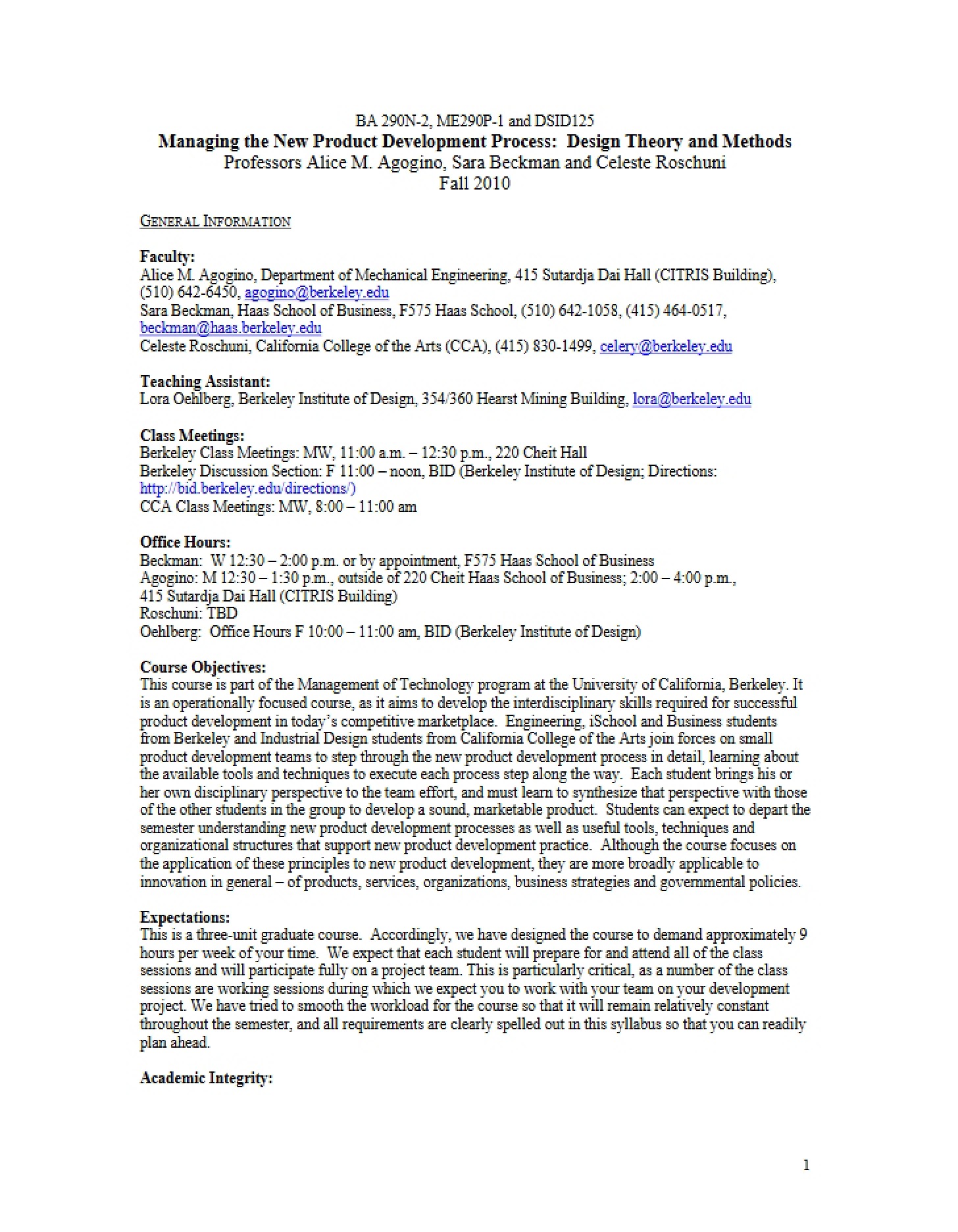
This is the official syllabus for MECENG 290P / MBA 290N / UDIST 300-14 at the University of California, Berkeley – a graduate-level course focused on New Product Development: Design Theory and Methods. It serves as a comprehensive guide outlining the course structure, expectations, and logistical details for students participating in the program. This syllabus is a foundational resource for anyone enrolled or considering enrollment in this interdisciplinary course.
Why This Document Matters
This syllabus is essential for students, particularly those in engineering, business, and design programs, who are preparing to engage in a hands-on, team-based new product development experience. It’s most valuable at the beginning of the semester to understand the course commitments, grading criteria, and required resources. Prospective students can use it to assess the course’s suitability for their academic goals and professional development. Understanding the course expectations upfront will help students plan their time effectively and maximize their learning.
Topics Covered
* Course logistics: meeting times, locations, and contact information.
* Teamwork and collaborative project expectations.
* The new product development process – an overview of key stages.
* Required resources and materials for successful course completion.
* Grading breakdown and assessment components.
* Policies regarding participation, collaboration, and academic integrity.
* Time commitment expectations for a three-unit graduate course.
What This Document Provides
* Detailed contact information for the course faculty and teaching assistants.
* A clear outline of the course objectives and learning outcomes.
* An overview of the expected workload and time commitment.
* Information regarding required readings and supplemental materials.
* A description of the collaborative learning environment and team dynamics.
* Guidance on how to succeed in this operationally focused, interdisciplinary course.
* A framework for understanding the application of new product development principles beyond the classroom.