What This Document Is
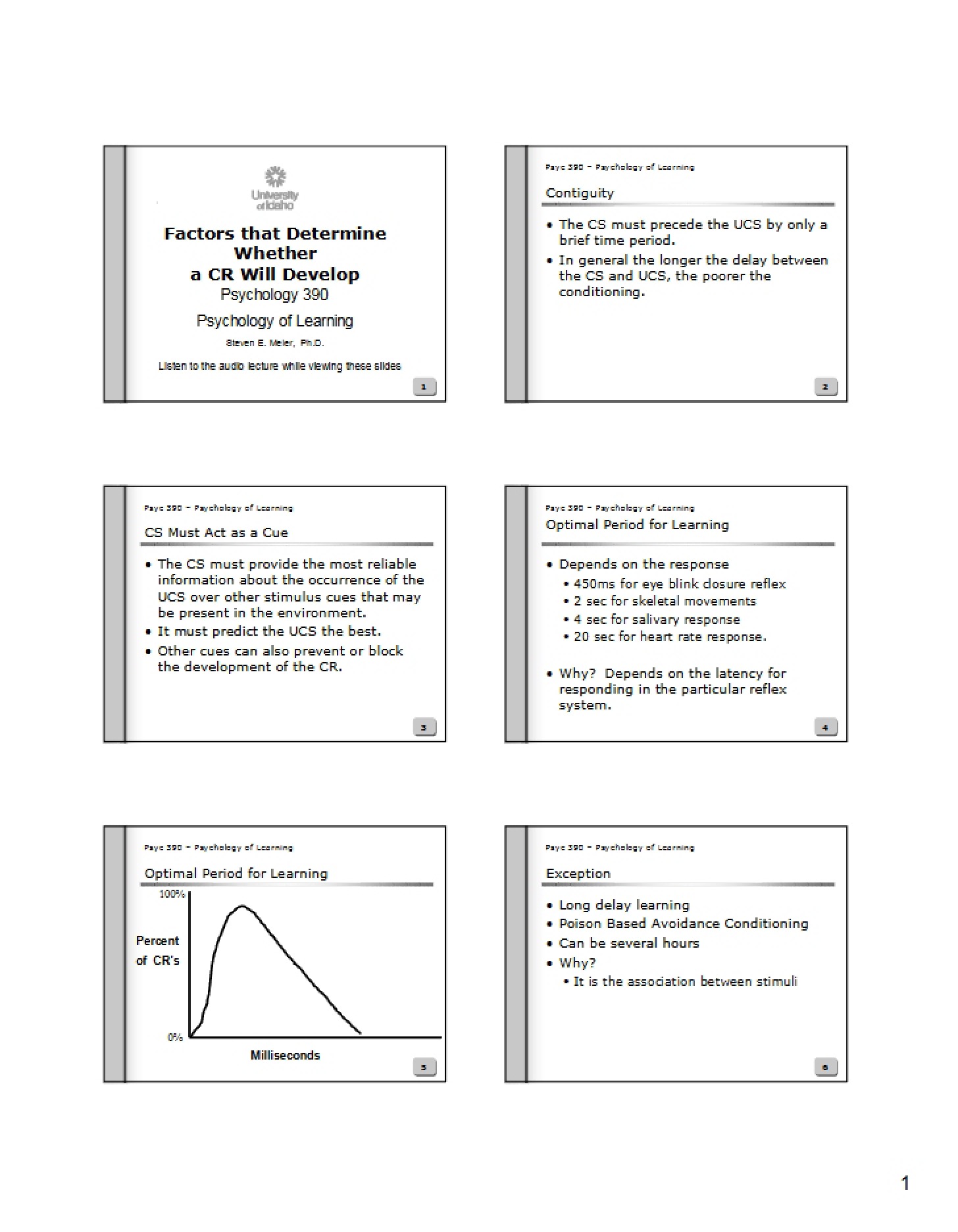
This resource is a focused exploration of classical conditioning schedules, a core concept within the field of learning psychology. Developed for PSYC 390 at the University of Idaho, it delves into the nuanced ways in which conditioned stimuli and unconditioned stimuli are paired to create learning. It’s designed to supplement lectures and provide a deeper understanding of experimental approaches to understanding associative learning. This material builds upon foundational principles of classical conditioning, moving beyond simple pairings to examine the impact of timing and sequence.
Why This Document Matters
Students enrolled in learning psychology courses, particularly PSYC 390, will find this a valuable study aid. It’s especially helpful when preparing for assessments that require a detailed grasp of experimental design in classical conditioning. Researchers and those interested in the biological basis of learning will also benefit from understanding these schedules. This resource is best utilized *after* initial exposure to the core principles of classical conditioning, serving as a tool for solidifying understanding and exploring the complexities of stimulus presentation.
Topics Covered
* Different schedules of conditioning, examining variations in stimulus timing.
* The impact of simultaneous presentation of stimuli on learning outcomes.
* Exploring conditioning that occurs when a stimulus precedes another.
* The role of temporal intervals in establishing conditioned responses.
* Considerations for understanding how time itself can function as a conditioned stimulus.
* Comparative analysis of various conditioning approaches.
What This Document Provides
* A structured overview of different conditioning schedules.
* Visual representations to aid in understanding the timing of stimulus presentation.
* A focused exploration of how the order of stimuli impacts conditioning.
* A framework for analyzing the effectiveness of different conditioning approaches.
* Insights into real-world applications of temporal conditioning principles.