What This Document Is
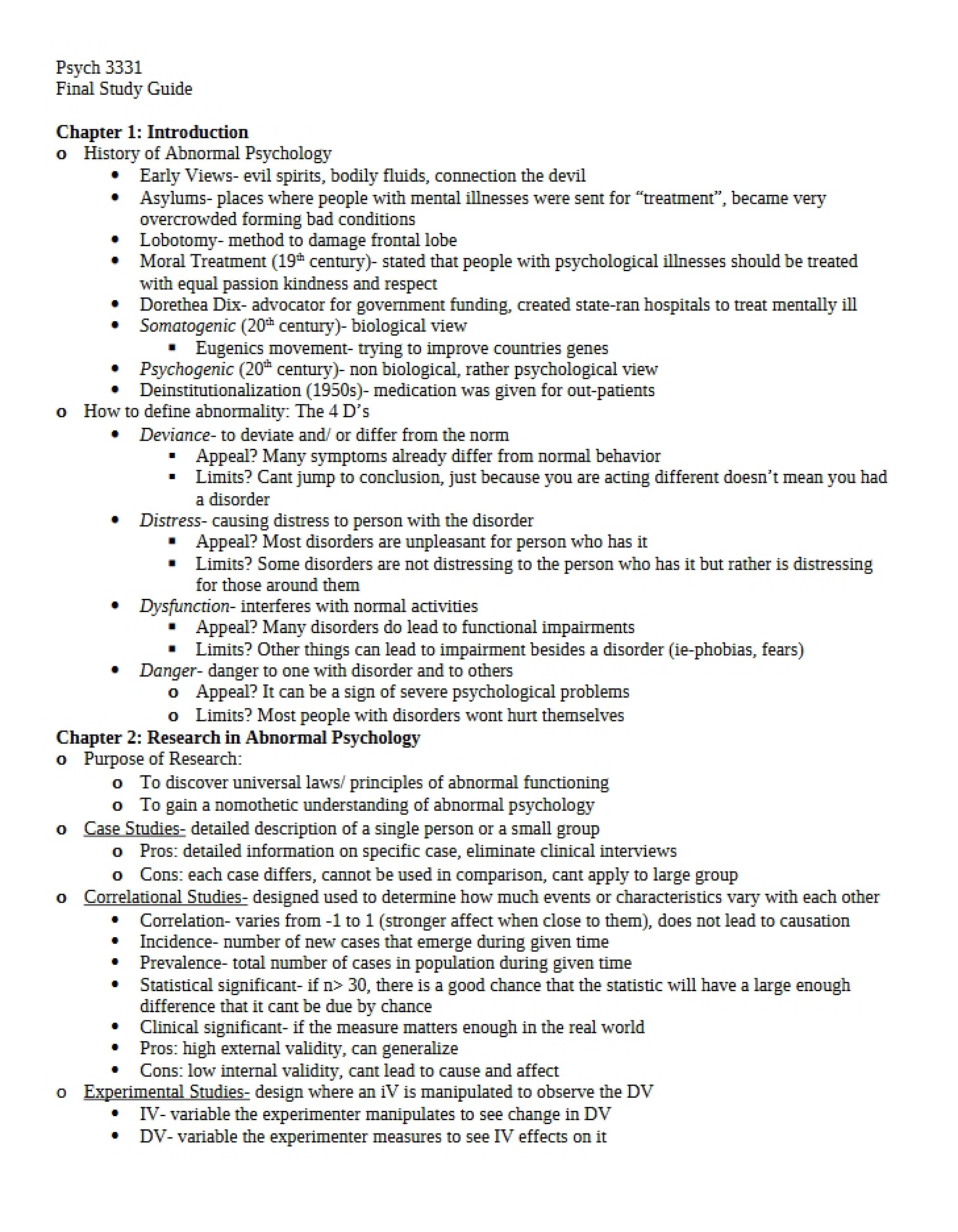
This study guide provides a comprehensive overview of the foundational principles of classification and assessment within the field of abnormal psychology. It’s designed for students seeking a deeper understanding of how psychological conditions are identified, evaluated, and categorized. This resource delves into the core concepts and methods used by clinicians to gather information and make informed judgments about a person’s psychological state.
Why This Document Matters
This guide is particularly beneficial for students enrolled in abnormal psychology courses, especially those preparing for exams or seeking to solidify their grasp of key assessment techniques. It’s ideal for anyone wanting to understand the systematic approaches used to differentiate normal from abnormal behavior and the crucial role assessment plays in effective treatment planning. Understanding these concepts is vital for future psychologists and anyone working in related mental health fields.
Topics Covered
* The fundamental principles of clinical assessment
* Distinctions between idiographic and nomothetic approaches
* Essential characteristics of reliable and valid assessment tools
* Standardization, norms, reliability, and validity in psychological testing
* An overview of different types of clinical interviews – structured and unstructured
* A survey of various clinical tests used in psychological assessment
* Exploration of projective tests and their applications
* Examination of personality tests and their role in understanding individual differences
What This Document Provides
* A detailed exploration of the definition and purpose of clinical assessment.
* A breakdown of the qualities that make an assessment tool useful and trustworthy.
* A comparative analysis of the strengths and weaknesses of different assessment methods.
* An introduction to the various categories of clinical tests currently in use.
* Insights into the advantages and disadvantages of different interview techniques.
* A foundation for understanding the complexities of psychological evaluation.