What This Document Is
This study guide provides a focused exploration of market structures within microeconomics, specifically examining how different competitive environments impact firm behavior and pricing strategies. It delves into the theoretical foundations of various market types, offering a comparative analysis to help you understand the nuances of each. This resource is designed for students in an introductory microeconomics course seeking a deeper understanding of price determination and firm decision-making.
Why This Document Matters
This guide is particularly beneficial for students enrolled in courses like Introduction to Microeconomics – Prices and Markets. It’s ideal for reinforcing lecture material, preparing for assessments, and building a solid foundation for more advanced economic studies. If you’re struggling to differentiate between market structures or understand how firms maximize profits in varying conditions, this resource will be a valuable asset. It’s best used alongside your course textbook and notes to enhance comprehension and retention.
Topics Covered
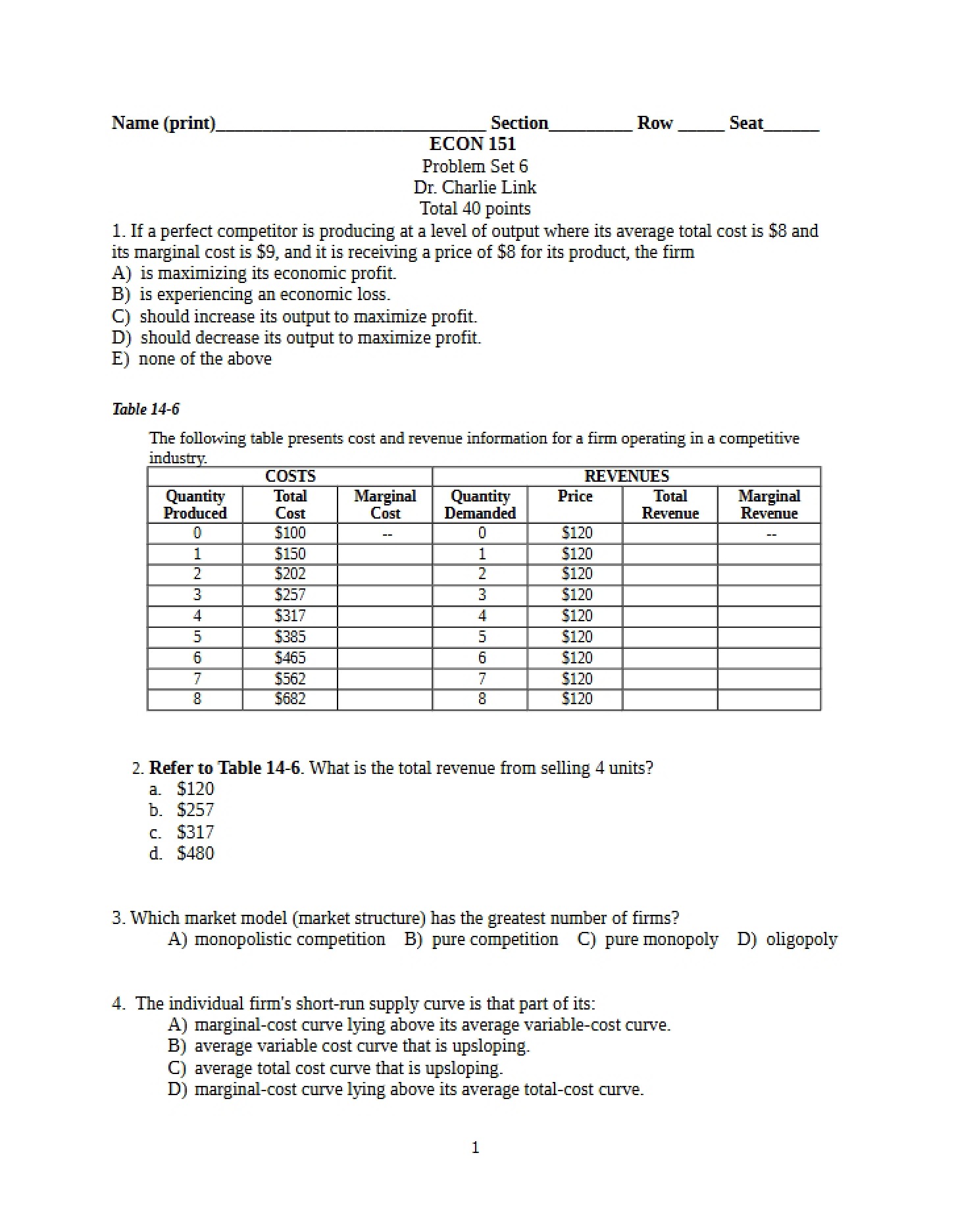
* Fundamental characteristics defining different market structures
* Conditions for achieving optimal firm output
* The relationship between revenue, costs, and profit maximization
* Short-run decision-making processes for firms
* Concepts related to firm behavior as price takers
* Shutdown decisions and their economic rationale
* Analysis of marginal revenue and marginal cost
What This Document Provides
* A clear overview of key market models, including perfect competition, monopoly, monopolistic competition, and oligopoly.
* An examination of the objectives firms pursue in competitive landscapes.
* A framework for understanding how firms respond to market conditions.
* Key concepts and terminology essential for analyzing market dynamics.
* A foundation for applying microeconomic principles to real-world scenarios.