What This Document Is
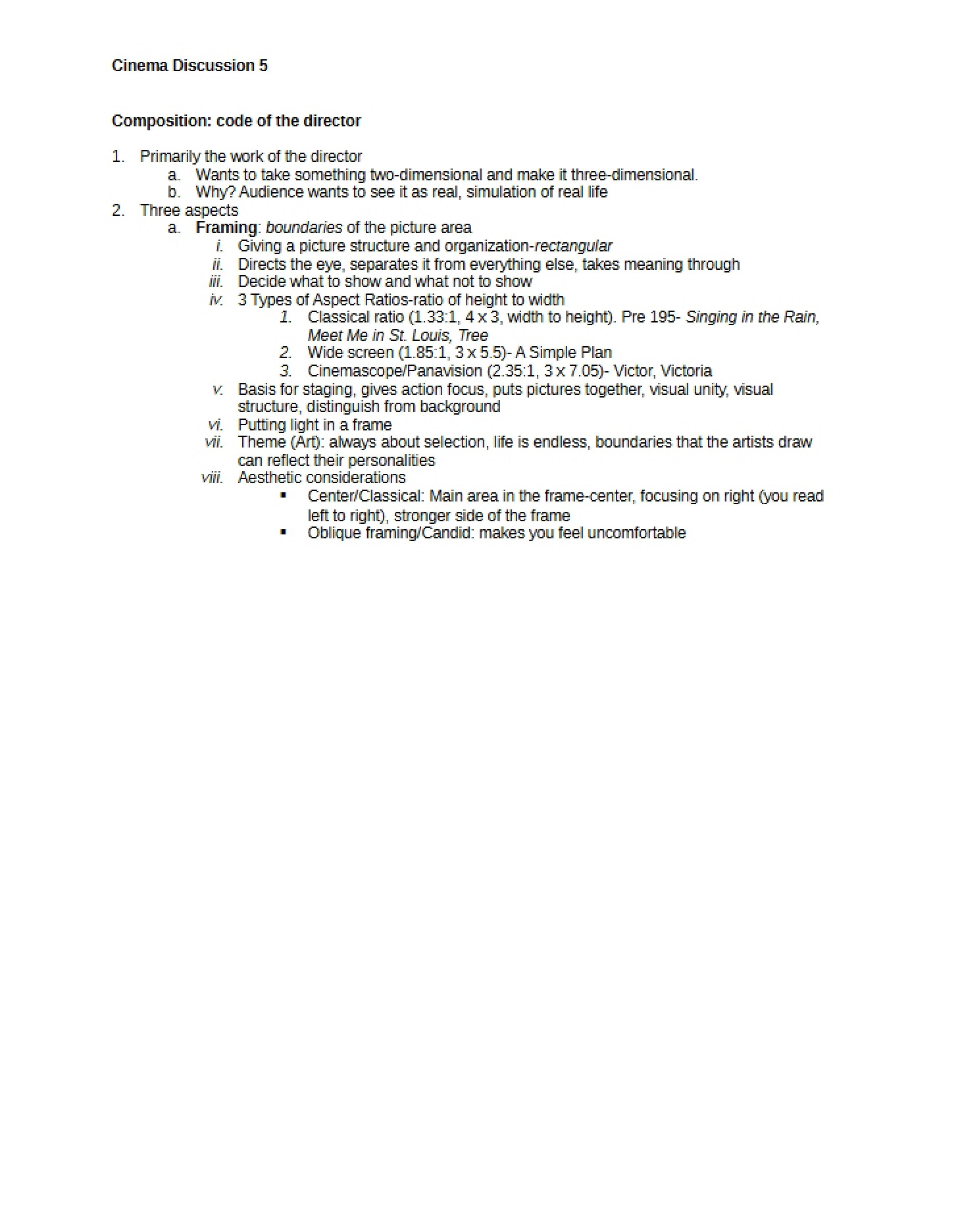
This resource is a focused exploration of core cinematic composition techniques, specifically designed for students of film studies. It delves into the fundamental visual elements that filmmakers utilize to construct meaning and guide the audience’s perception. The material centers around a detailed analysis of how framing, staging, and photography work in concert to create impactful scenes. It appears to be based on lecture notes from a course, referencing specific film examples for illustrative purposes.
Why This Document Matters
This is an invaluable resource for anyone seeking a deeper understanding of how movies *communicate* beyond the narrative itself. It’s particularly helpful for students enrolled in introductory cinema courses, film production classes, or anyone learning visual storytelling. Use this material to enhance your film analysis skills, prepare for class discussions, and develop a more critical eye when watching movies. It’s best utilized *alongside* film screenings, allowing you to actively identify and interpret the techniques discussed.
Common Limitations or Challenges
This resource focuses on theoretical concepts and their application. It does not offer a comprehensive history of cinematic techniques, nor does it provide a step-by-step guide to *creating* these compositions. It also doesn’t include detailed script breakdowns or shot lists. The analysis presented is specific to the examples discussed and may require further exploration to fully grasp the breadth of each concept. It’s designed to be a starting point for deeper learning, not a complete solution.
What This Document Provides
* A breakdown of key framing considerations, including aspect ratios and the psychological impact of different frame compositions.
* An examination of staging principles and how the arrangement of elements within a scene contributes to meaning.
* An overview of photographic techniques, including various shot sizes and their effects on the viewer.
* Discussion of how camera angles and movement influence the perception of time and space.
* Exploration of the relationship between visual composition and narrative focus.