What This Document Is
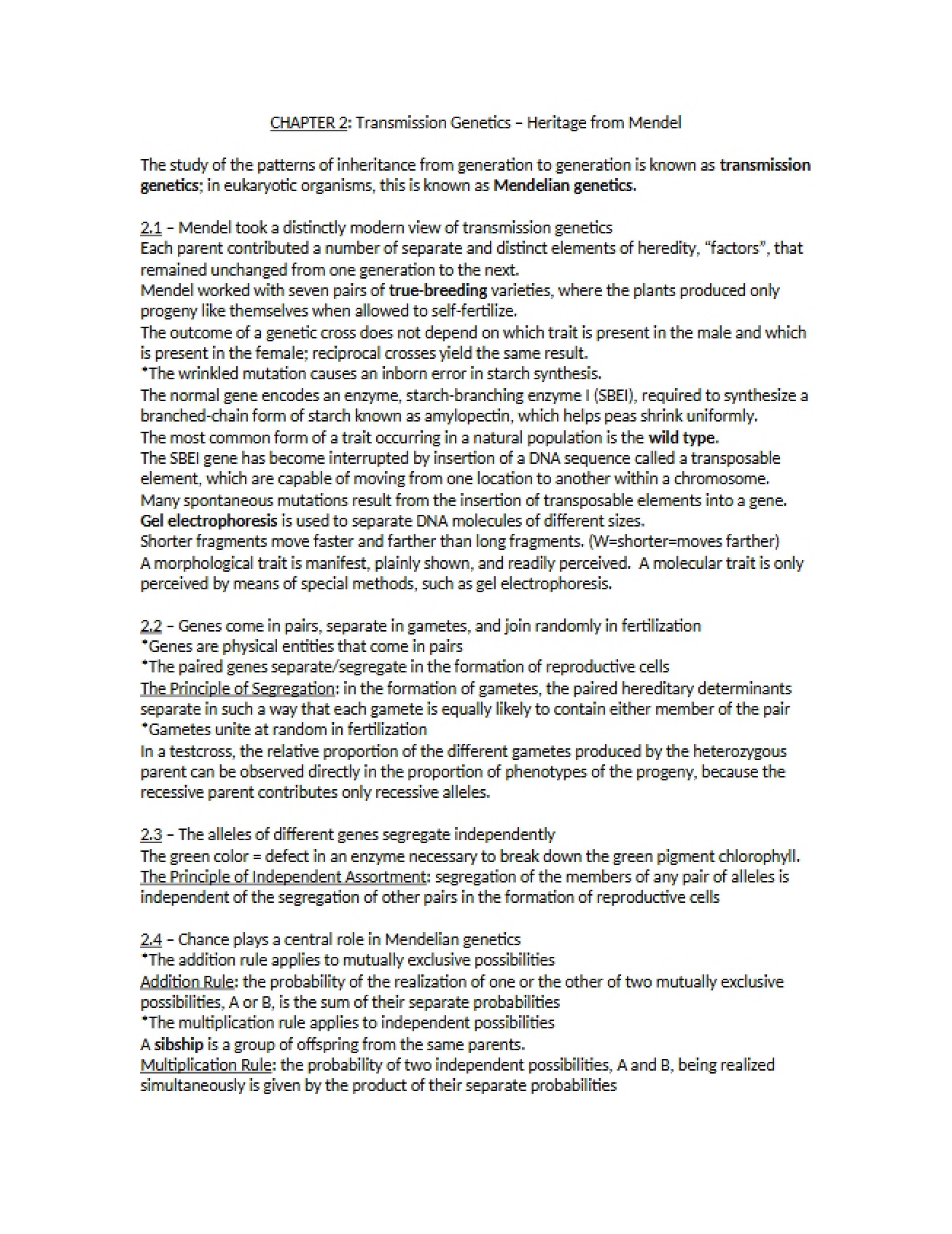
These are comprehensive lecture notes from a Genetics and Molecular Biology course (BIOL 2301) at Northeastern University. The notes cover foundational concepts in genetics, starting with a historical overview and progressing through the central dogma of molecular biology – the flow of genetic information from DNA to RNA to proteins. They explore how genes influence observable traits (phenotypes) and the interplay between genetic factors and the environment. The notes also introduce key figures in genetics, like Gregor Mendel, and the principles of inheritance.
Why This Document Matters
These notes are essential for students enrolled in a Genetics and Molecular Biology course. They serve as a detailed record of lecture material, aiding in understanding complex topics and preparing for assessments. They are particularly valuable for students who benefit from a structured, written companion to in-class discussions. The notes provide a foundational understanding crucial for further study in biology, medicine, and related fields.
Common Limitations or Challenges
These notes are a *supplement* to lectures and textbook readings, not a replacement. They provide a strong overview but do not include interactive elements like practice problems or detailed experimental protocols. A solid grasp of the material requires active engagement with the course content and independent study. This preview does not cover all topics within the full set of notes.
What This Document Provides
The complete lecture notes include:
* A brief history of genetics and the experiments that established DNA as the molecule of heredity.
* An explanation of the relationship between genotype and phenotype, including the influence of environmental factors.
* A detailed outline of the central dogma of molecular biology (DNA → RNA → Protein).
* Information on the role of proteins, including enzymes, in cellular function and hereditary diseases.
* An introduction to Mendelian genetics, including concepts like dominant and recessive traits, and true-breeding varieties.
* Discussion of evolution and the shared genetic heritage of all life.
This preview *does not* include detailed explanations of specific genetic mechanisms, experimental data, or advanced molecular biology techniques. It also does not contain any practice questions or assessments.