What This Document Is
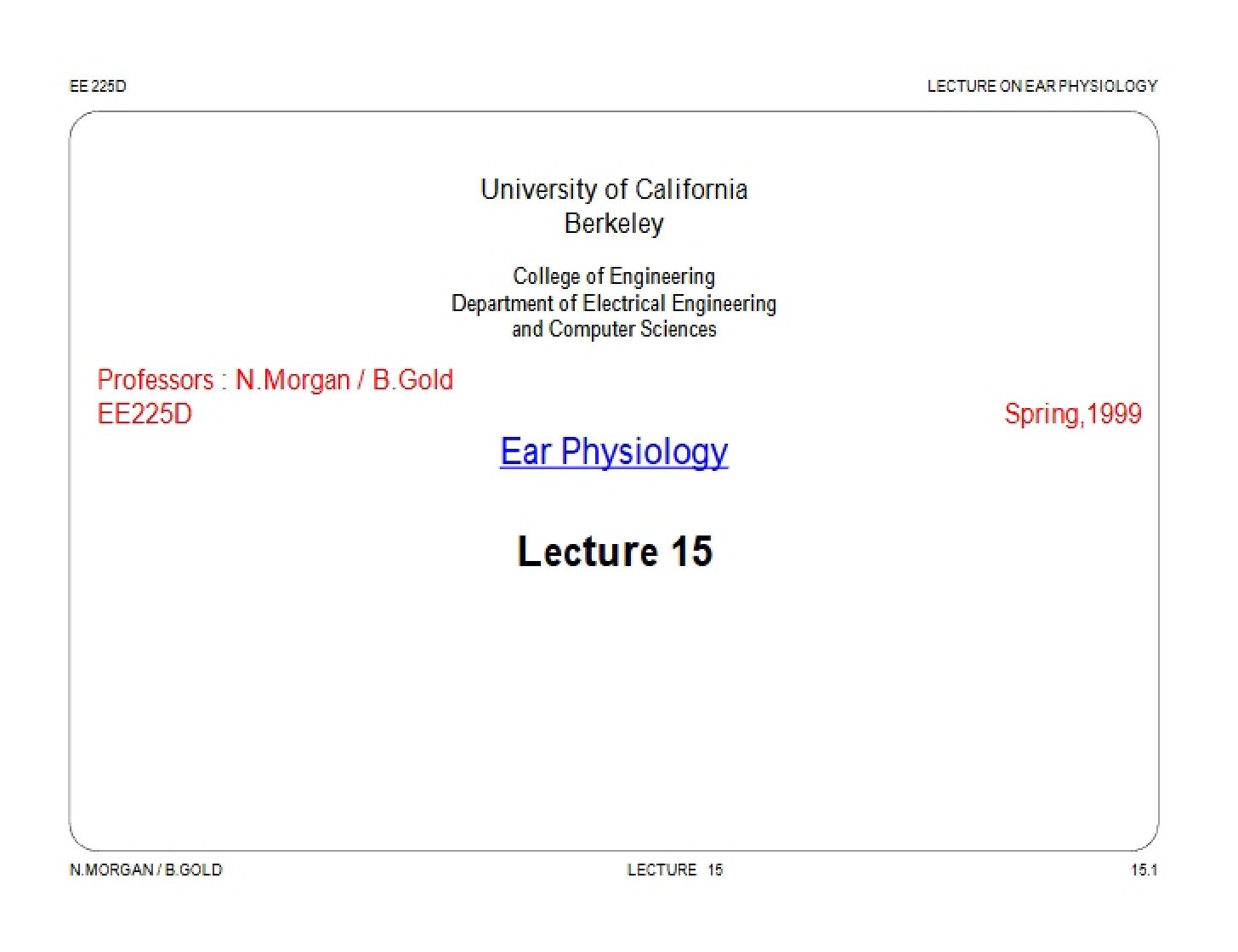
This is a focused exploration of advanced signal processing techniques, specifically delving into the theory and application of wavelets. It builds upon foundational concepts in digital signal processing and examines how wavelet analysis offers powerful tools for approximation and compression of information. The material originates from a graduate-level course at the University of California, Berkeley, and represents a deep dive into a specialized area of electrical engineering.
Why This Document Matters
This resource is ideal for students and professionals seeking a comprehensive understanding of wavelet-based signal processing. It’s particularly valuable for those enrolled in advanced digital image processing courses, or anyone working on projects involving data compression, signal analysis, or filter design. Understanding these concepts is crucial for developing efficient algorithms and optimizing performance in various applications, from image and video coding to data analysis and feature extraction. Accessing the full content will provide a significant advantage in mastering these complex techniques.
Topics Covered
* The historical development and motivations behind wavelet analysis.
* Relationships between wavelets, filter banks, and signal processing operators.
* Approximation theory and its connection to basis selection.
* The role of orthogonality and completeness in basis functions.
* Wavelet-based compression algorithms and their underlying principles.
* Formal definitions of spaces and norms used in signal processing.
* The Shannon sampling theorem and its relevance to wavelet analysis.
What This Document Provides
* A rigorous mathematical framework for understanding wavelet transforms.
* Detailed discussion of the interplay between continuous and discrete-time signal processing.
* Exploration of recent advances in wavelet theory and their practical implications.
* Insights into open problems and future research directions in the field.
* A foundation for applying wavelet techniques to real-world signal processing challenges.
* Formal definitions and notations commonly used in the field.