What This Document Is
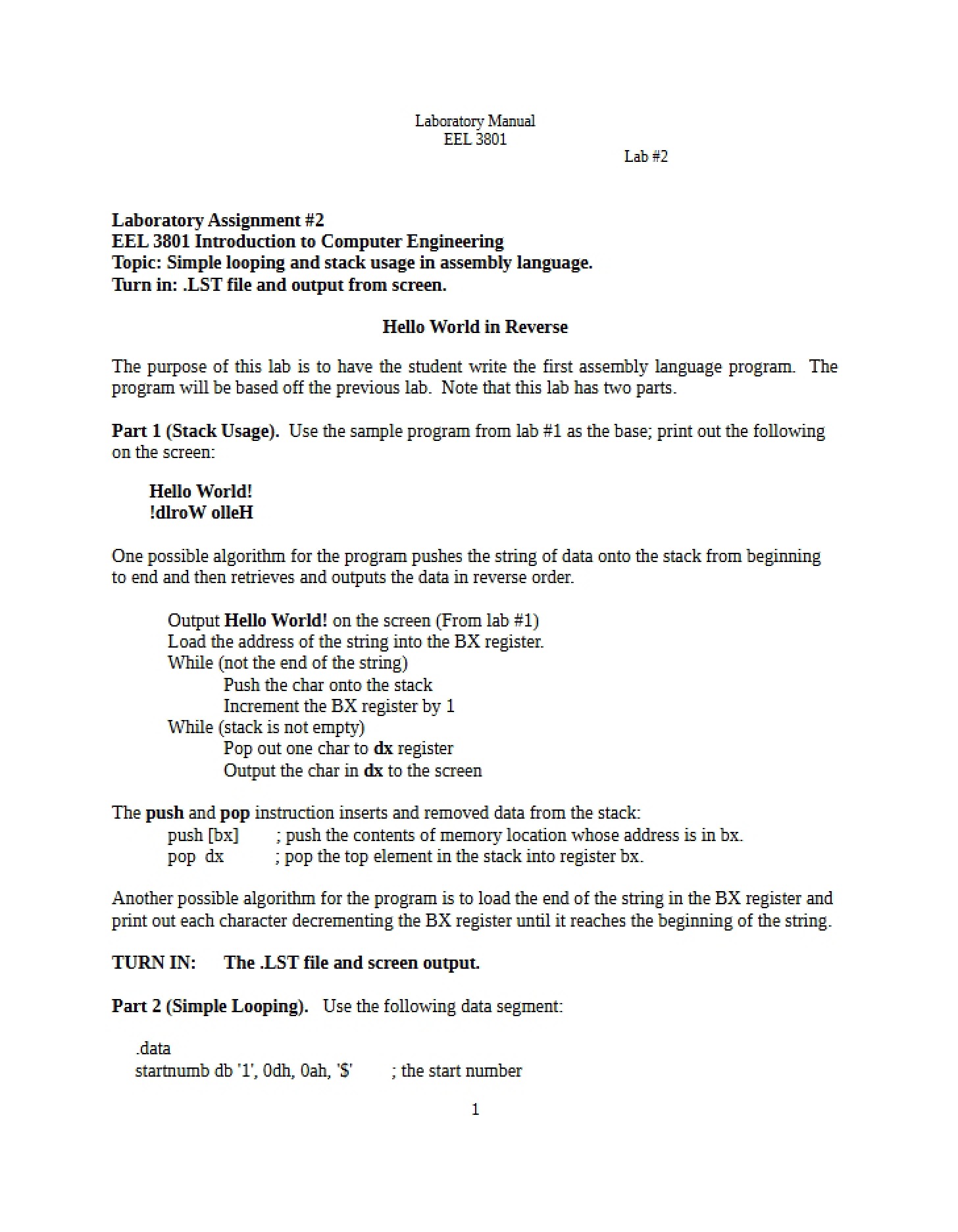
This is a laboratory manual designed to accompany an introductory Computer Engineering course (EEL 3801) at the University of Central Florida. It serves as a practical guide for students learning fundamental assembly language programming concepts and the initial stages of software development within a computer organization context. The manual outlines a series of hands-on exercises intended to build a foundational understanding of how software interacts with hardware.
Why This Document Matters
This manual is essential for students enrolled in the specified Computer Engineering course. It’s particularly valuable for those who learn best through practical application and require step-by-step guidance in setting up a programming environment and completing assigned tasks. It’s most useful when working *alongside* the course lectures and provides a structured approach to mastering core concepts. Students will find it helpful throughout the semester as they progress through the lab assignments.
Topics Covered
* Assembly Language Fundamentals
* Programming Environment Setup & Usage
* Basic Input/Output Operations
* Control Structures (Loops, Conditional Statements)
* Data Manipulation and Memory Management
* Modular Programming Concepts
* Stack Operations and Data Structures
* Introduction to Object-Oriented Programming principles
* Pointers and Dynamic Memory Allocation
What This Document Provides
* A detailed schedule of laboratory assignments with associated point values.
* Guidelines for formatting and submitting lab work, including required components like cover pages, source code, and program output.
* Specific instructions regarding commenting practices for improved code readability and understanding.
* Information on accessing and utilizing the necessary programming tools and resources.
* A framework for approaching and completing each lab exercise, fostering a practical understanding of computer engineering principles.