What This Document Is
This material represents a session focused on the core principles of representing and utilizing knowledge within computer science. Specifically, it delves into the realm of logical reasoning systems – the mechanisms computers use to draw conclusions and make decisions based on provided information. It explores various approaches to building these systems, moving beyond simple data storage to enable intelligent processing. This session is part of a foundational course in the field.
Why This Document Matters
Students enrolled in advanced computer science courses, particularly those concentrating on intelligent systems, will find this session invaluable. It’s especially relevant when you’re beginning to explore how to build systems that can reason, solve problems, and learn. It serves as a crucial stepping stone for understanding more complex topics like expert systems, automated planning, and knowledge representation. Those preparing to design and implement systems requiring logical inference will benefit from a solid grasp of the concepts covered here.
Common Limitations or Challenges
This session provides a theoretical overview of different logical reasoning approaches. It does *not* offer detailed code implementations or step-by-step guides for building these systems. It also doesn’t cover the practical challenges of knowledge acquisition – the process of gathering and formalizing real-world knowledge. Furthermore, it focuses on the fundamental concepts and doesn’t delve into the latest advancements or specialized applications within each system type.
What This Document Provides
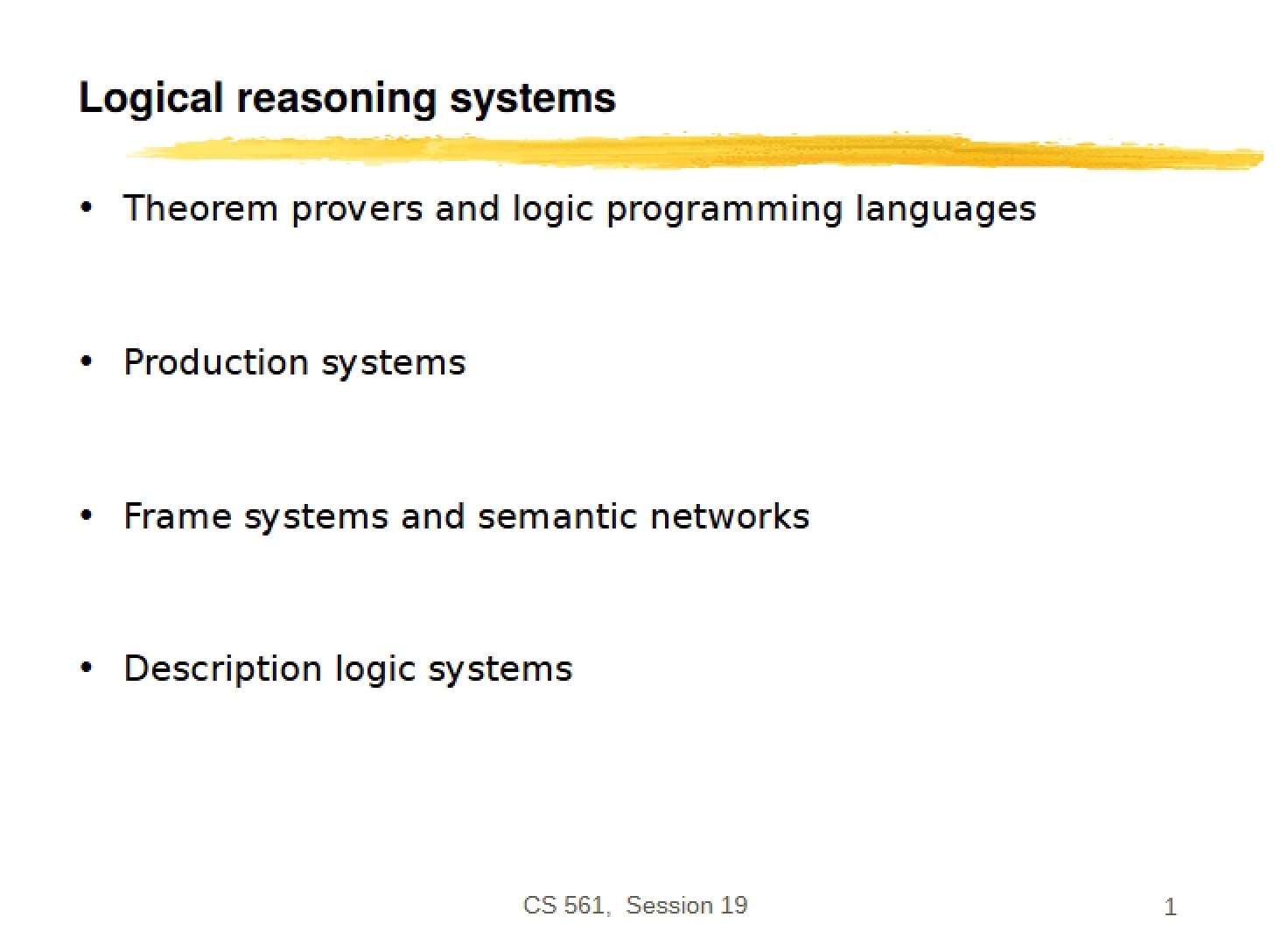
* An examination of different types of logical reasoning systems, including theorem provers, production systems, and description logic systems.
* A discussion of fundamental tasks associated with knowledge-based systems, such as adding facts, querying information, and updating knowledge bases.
* An overview of techniques for indexing and retrieving information within these systems to improve efficiency.
* An exploration of the complexities involved in implementing these systems, particularly concerning computational cost.
* An introduction to the concept of unification, a key process in logical inference.
* A brief comparison between logic programming and traditional programming paradigms.