What This Document Is
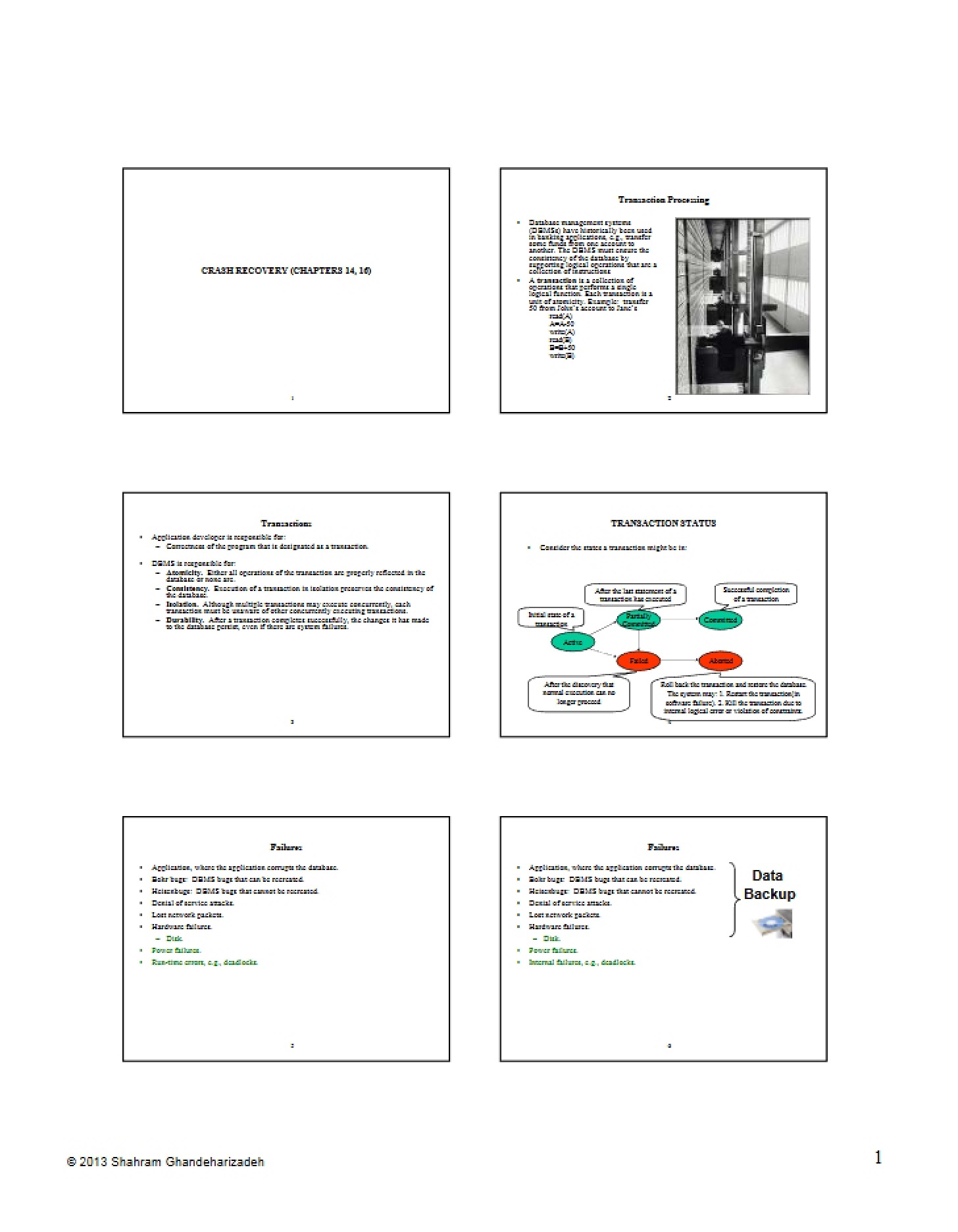
This document presents lecture material covering concurrency control within the context of file and database management systems. It delves into the complexities that arise when multiple transactions attempt to access and modify data simultaneously. The core focus is on understanding the principles needed to maintain data integrity and consistency in multi-user environments. It explores theoretical foundations and introduces common protocols used to manage concurrent access.
Why This Document Matters
This material is crucial for students in advanced database courses, particularly those preparing for roles in database administration, software engineering involving data storage, or research related to transaction processing. It’s most valuable when you’re learning about the underlying mechanisms that ensure reliable data handling in real-world applications – think banking systems, airline reservation platforms, or any application where data accuracy is paramount. Understanding these concepts is foundational for building robust and scalable database systems.
Common Limitations or Challenges
This lecture focuses on the theoretical underpinnings of concurrency control. It does *not* provide detailed code implementations or specific database system configurations. It also doesn’t cover advanced recovery techniques beyond mentioning their existence. The material assumes a foundational understanding of database concepts like transactions and data consistency. It’s designed to build conceptual knowledge, not to provide a ready-to-use solution for a specific database problem.
What This Document Provides
* An introduction to the challenges of concurrent data access.
* Discussion of the potential for inconsistencies when multiple transactions operate simultaneously.
* Exploration of different approaches to ensuring data serializability.
* Overview of lock-based protocols for managing concurrent access.
* Introduction to concepts like two-phase locking and deadlock detection.
* Examination of wait-for graphs as a tool for identifying potential deadlocks.