What This Document Is
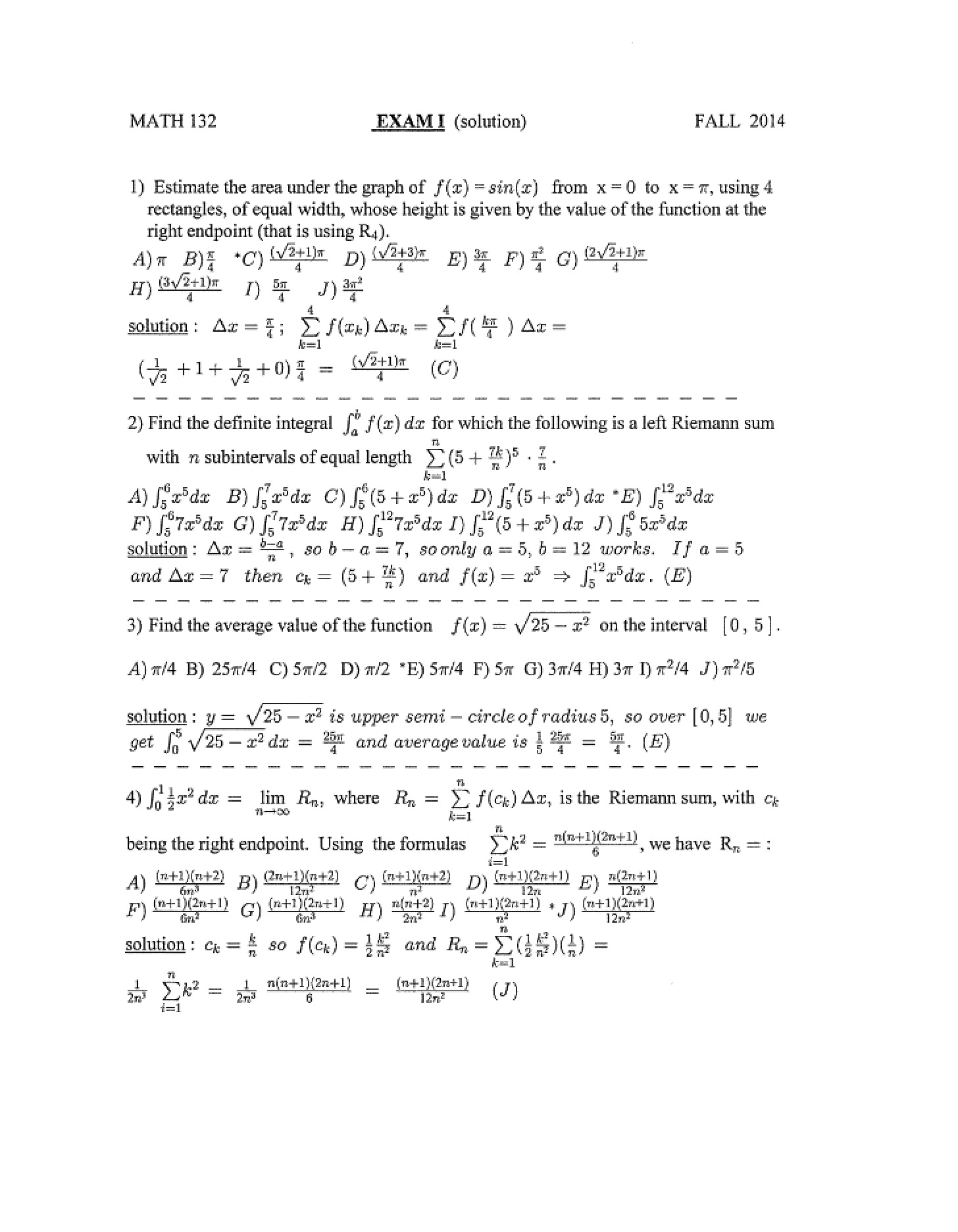
This document is a complete key and detailed solutions set for a Calculus II (MATH 132) exam administered at Washington University in St. Louis during the Fall 2009 semester. It covers a range of core concepts typically assessed in an introductory Calculus II course, focusing on techniques for integration, applications of integration, and related rate problems. The document presents a question-by-question breakdown, offering insights into the expected approach for each problem.
Why This Document Matters
This resource is invaluable for students currently enrolled in Calculus II, or those preparing for a similar exam. It’s particularly helpful for identifying areas of strength and weakness, understanding common exam question formats, and reviewing problem-solving strategies. Students who have already taken the exam can use it to analyze their performance and pinpoint where they may have lost points. It’s best utilized *after* attempting the original exam to maximize learning and avoid simply replicating solutions.
Common Limitations or Challenges
This document provides solutions to a *specific* past exam. While the concepts tested are broadly applicable, the exact problems and their wording will likely differ on future assessments. It does not offer comprehensive instruction on the underlying calculus principles themselves; it assumes a foundational understanding of the material. It also doesn’t include the original exam questions – access to those is required to fully utilize this resource.
What This Document Provides
* Detailed breakdowns of solutions for each exam question.
* Illustrative examples of applying calculus techniques to various problem types.
* Coverage of topics including Riemann sums, definite integrals, and integration techniques.
* Applications of integration to real-world scenarios, such as related rates and cost analysis.
* Worked examples involving exponential functions and logarithmic integration.
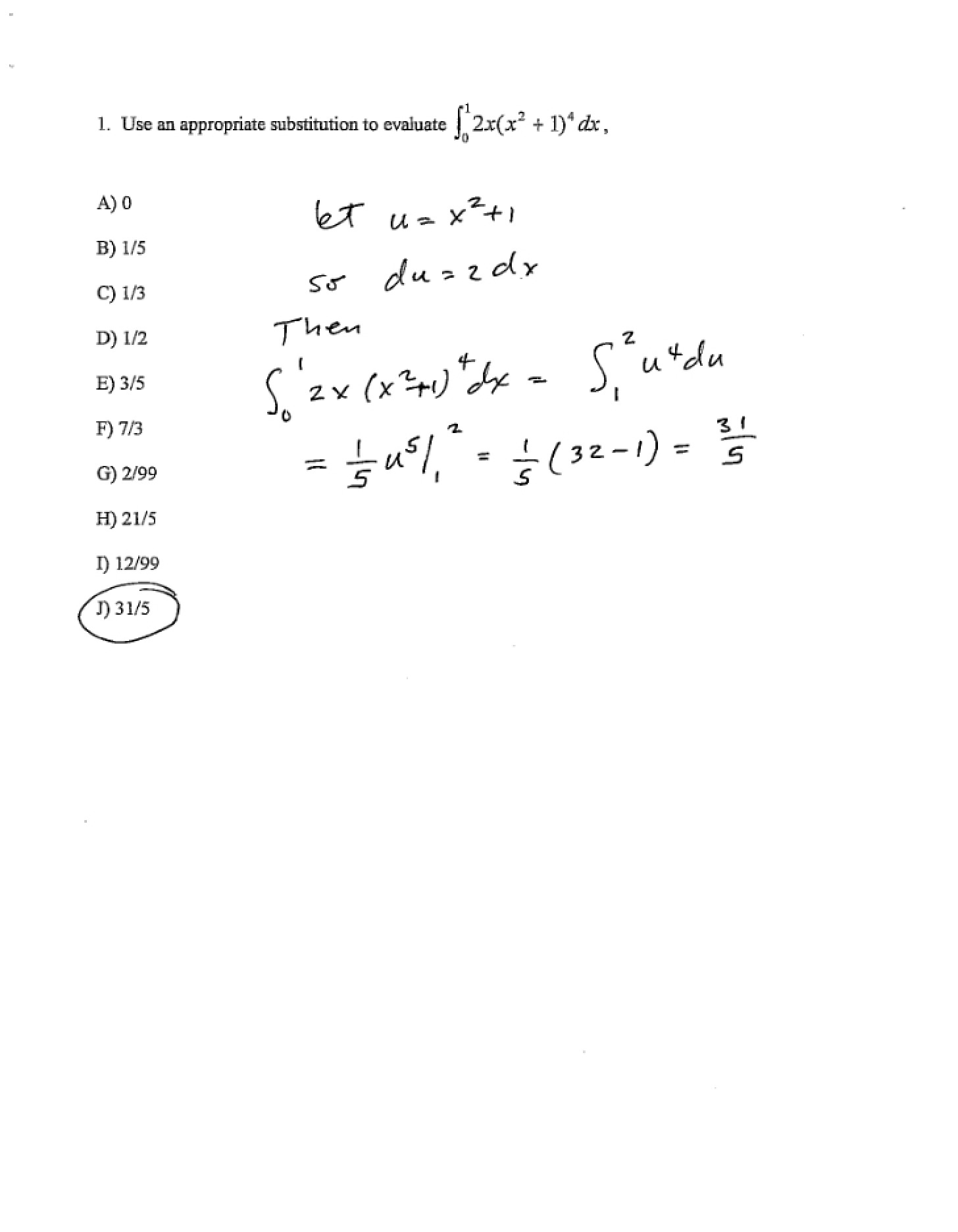
* Solutions demonstrating the use of u-substitution and trigonometric integration.
* Problems related to radioactive decay and continuous compounding.
* Analysis of area calculations between curves.