What This Document Is
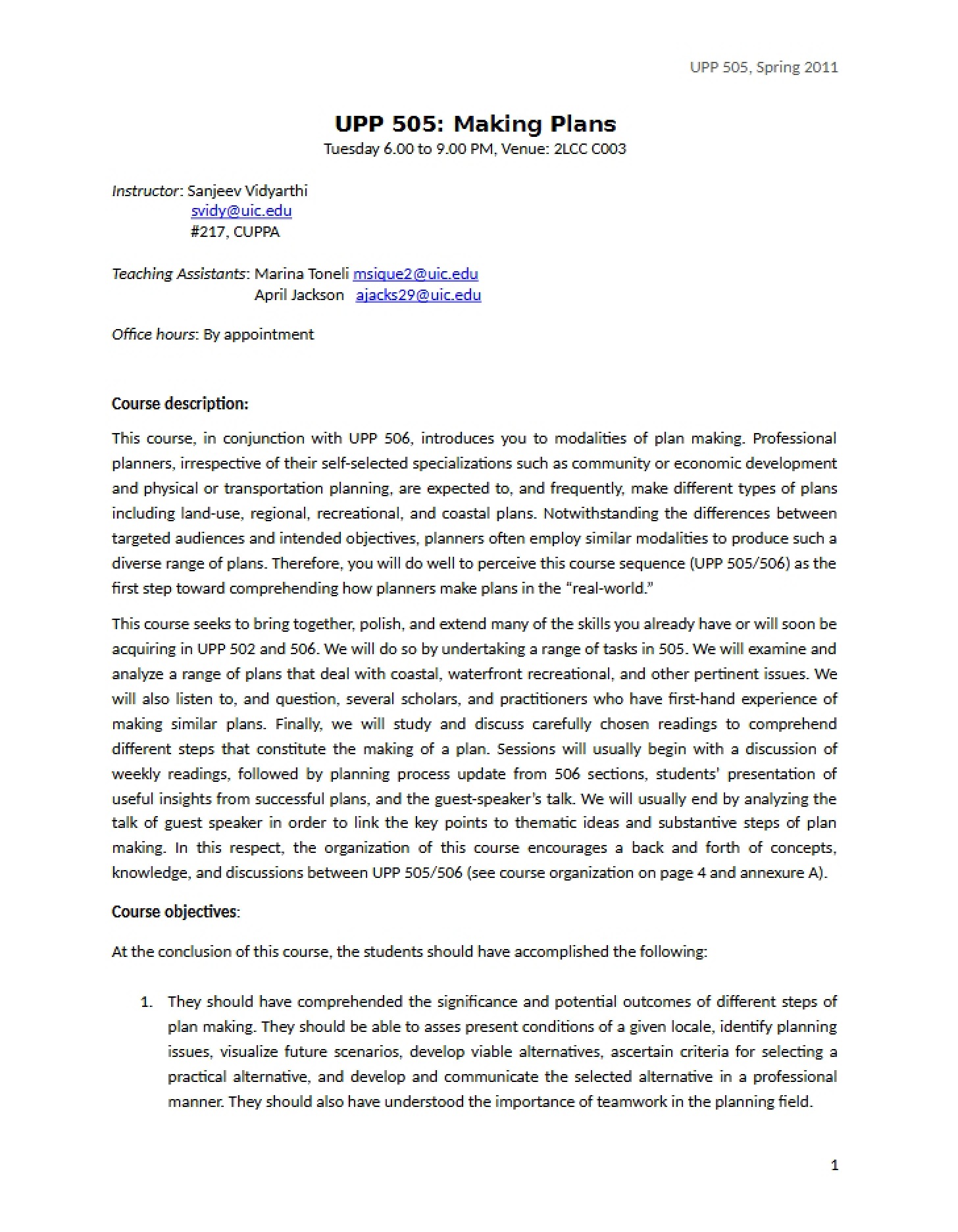
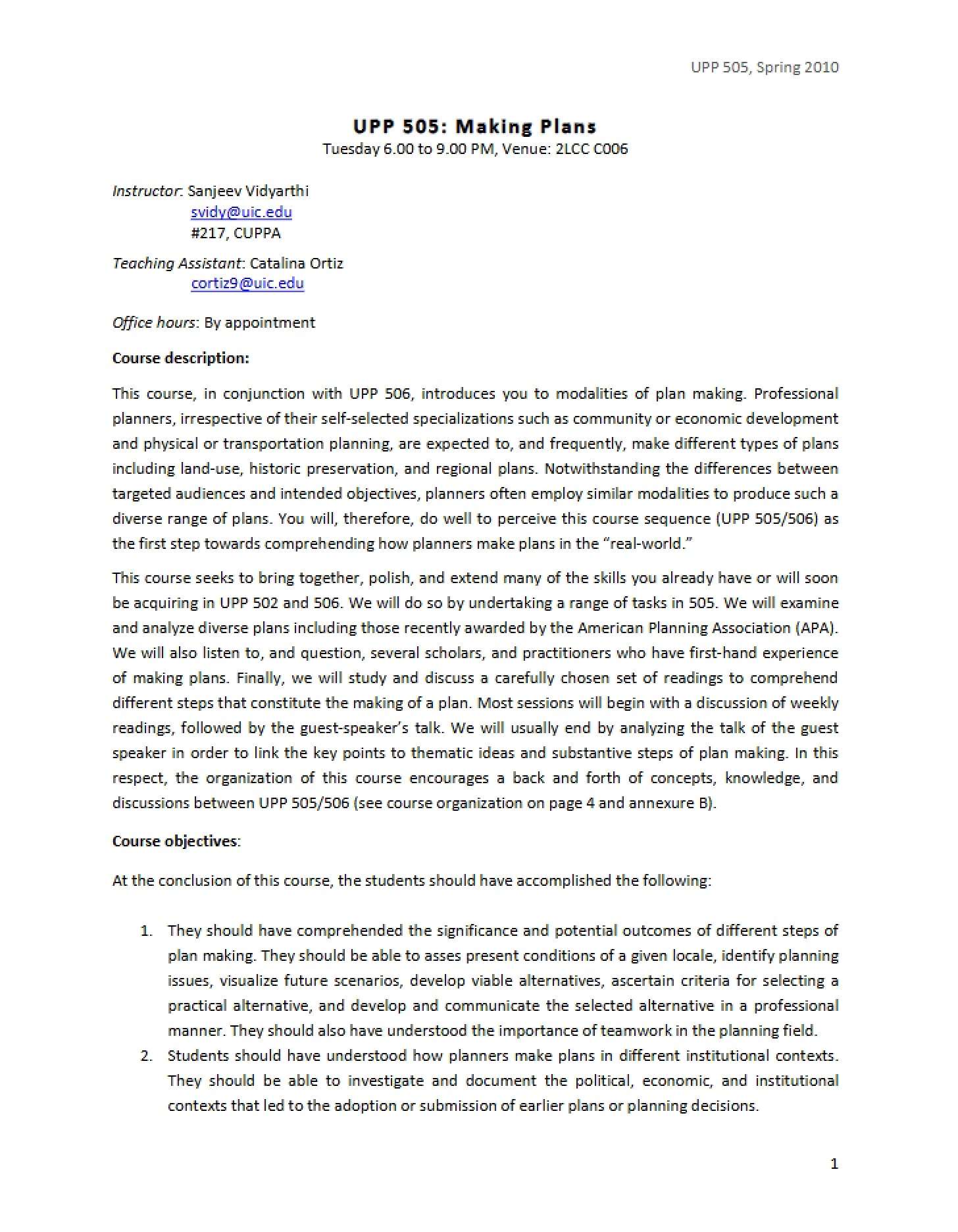
This document outlines the core content for UPP 505: Making Plans, a graduate-level course offered at the University of Illinois at Chicago. It serves as a comprehensive overview of the course structure, objectives, and expectations for students entering the field of urban and regional planning. It details how this course connects with a related course (UPP 506) to provide a foundational understanding of the plan-making process. This is a key resource for anyone seeking a detailed understanding of the course’s scope and requirements.
Why This Document Matters
This document is essential for prospective and enrolled students in UPP 505. It’s particularly valuable for those wanting to understand the course’s approach to plan making *before* committing to the full curriculum. It will help you determine if the course aligns with your academic and professional goals within the planning discipline. It’s also a crucial reference point throughout the semester for understanding assignment expectations and overall course progression.
Topics Covered
* The fundamental steps involved in the plan-making process.
* The significance of understanding institutional contexts in planning.
* Methods for analyzing existing plans and planning decisions.
* Integrating diverse skills – writing, visual communication, data analysis – into professional planning advice.
* Ethical considerations and professional judgment in plan development.
* The relationship between planning and concepts like justice, efficiency, and sustainability.
* The role of teamwork and collaboration in planning projects.
What This Document Provides
* A detailed course syllabus outlining weekly topics and activities.
* Clearly defined learning objectives for successful course completion.
* Information on instructor and teaching assistant contact details and office hours.
* A breakdown of course requirements and the weighting of each assignment towards the final grade.
* An overview of the types of plans that will be analyzed throughout the semester (e.g., land-use, regional, environmental).
* A description of the role of guest speakers and how their insights will be integrated into the learning experience.