What This Document Is
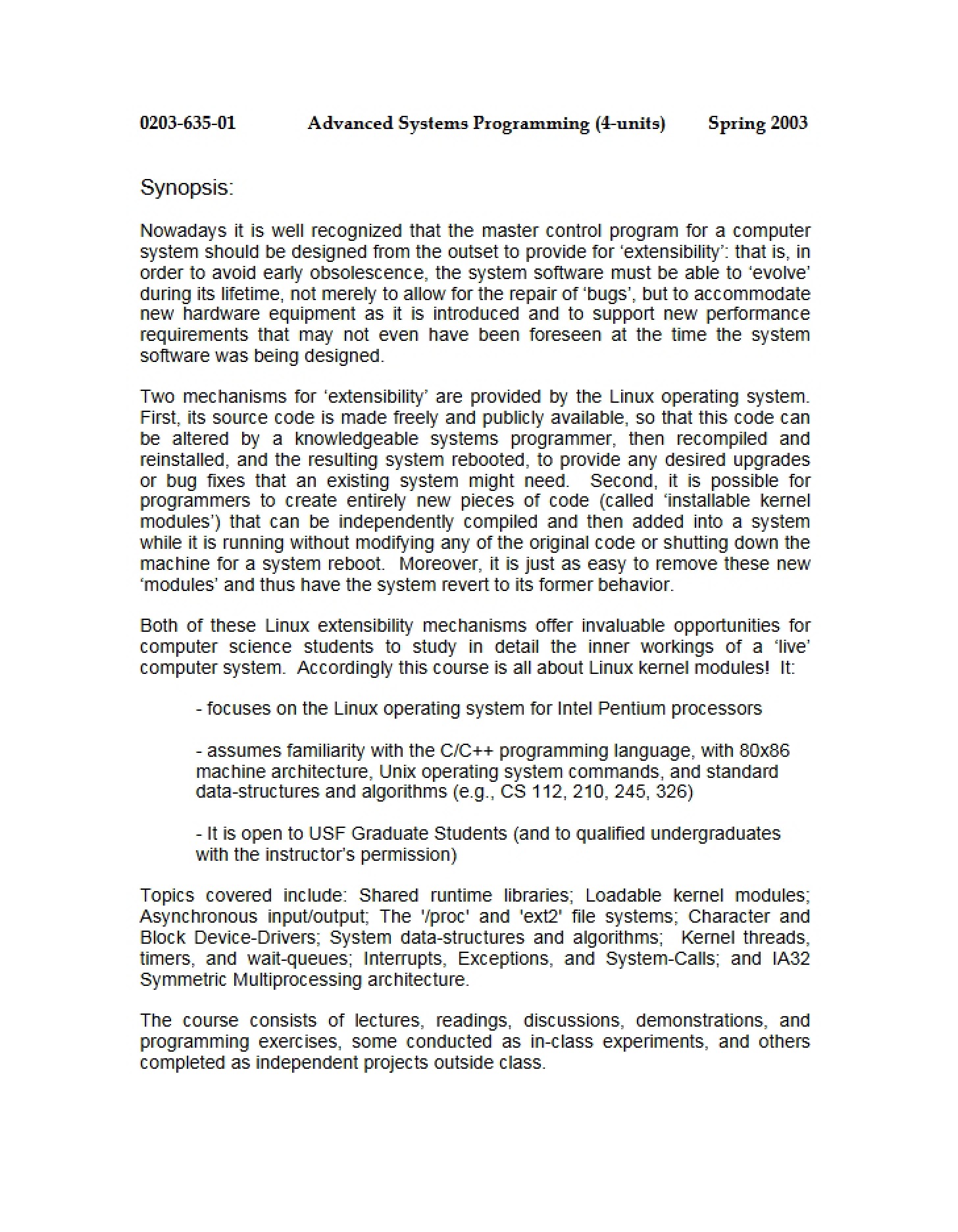
This is a comprehensive course outline and syllabus for Advanced Systems Programming (CS 635) at the University of San Francisco. It details the structure, expectations, and core topics covered in a graduate-level computer science course focused on operating system internals – specifically, the Linux kernel. The syllabus serves as a foundational guide for students and outlines the instructor’s approach to the subject matter. It’s designed to provide a clear roadmap for the entire semester.
Why This Document Matters
This syllabus is essential for anyone considering enrolling in, or currently enrolled in, CS 635. It’s particularly valuable for computer science graduate students, and qualified undergraduates, seeking a deep understanding of operating system design and implementation. It will help you assess if your existing skillset aligns with the course prerequisites and understand the commitment required for success. Reviewing this outline *before* the course begins will allow you to proactively prepare and maximize your learning experience.
Common Limitations or Challenges
This document provides a high-level overview of the course. It does *not* contain the actual lecture notes, programming assignments, or detailed explanations of the concepts. It outlines the *topics* that will be covered, but doesn’t provide the in-depth technical content itself. It also doesn’t include solutions to problems or examples of code implementations. Access to the full course materials is required for complete understanding and successful completion of the course.
What This Document Provides
* A clear synopsis of the course’s central theme and its relevance to modern systems programming.
* A list of prerequisite knowledge and skills expected of students.
* A detailed schedule of planned course topics, including areas like kernel modules, file systems, and device drivers.
* Information regarding learning outcomes – what students will be able to *do* upon completion of the course.
* Instructor contact information and office hours.
* Required textbook details, including ISBNs.
* Details regarding classroom location and necessary computer access.
* Important exam dates and the grading breakdown for the course.