What This Document Is
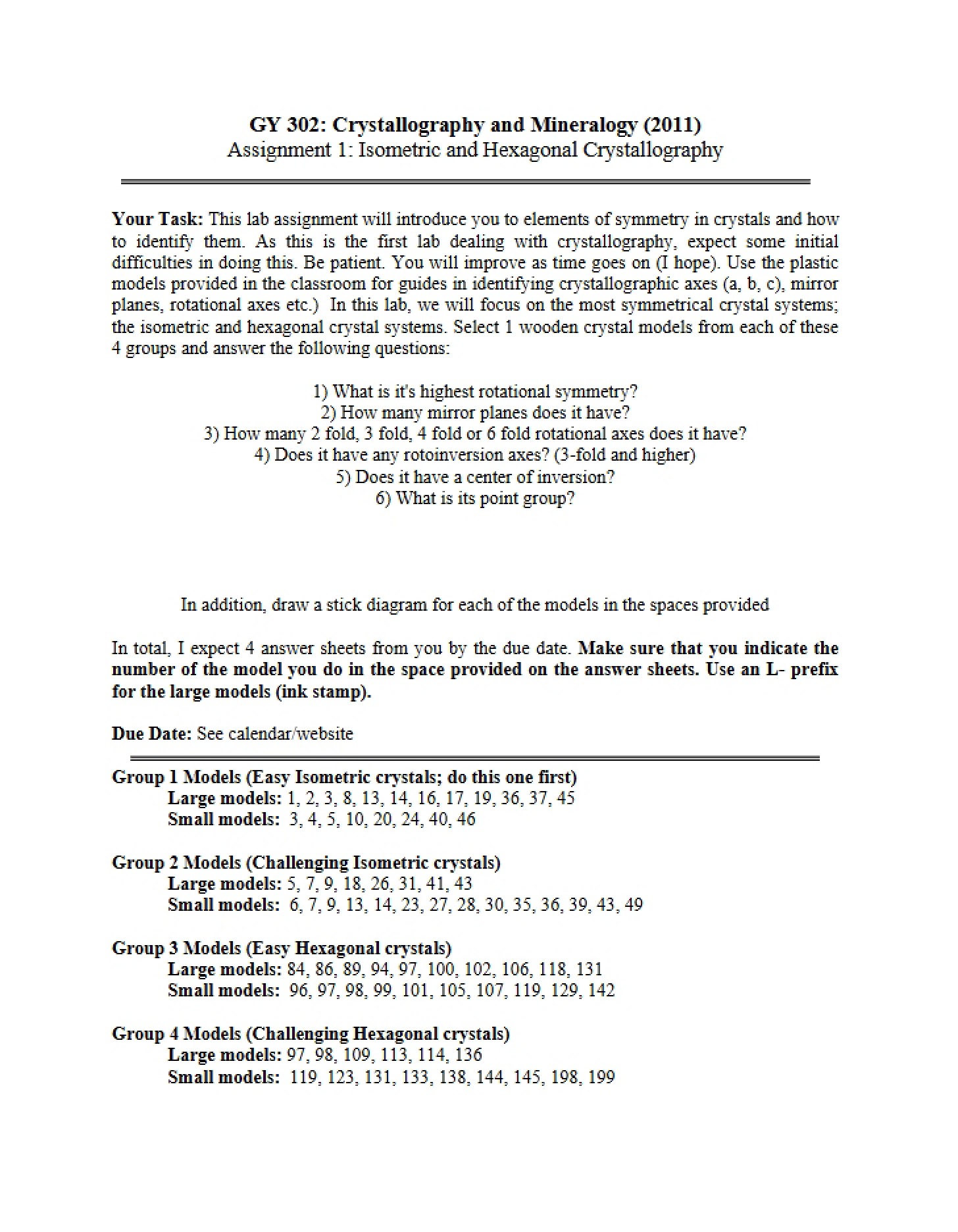
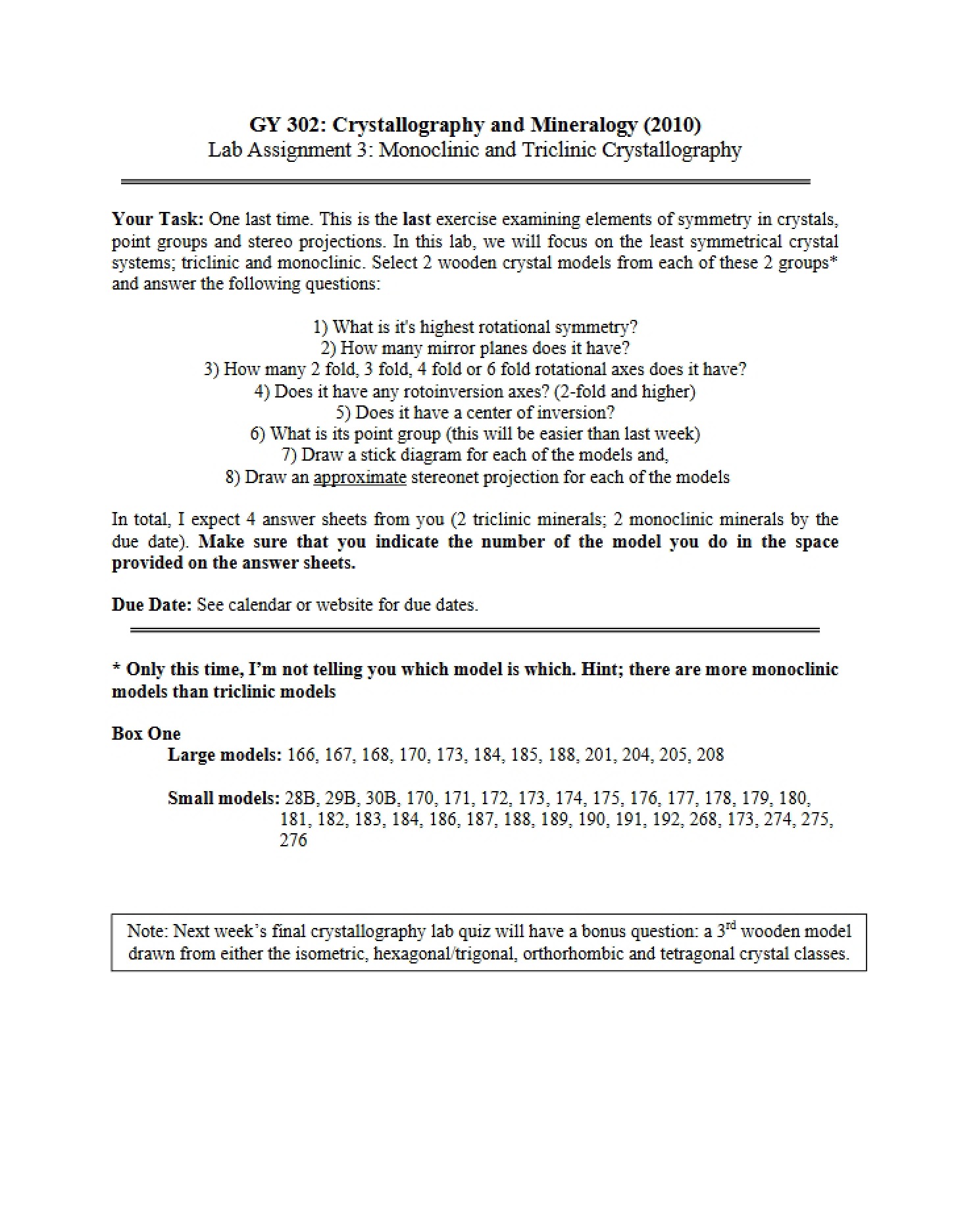
This is a laboratory assignment designed for students enrolled in a Crystallography and Mineralogy course (GY 302) at the University of South Alabama. The assignment focuses on developing practical skills in identifying and analyzing the symmetry elements present within crystal structures, specifically those belonging to the isometric and hexagonal crystal systems. It requires hands-on work with physical crystal models to reinforce theoretical concepts.
Why This Document Matters
This assignment is crucial for students aiming to build a strong foundation in crystallography – a core component of mineralogy and materials science. Successfully completing this lab will enhance your ability to visualize and interpret crystal structures, which is essential for identifying minerals, understanding their physical properties, and predicting their behavior. It’s particularly valuable when you’re first learning to apply crystallographic principles and need guided practice. This assignment is best used *during* a crystallography lab session, alongside the provided crystal models.
Common Limitations or Challenges
This assignment does not provide a comprehensive overview of all crystal systems; it concentrates solely on isometric and hexagonal structures. It also assumes a basic understanding of crystallographic terminology (axes, planes, rotational symmetry) which may need to be reviewed separately. The assignment focuses on *identification* of symmetry elements, not on the underlying mathematical principles or complex structure determination techniques. It will not teach you how to derive point groups from first principles.
What This Document Provides
* A structured lab exercise with specific instructions for analyzing crystal models.
* Designated groups of crystal models (both large and small) to select from for analysis.
* A series of targeted questions designed to assess your understanding of symmetry elements.
* A template for creating “stick diagrams” to visually represent crystal symmetry.
* A clear outline of the expected deliverables (four completed answer sheets).
* Guidance on identifying key symmetry features like rotational axes, mirror planes, and centers of inversion.