What This Document Is
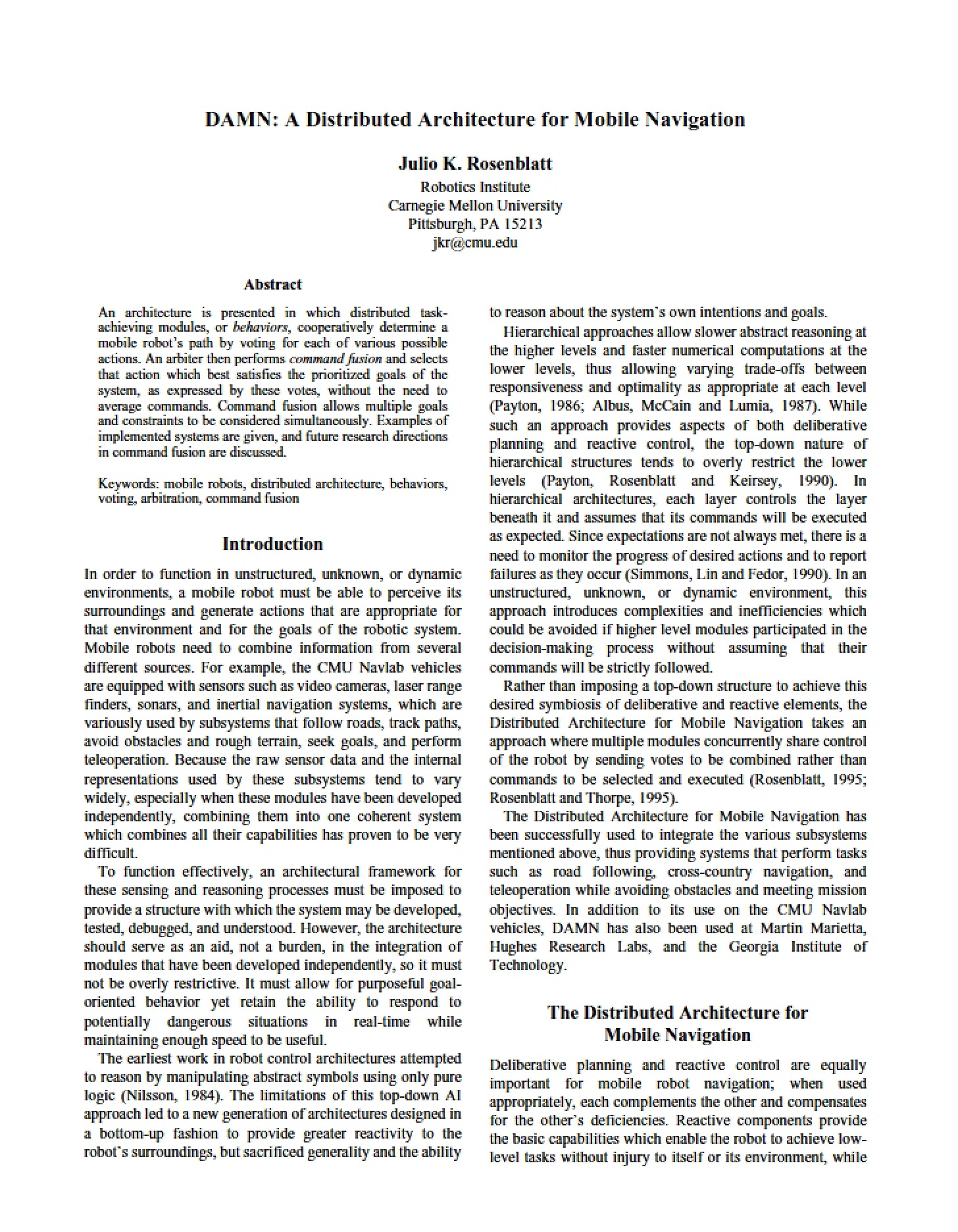
This document presents a research paper detailing a specific architectural approach to mobile robot navigation and control. It delves into the complexities of creating robotic systems capable of operating effectively in unpredictable environments. The core focus is on how to integrate various sensing and reasoning processes within a robot, moving beyond traditional, rigidly structured control methods. It explores a distributed system where individual modules contribute to overall decision-making.
Why This Document Matters
This paper is invaluable for graduate students and researchers in robotics, computer science, and related fields. Specifically, those studying mobile robotics, multi-agent systems, and intelligent control will find it highly relevant. It’s particularly useful when investigating alternative architectures to traditional hierarchical or purely reactive robot control systems. Understanding the concepts presented can inform the design and implementation of more robust and adaptable robotic solutions, especially for applications requiring operation in dynamic and uncertain conditions. It’s ideal for those seeking a deeper theoretical understanding of robot behavior coordination.
Common Limitations or Challenges
This paper is a focused exploration of a particular architecture and does not offer a comprehensive survey of *all* robot control methods. It doesn’t provide step-by-step implementation guides or code examples. While it discusses the benefits of the proposed approach, it doesn’t include detailed comparative performance data against other architectures. The paper assumes a foundational understanding of robotics principles and control theory; it is not intended as an introductory text.
What This Document Provides
* A detailed description of a distributed architecture for mobile robot navigation.
* An exploration of the concepts of command fusion and arbitration in robotic control.
* Discussion of the challenges associated with integrating diverse sensor data and independent modules.
* Insights into the trade-offs between reactivity, deliberative planning, and real-time responsiveness in robot control systems.
* A foundation for understanding advanced research in mobile robot architecture and multi-robot systems.